

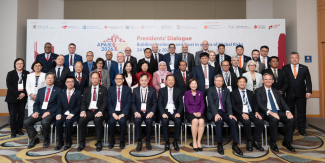
At the Asia-Pacific Association for International Education (APAIE) 2026 Conference in Hong Kong, leaders from universities across Asia-Pacific convened to confront a shared question: how can higher education build resilience and trust in an era defined by global risk.
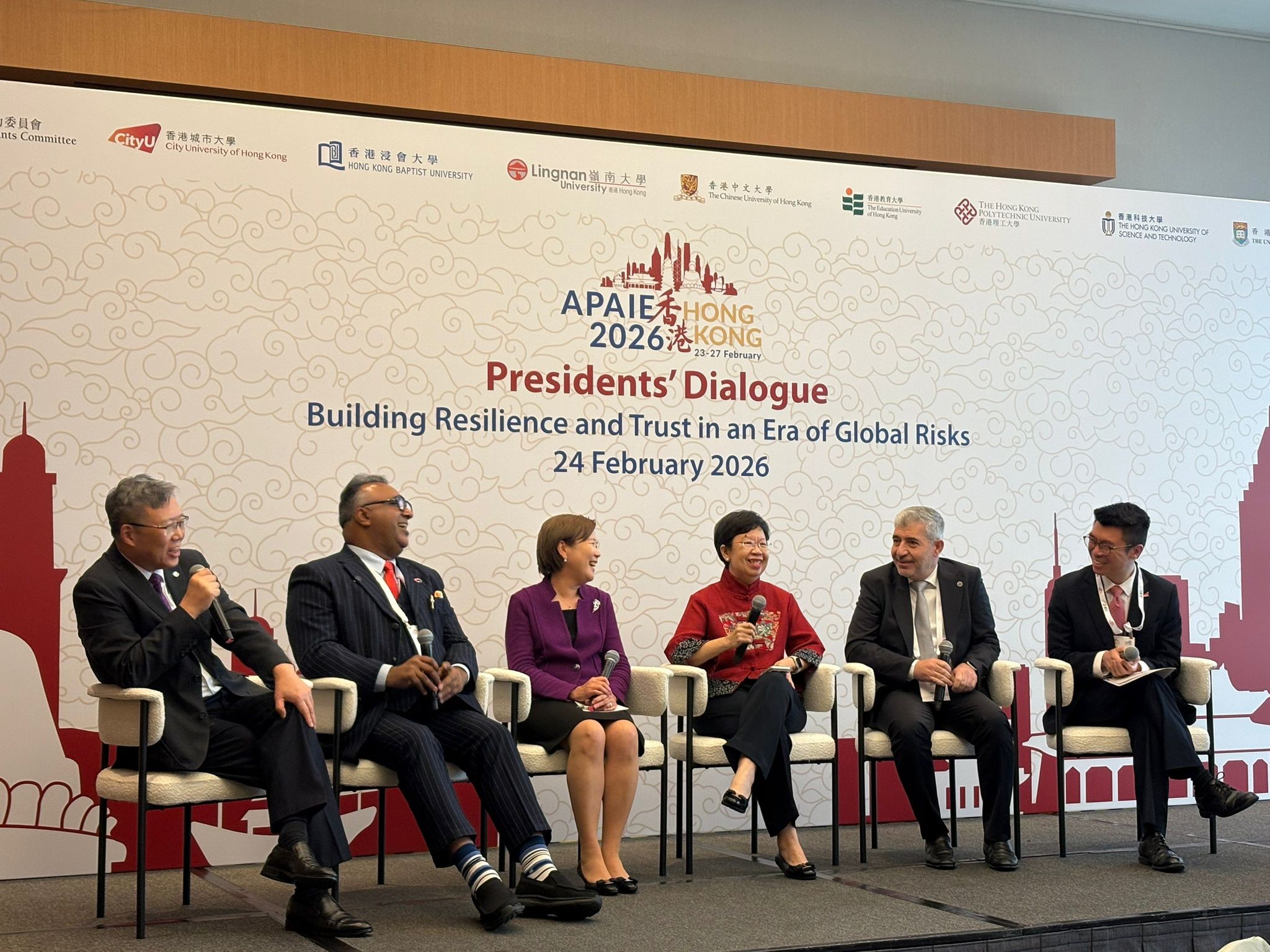
Speaking at the Presidents’ Dialogue, Singapore Management University (SMU) President Professor Lily Kong emphasized that intensifying geopolitical strain, accelerating artificial intelligence, climate disruption and demographic change are reshaping both societies and universities. In such a context, she highlighted that partnership is no longer optional.
The Dialogue, facilitated by Professor Jin-Guang Teng, President of The Hong Kong Polytechnic University, explored how collaboration must evolve. University leaders agreed that meaningful partnerships today must be multisectoral, international and interdisciplinary, spanning academia, industry, government and community.
Preparing learners for a 100-year life
Against a backdrop of rapid technological disruption and ageing societies, Professor Kong underscored that universities must reinvent both education and research to remain relevant amid technological disruption and demographic change. As she observed, “demographic shifts are reshaping society and demanding that universities reinvent themselves to remain relevant.”
She argued that institutions must move beyond preparing graduates for a single profession to supporting lifelong reinvention, adding: “We should also educate for a 100-year life—where society lives and works for longer—by curating lifelong learning that is holistic and human in the face of the technological juggernaut.” This imperative sits at the core of SMU2030, which advances human capital development through interdisciplinary learning, industry integration and sustained global exposure.
Professor Kong added that research must also evolve to meet complex societal challenges: “Our research must rise above conventional metrics of prestige and university performance to deliver robust solutions that can truly benefit society.” In a more fragmented geopolitical landscape, she said, universities must sustain openness while strengthening governance by building trusted partnerships that “transcend sectors, disciplines and borders.”
These priorities, she noted, underpin SMU2030’s ambition to translate knowledge into economic and social impact across Asia, including new regional platforms such as SMU’s upcoming Shenzhen centre alongside its established presence in Jakarta, Bangkok and Ho Chi Minh City.
SMU convenes global leaders
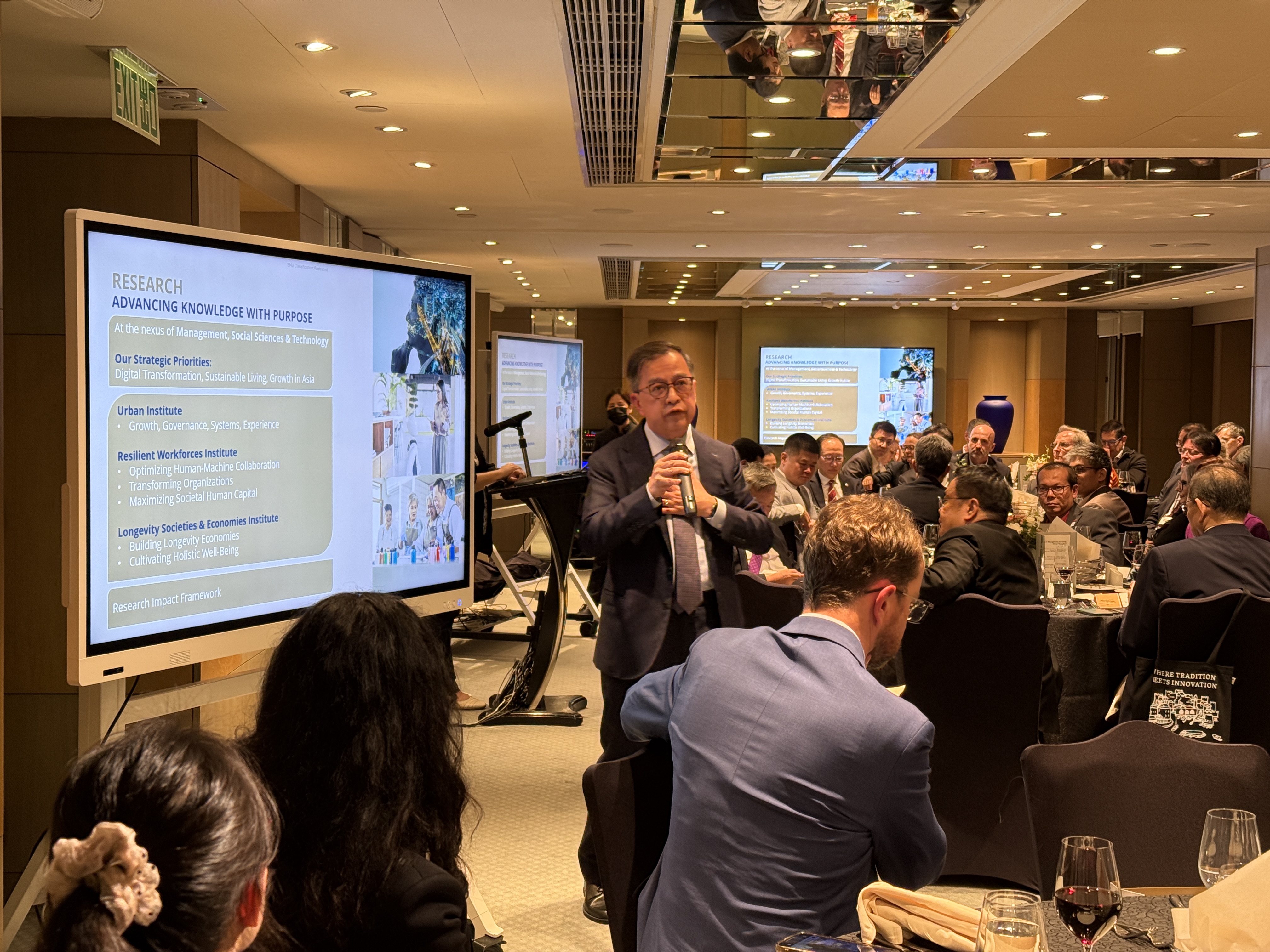
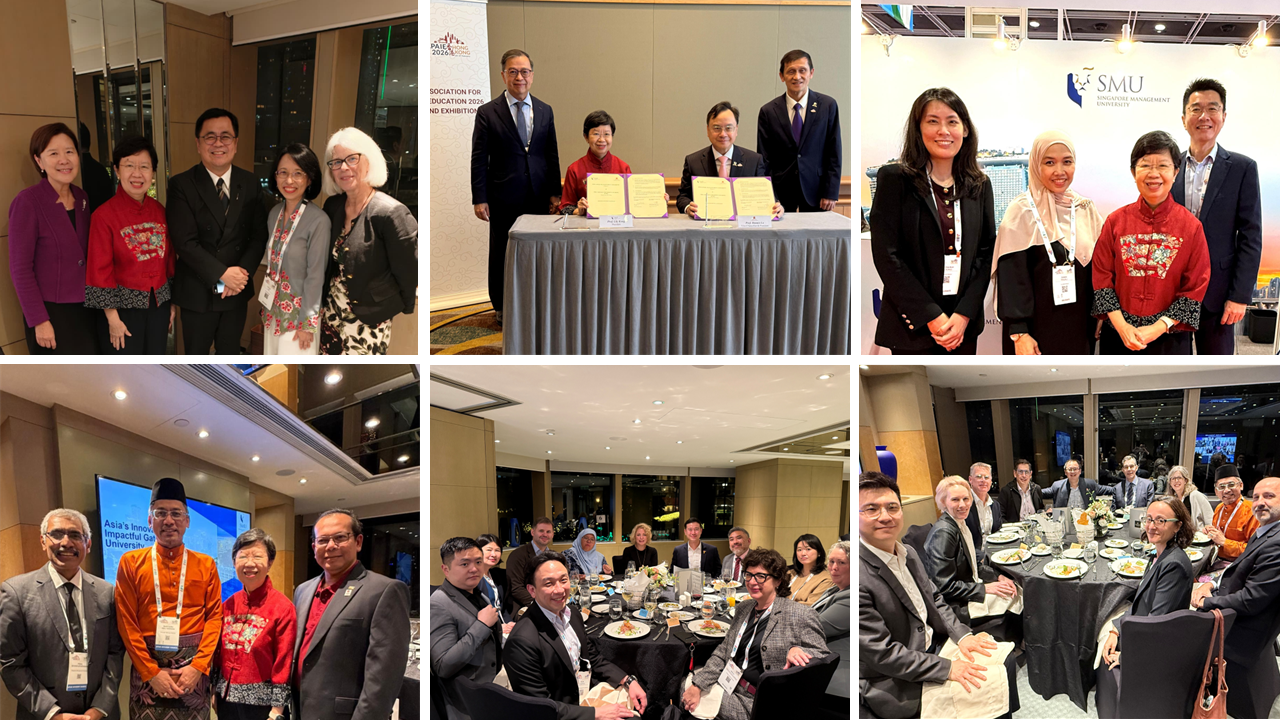
APAIE 2026 also saw SMU host a senior leaders’ dinner reception, where SMU Provost Professor Alan Chan outlined the university’s strategic plans towards 2030. The gathering brought together over 50 university leaders from 19 countries to continue the exchange of insights and thoughts on higher education and research, as well as discuss strategies for impactful universities, as they deepened relations and forged new collaborations.
Partnership appetite remains strong
Hosted by The Chinese University of Hong Kong and supported by other universities in Hong Kong, APAIE 2026 drew more than 3,300 delegates, underscoring sustained regional commitment to collaboration despite geopolitical uncertainty.
For SMU, the conversations in Hong Kong reinforced both urgency and direction: that trusted, values-driven partnerships will be central to advancing SMU2030’s ambitions across education, research and societal impact.
As global risks grow more interconnected, universities too are being called to work across borders and sectors with greater purpose. SMU’s engagements at APAIE 2026 signal its intent to remain an active convenor and partner in shaping solutions that extend beyond institutions to the wider region and world.