

Singapore, 12 March 2026 (Thursday) – As philanthropic capital grows and expectations for measurable impact intensify, the Singapore Management University (SMU) Business Families Institute (BFI) today unveiled a new framework calling for a fundamental rethink of how philanthropy is designed, funded and evaluated.
While donors are increasingly expected to address complex social and environmental challenges, most funding models remain geared towards short-term, measurable outcomes. This has created a growing funding gap for initiatives aimed at driving long-term systems change, with 72% of systems-change leaders receiving less than 25% of their funding as unrestricted support (Source). This gap constrains high-potential initiatives from adapting, strengthening and scaling sustainably.
Titled The Moonshot Approach to Philanthropy: A Framework From ‘What Ifs?’ to Action, the report, led by SMU’s Associate Professor of Strategy and Entrepreneurship Kenneth Goh, introduces a disciplined yet ambitious framework to enable philanthropists to support bold, long-horizon solutions capable of delivering sustained, large-scale impact.
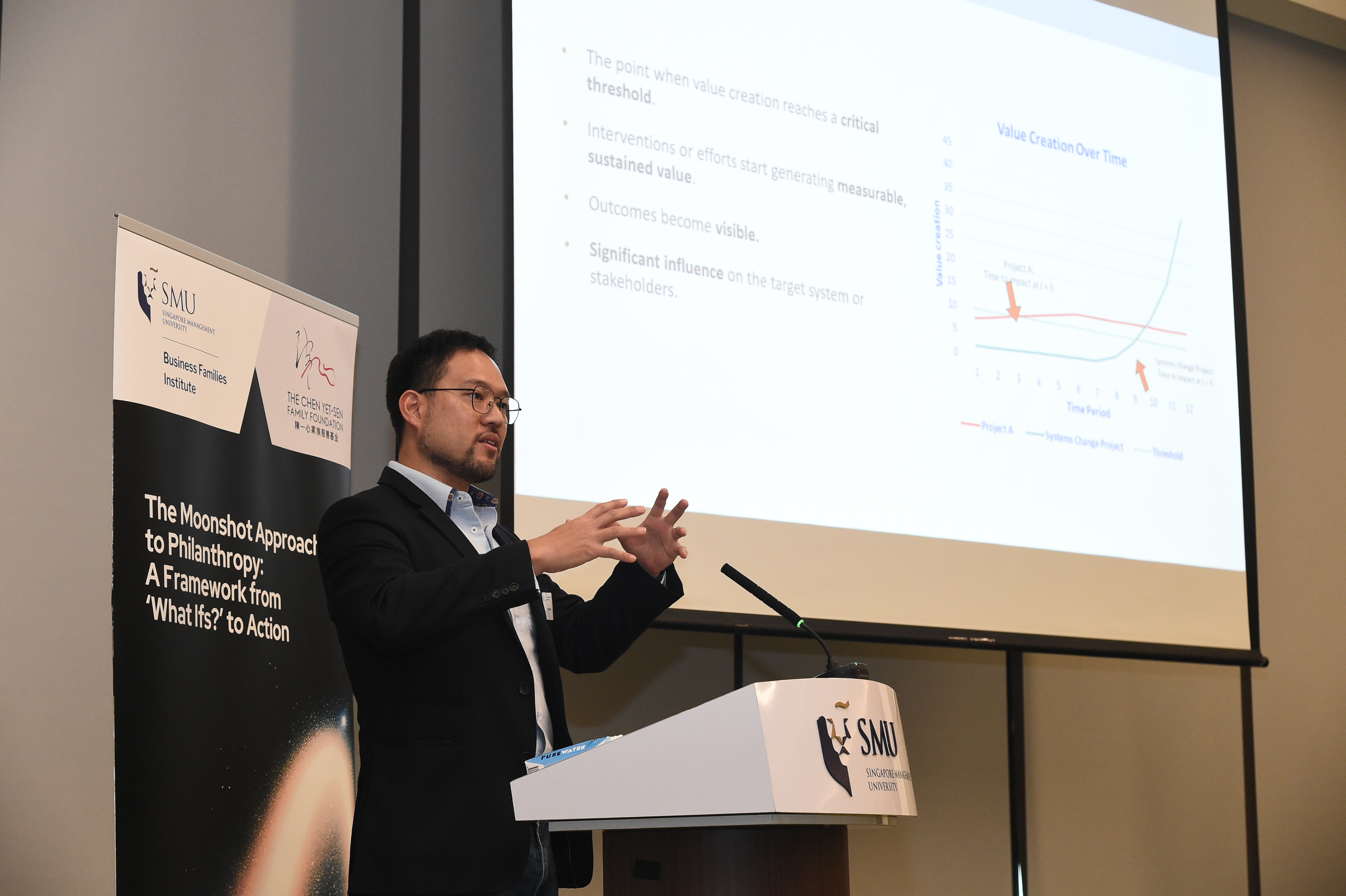
Beyond contributing to academic and practitioner discourse, the report, made possible through a research gift from The Chen Yet-Sen Family Foundation (CYSFF), is intended to directly influence philanthropic decision-making by providing funders with a structured way to assess, support and scale initiatives with long-term systems-change potential. By reframing how risk, time horizons and impact are evaluated, the framework aims to help philanthropists and foundations unlock support for underfunded, high-potential initiatives that are often overlooked under traditional funding models, and to encourage more sustained, system-oriented approaches to philanthropic capital deployment.
Associate Professor Kenneth Goh said, “Despite good intentions and significant resources, many philanthropic efforts struggle to achieve lasting systems change. The moonshot approach is intended to guide philanthropists to think differently about risk, time horizons and partnerships as they deploy capital at scale, while providing a practical way to support bold, high-potential initiatives responsibly amid long-term uncertainty.”
Practitioner insights and implementation tools
The report introduces original concepts and frameworks developed iteratively through in-depth interviews in 2025 with philanthropic practitioners, including leaders from CYSFF, Dawood Foundation, Li Foundation, Tan Chin Tuan Foundation, The Silent Foundation and ALBA Capital Foundation. Focus-group discussions were also organised with participants from Renmin University, the Gingko Foundation and the China Global Philanthropy Institute. These insights were synthesised to ensure that the framework reflects real-world philanthropic decision-making and systems-change practice.
The report outlines five defining elements of the moonshot approach to philanthropy:
- Exponential value creation, recognising that impact may accelerate only after an initial period of slow progress
- A ‘What If’ mindset, prioritising future possibilities over predictable short-term results
- Structured learning, enabling continuous adaptation
- Thoughtful risk-taking, supported by due diligence and staged funding
- Acting as catalysts rather than controllers, empowering changemakers without micromanagement
To help funders put this approach into practice, the report introduces a set of actionable tools designed to help philanthropists make better-informed funding decisions, balance immediate needs with long-term ambition, and build portfolios that can sustain impact even after philanthropic funding tapers off. They are:
- A Time-to-Impact concept for managing philanthropic portfolios across different impact horizons
- An Impact-Timing Matrix to align initiatives with appropriate risk and ambition levels
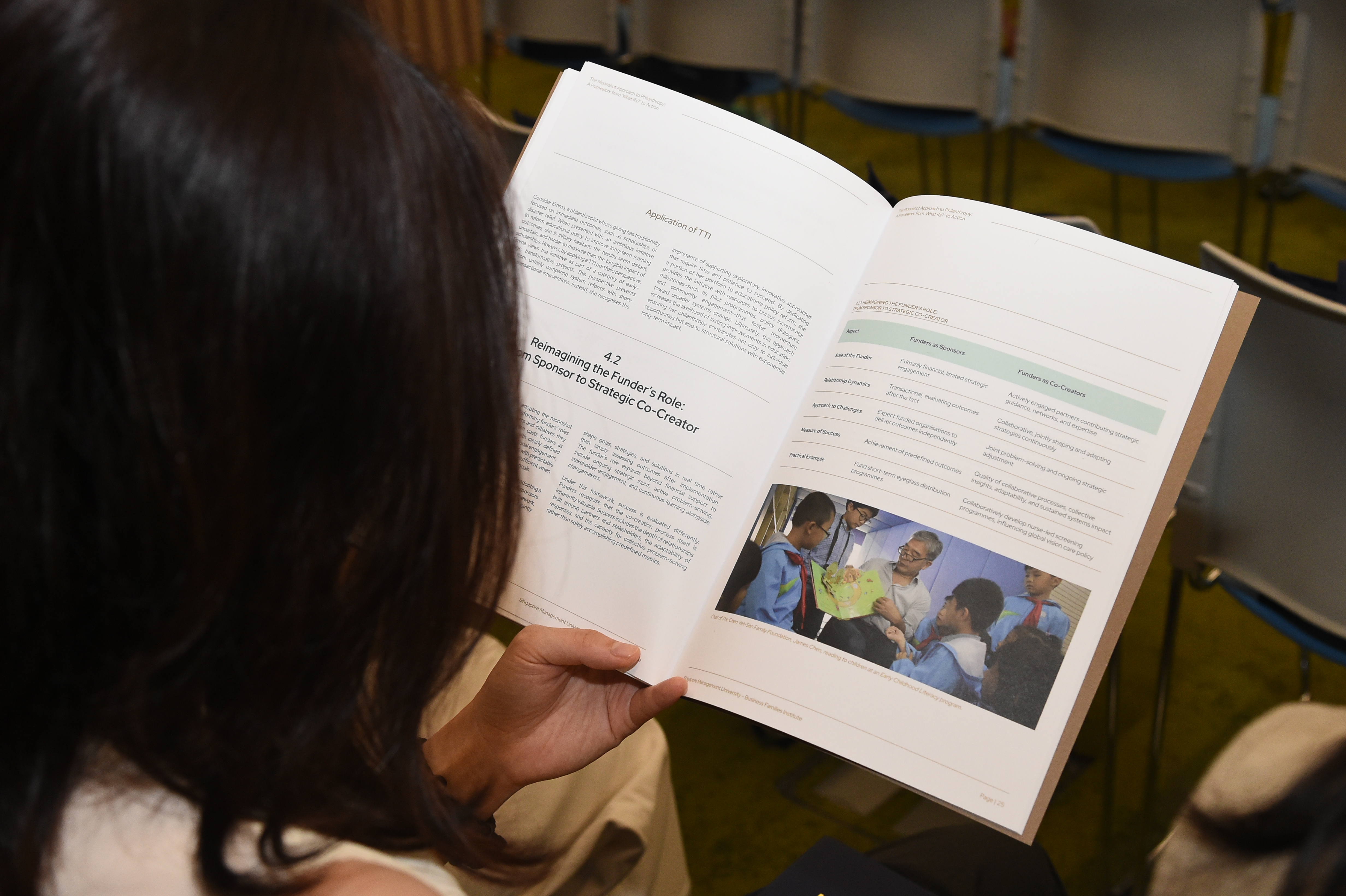
- Guidance on reimagining the funder’s role from sponsor to strategic co-creator
- A roadmap to guide initiatives from exploration to institutionalisation and sustained systems change
The report also highlights examples of ‘moonshot philanthropy’ in action. One such example is CYSFF’s Clearly initiative, which aims to tackle what its Chair, Mr James Chen, calls “the world’s largest unaddressed disability”: the 2.2 billion people worldwide who need eyeglasses but cannot access them. The Clearly initiative combined research, innovative models, and partnerships with governments, NGOs, and businesses to create scalable solutions. These efforts contributed to the first-ever UN resolution on vision in 2021, illustrating how patient, structured risk-taking can transform bold ideas into systemic, long-term impact.
James Chen, Chair of CYSFF, said, “The moonshot mindset is defined by curiosity, disciplined learning, and the courage to persist through long stretches of uncertainty. The role of philanthropy is to privatise failure and socialise success, funding the radical innovations that others are too cautious to touch. The findings from this report provide the practical roadmap for the next generation of donors to hold their nerve, embrace uncertainty, and pursue their moonshot.”

Despite their potential for outsized impact, initiatives like Clearly often struggle to secure sustained support through long periods of uncertainty.
Associate Professor Goh explained, “The report identifies why projects with transformative systems-change potential are often underfunded. These include psychological biases towards certainty, evaluation frameworks that privilege short-term metrics, and governance models that discourage experimentation.”
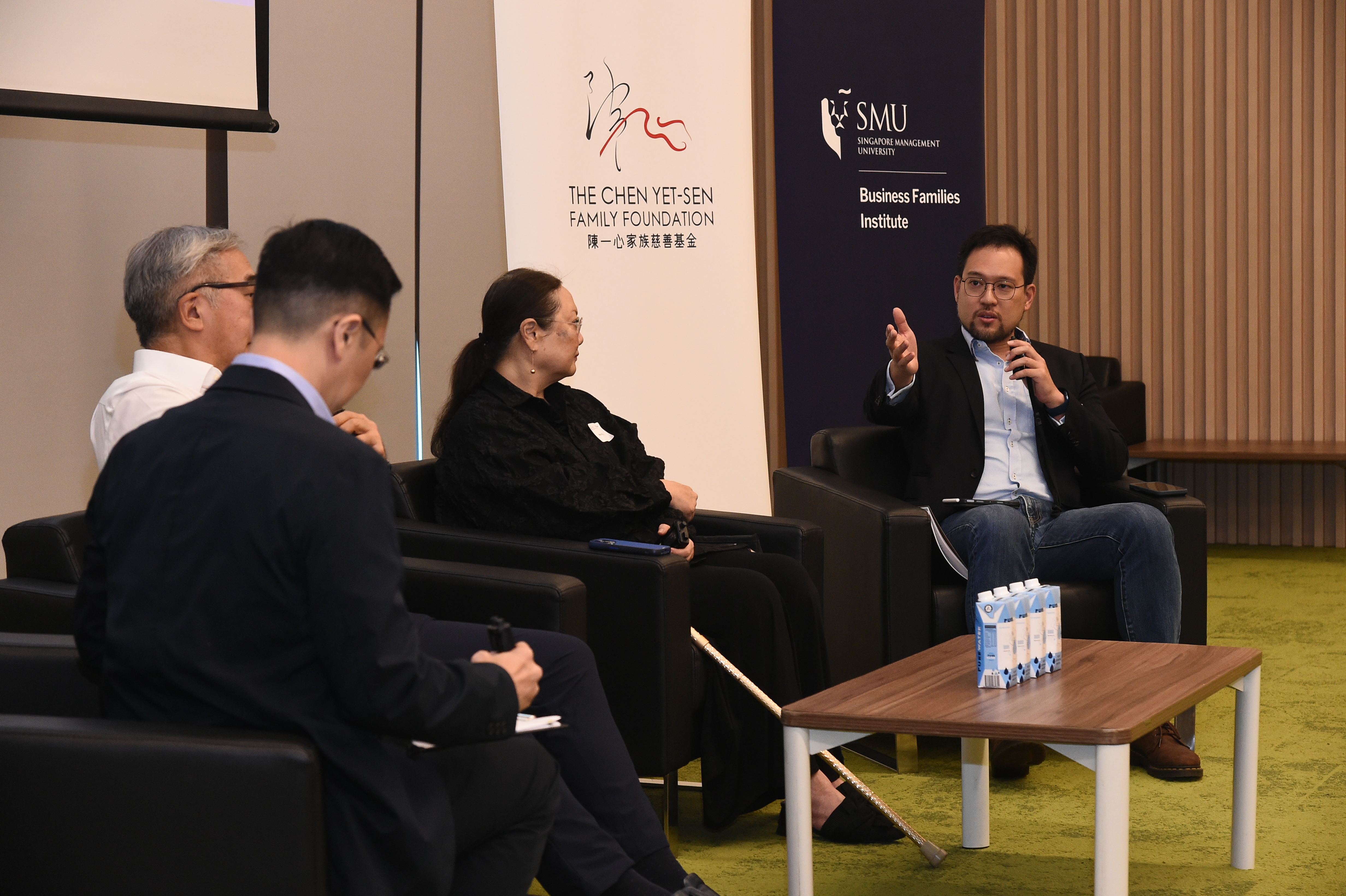
He added that the report will be particularly relevant for philanthropists, foundation leaders, intermediaries and eco-system partners navigating the tensions between accountability with ambition, and deploying capital in ways that can influence policy, markets and institutional behaviour over time.
SMU Associate Professor of Finance Mandy Tham, who is also Academic Director of BFI, said, “Across Asia, we are seeing a new generation of philanthropists who want their capital to shape systems, not just programmes. As a research and convening platform for business families, BFI translates insight into practice, equipping funders with actionable frameworks to make more thoughtful, long-term decisions that address complex social and environmental challenges.”
“In line with SMU’s broader commitment under its SMU2030 Strategic Plan, this report seeks to generate research with real-world relevance and societal impact, and to advance knowledge that informs practice, policy and positive change across Asia and beyond,” she added.
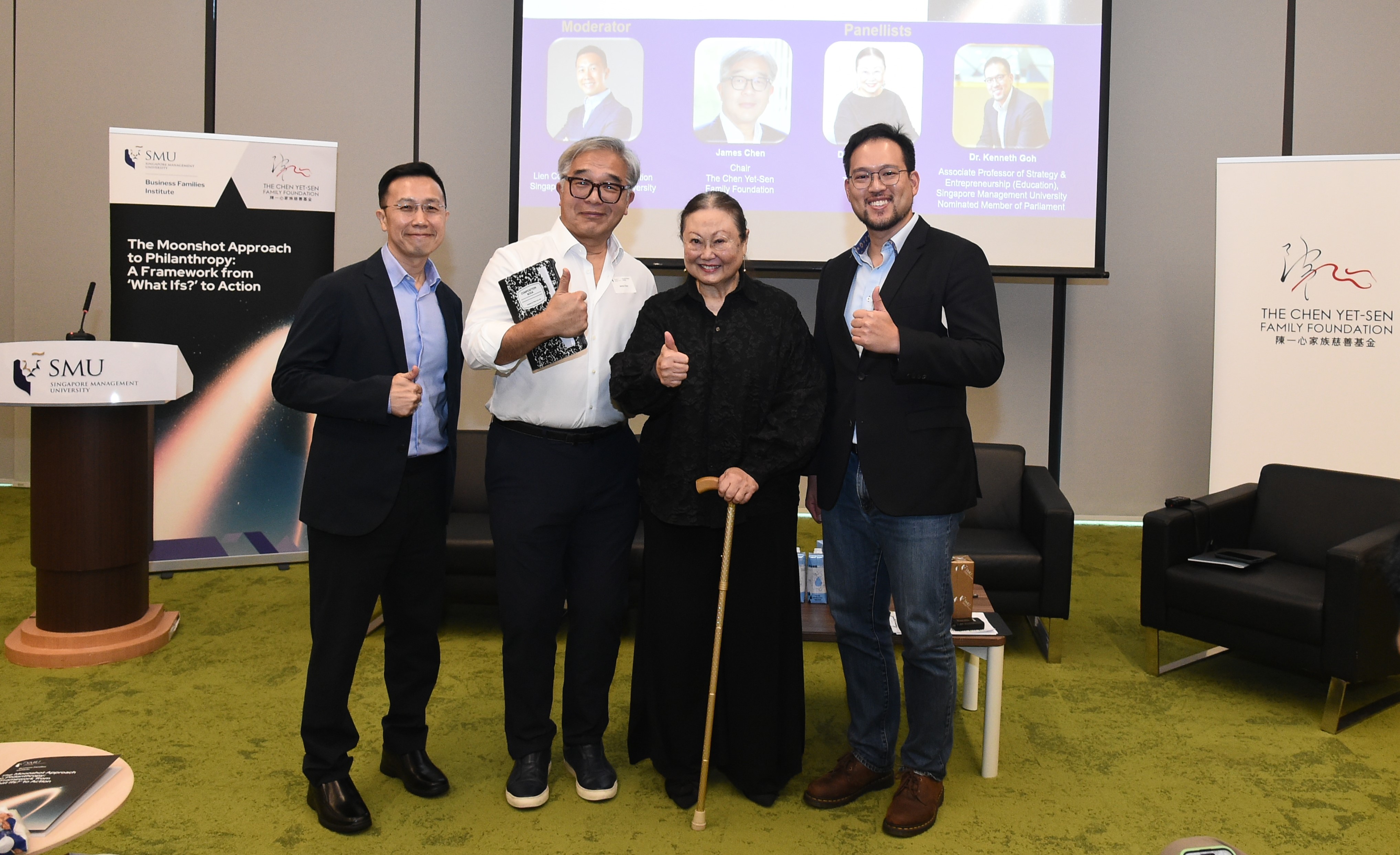
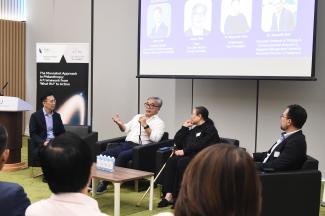
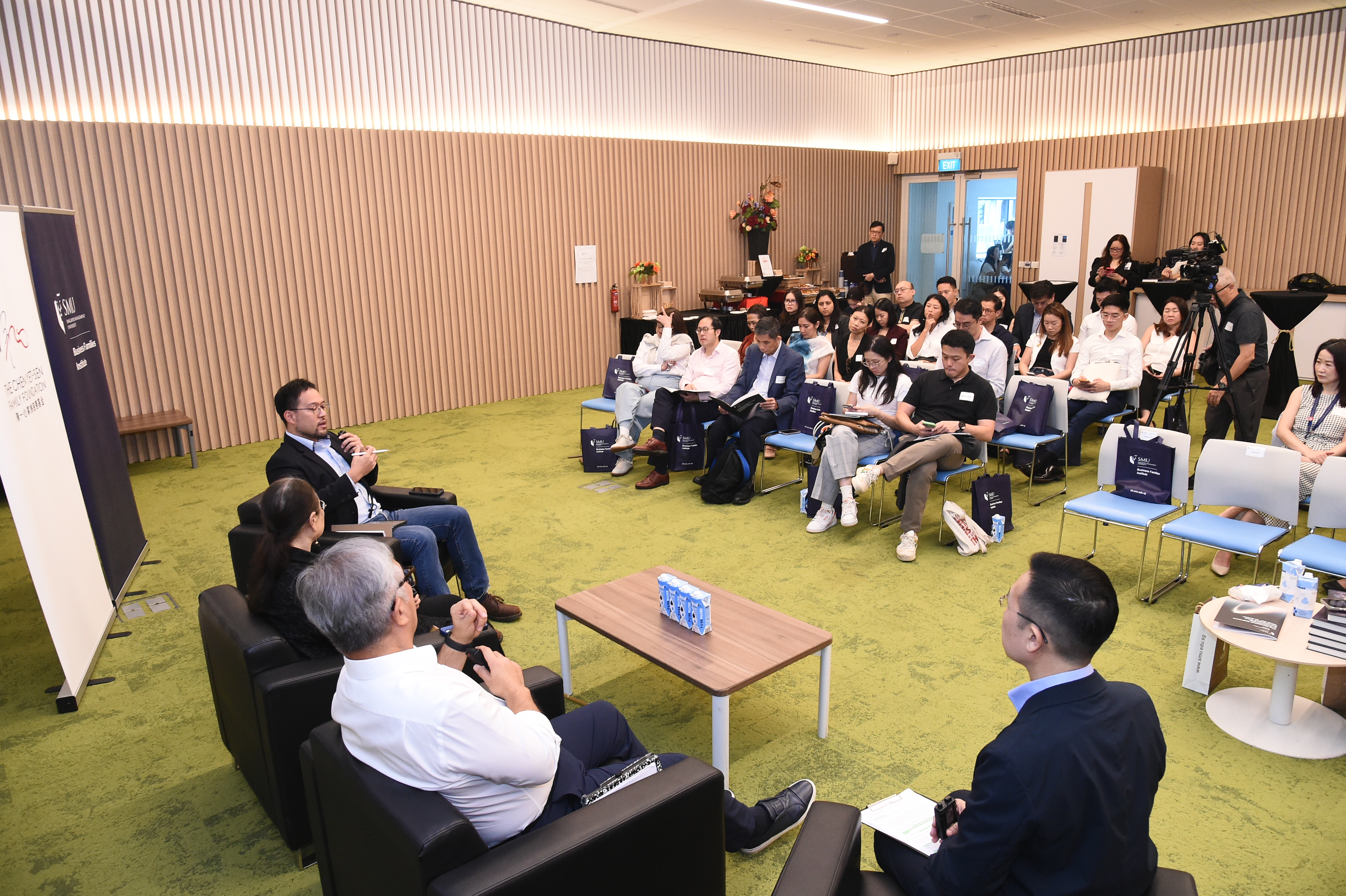
The launch, attended by about 50 invited guests from the philanthropy ecosystem, featured a panel with James Chen; Dr Mary Ann Tsao, Chairwoman of Tsao Foundation; and SMU’s Assoc Prof Goh, moderated by Steve Loh, Executive Director of the Lien Centre for Social Innovation at SMU. The discussion highlighted how the new framework can guide philanthropists in making bold, long-term decisions with sustained impact.
The full report can be downloaded from here.
- End -
Enclosure:
- Annex 1 – Chinese translation of terms and titles