

Singapore Management University (SMU) is sharpening its push into Asia’s fast-shifting growth markets, transforming SMU Thailand into a high-level convening hub where policymakers, corporate leaders and academics intersect, as part of its Vision 2030 drive to embed the university more deeply in key Asian cities.
The latest signal came through a three-day overseas immersion hosted for the inaugural cohort of the SMU–Peking University HSBC Business School Doctor of Business Administration programme held in January. Anchored in Bangkok, the immersion convened senior policymakers, conglomerate leaders and multinational executives in structured dialogue with scholar practitioners, reinforcing SMU Thailand’s role as a significant regional platform connecting academia, industry and government across ASEAN.
From Study Visit to Strategic Platform

Unlike traditional academic tours, the programme functioned as a curated leadership forum. Engagements ranged from Thailand’s investment authorities to boardroom level discussions at some of the region’s most influential corporations.
At the policy level, the cohort engaged with Thailand’s Thailand Board of Investment to unpack how free trade agreements, targeted tax incentives and sector prioritisation in areas such as new energy vehicles and digital infrastructure are reshaping ASEAN’s competitive map.
Leadership & Network Capital
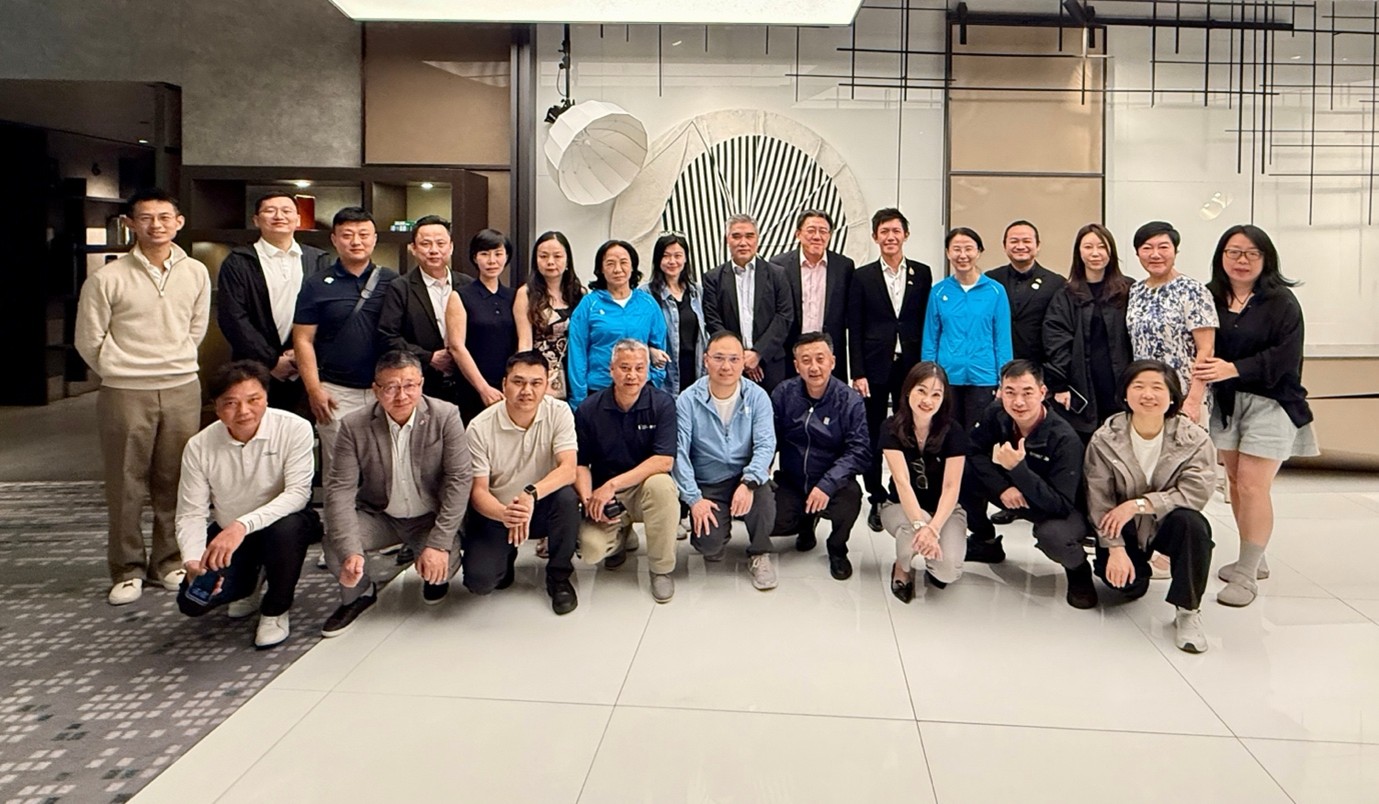
Complementing these policy discussions, the cohort joined a networking dinner with senior representatives from key trade chambers, including the Singapore-Thai Chamber of Commerce (STCC), Thai-Chinese Chamber of Commerce (TCC), Thai-Zhejiang Chamber of Commerce, and Thai-Fujian Business Association (Thai-Min Business Association). The dialogue offered a ground level perspective on the practical realities of cross border trade and investment.
Beyond the formal briefings, the session reinforced one of the immersion’s central objectives: strengthening Asia-based leadership networks. By bringing together policymakers, business leaders and scholar practitioners, the engagement translated regional theory into the lived dynamics of cross border commerce.
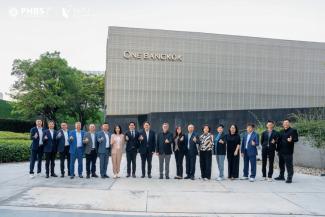
Corporate dialogues spanned leading regional and multinational enterprises, including PTT Exploration and Production (PTTEP), Bangkok Dusit Medical Services (BDMS), Frasers Property Thailand, One Bangkok and Charoen Pokphand Group (CP Group). From energy and healthcare to industrial real estate and digital ecosystems, discussions examined how major corporations are recalibrating growth strategies, embedding sustainability and deploying technology to stay competitive in an increasingly complex regional landscape.

The conversations were deliberately strategic. At PTTEP, discussions centred on balancing energy security with ESG commitments and digital transformation. At BDMS Wellness Clinic, executives outlined how precision, data driven healthcare is positioning Thailand as a medical tourism powerhouse amid Asia’s ageing demographics. At CP Group, Senior Chairman Dhanin Chearavanont shared his “Three Benefits” philosophy, arguing that sustainable multinational growth must first serve the country and its people before the company itself.
Collectively, these engagements transformed SMU Thailand into a live laboratory for examining how capital, policy and technology intersect across Southeast Asia.

Advancing SMU’s 2030 Asia Strategy
The Thailand immersion underscores a broader institutional shift. Under its Vision 2030 ambitions, SMU is moving from internationalisation to regional embeddedness. The strategy recognises that Asia’s next phase of growth will be defined not only by scale, but by cross border complexity, regulatory divergence and geopolitical recalibration.
SMU Thailand plays a pivotal role in this recalibration. Situated in one of ASEAN’s largest economies, Bangkok offers proximity to regional supply chains, infrastructure corridors and policy institutions. As a physical and intellectual gateway between Singapore and mainland Southeast Asia, the centre enables sustained partnerships rather than episodic engagement.
From a strategic standpoint, this model strengthens three capabilities:
- Leadership convening power — positioning SMU as a neutral academic platform for cross sector dialogue in politically sensitive and fast evolving industries such as energy transition and digital infrastructure.
- Practice based research — enabling doctoral and executive programmes to test theory against operational realities in real time.
- City level anchoring — embedding SMU within key Asian capitals rather than operating purely through bilateral agreements from Singapore.
Deepening Presence in Key Asian Cities
Bangkok joins a growing network of Asian touchpoints under SMU’s regionalisation agenda. The emphasis is not numerical expansion but strategic depth. By embedding in cities that function as commercial gateways, SMU enhances access to corporate leadership, sovereign institutions and regional enterprises that are shaping Asia’s next growth cycle.
This approach also reflects a pragmatic assessment of global higher education. In a multipolar environment marked by technological disruption and supply chain reconfiguration, universities that operate as static campuses risk marginalisation. Institutions that function as mobile conveners of policy, capital and talent will shape the next decade.
This approach also reflects a pragmatic assessment of global higher education. In a multipolar environment marked by technological disruption and supply chain reconfiguration, universities that operate as static campuses risk marginalisation. Institutions that function as mobile conveners of policy, capital and talent will shape the next decade.
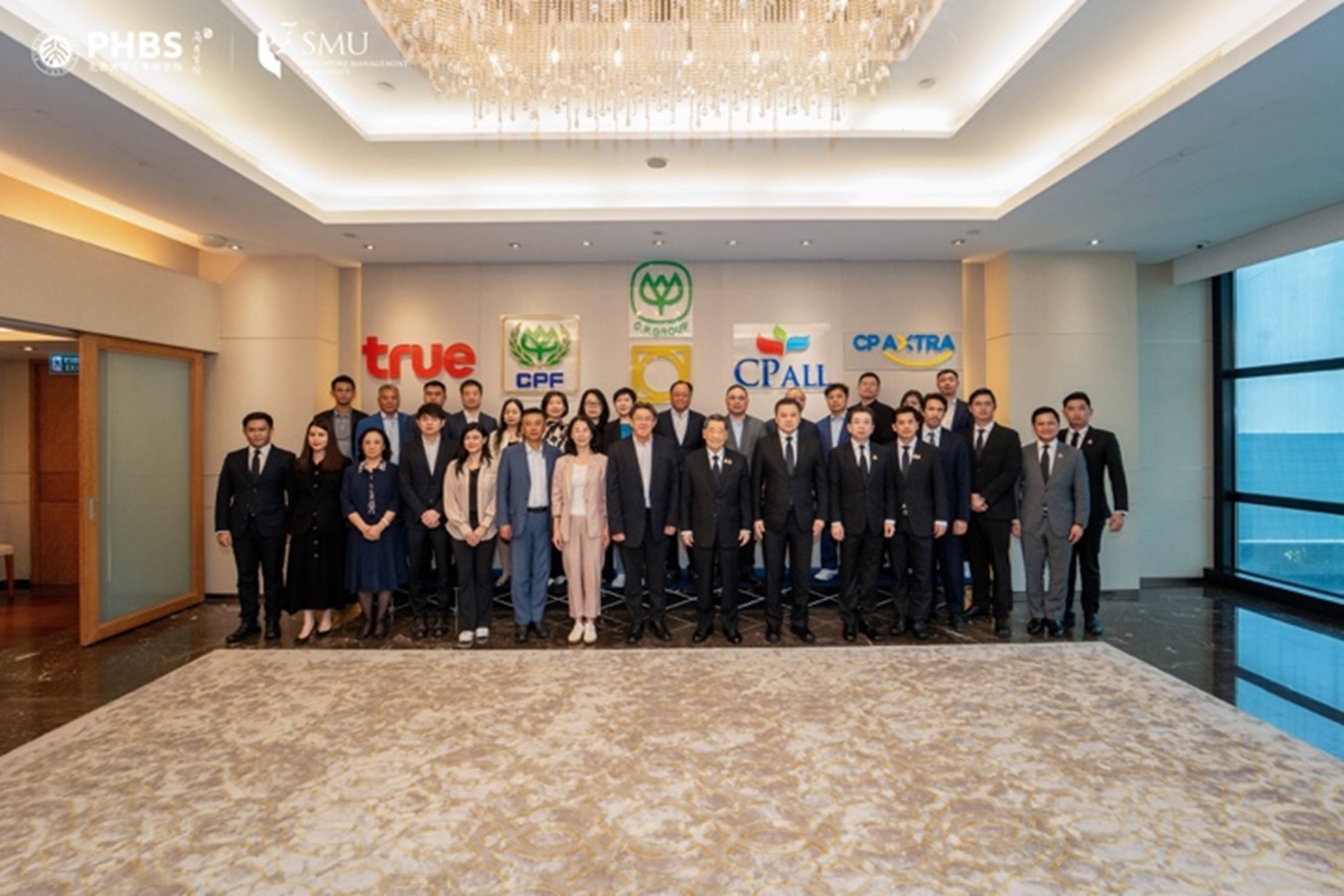
The SMU–PHBS DBA immersion illustrates this shift in action. It fused doctoral scholarship with live executive insight, regional geopolitics with boardroom strategy, and Singapore’s academic rigour with Thailand’s industrial dynamism.
In an era when Asia’s growth narrative is increasingly decentralised across multiple power centres, the question is no longer whether universities should internationalise. It is whether they can embed themselves meaningfully in the cities that will define the region’s future.