
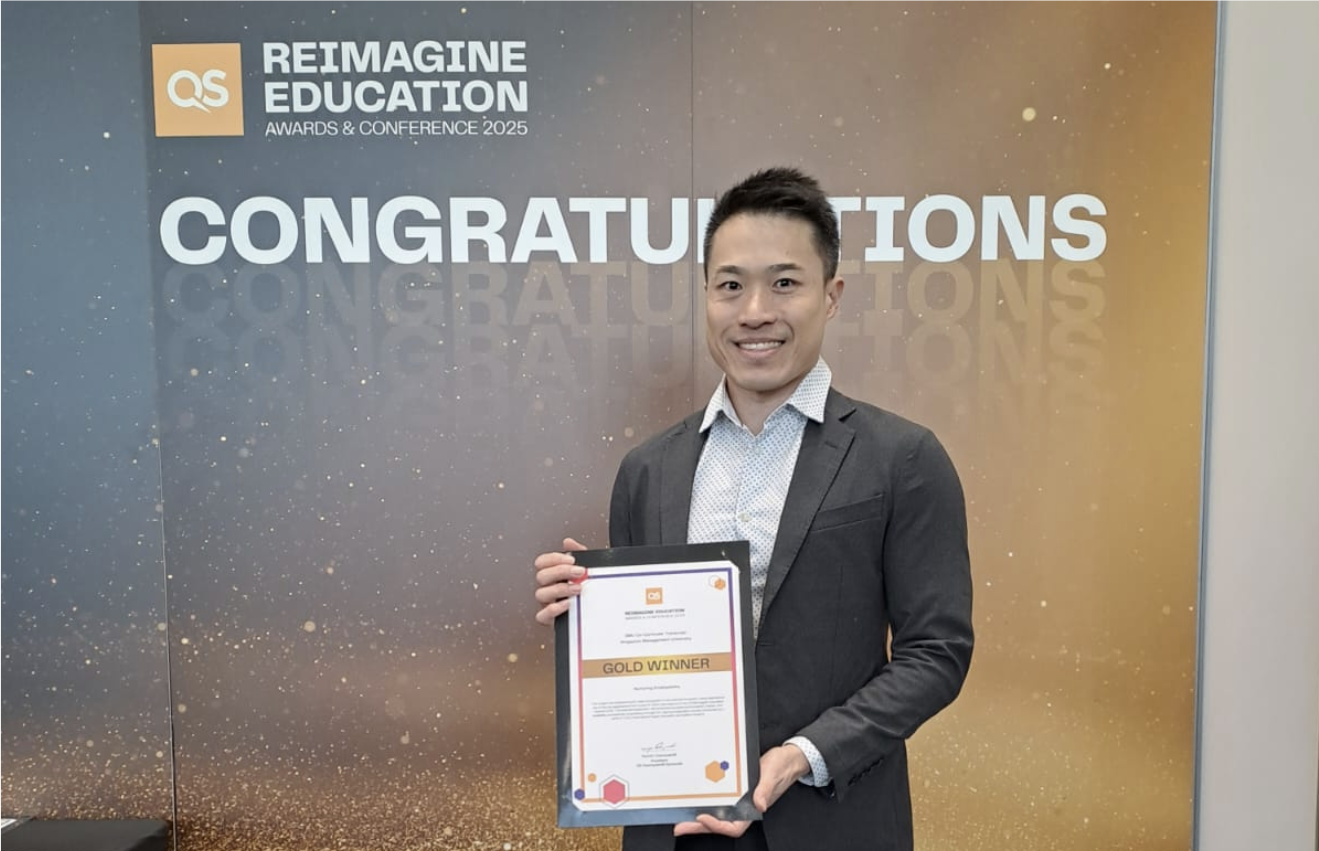
Singapore Management University (SMU) has been awarded the Gold Award in the Nurturing Employability category at the QS Reimagine Education Awards 2025, in recognition of its groundbreaking Co-Curricular Transcript (CCT), a pioneering University-wide initiative that makes visible the skills and competencies students develop through experiential, out-of-classroom learning. The win underscores the CCT’s innovation, real-world impact, and scalability.
The QS Reimagine Education Awards & Conference, held in London in December 2025, is a leading global platform that celebrates innovative and impactful approaches to teaching and learning that enhance student outcomes and employability.
The 2025 edition attracted over 1,600 submissions worldwide, rigorously evaluated across four rounds by a panel of higher education leaders and edtech experts.
CCT: A First for Singapore
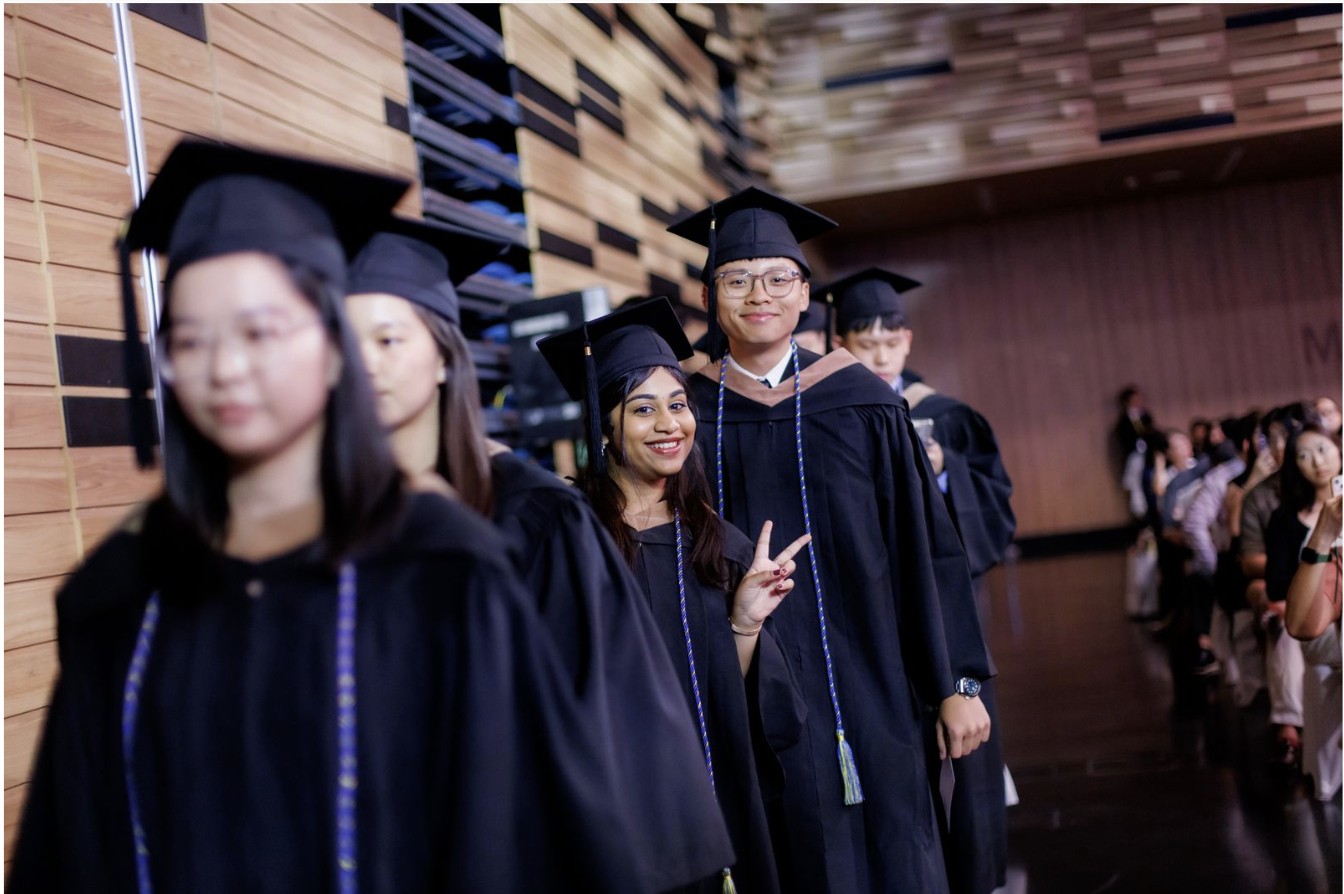
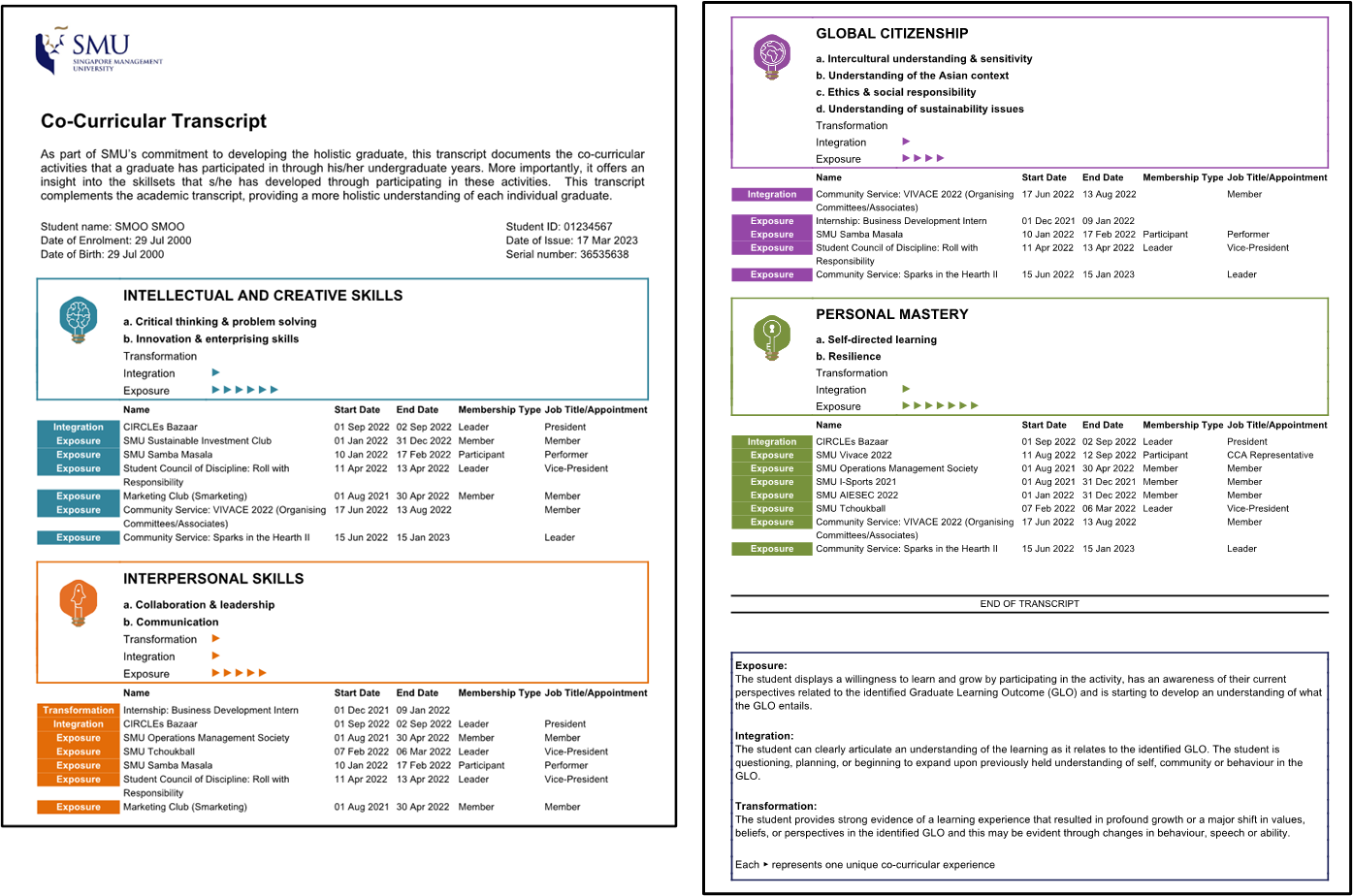
Developed by the Office of the Dean of Students (ODOS), the Co-Curricular Transcript is a first-of-its-kind initiative in Singapore that complements the academic transcript by formally documenting students’ engagement in co-curricular activities and the skills developed through these experiences. First awarded to the graduating Class of 2025, the CCT reflects SMU’s long-standing philosophy that meaningful learning occurs not only in the classroom, but also through leadership roles, community service, internships, student organisations and other experiential opportunities.
Distinct from conventional co-curricular records, the CCT is anchored in SMU’s Graduate Learning Outcomes and maps student development across three progressive levels — Exposure, Integration, and Transformation — signalling increasing depth of engagement and learning impact. Students who demonstrate significant growth in specific outcomes may also earn digital badges, further strengthening the visibility and credibility of their skill development.
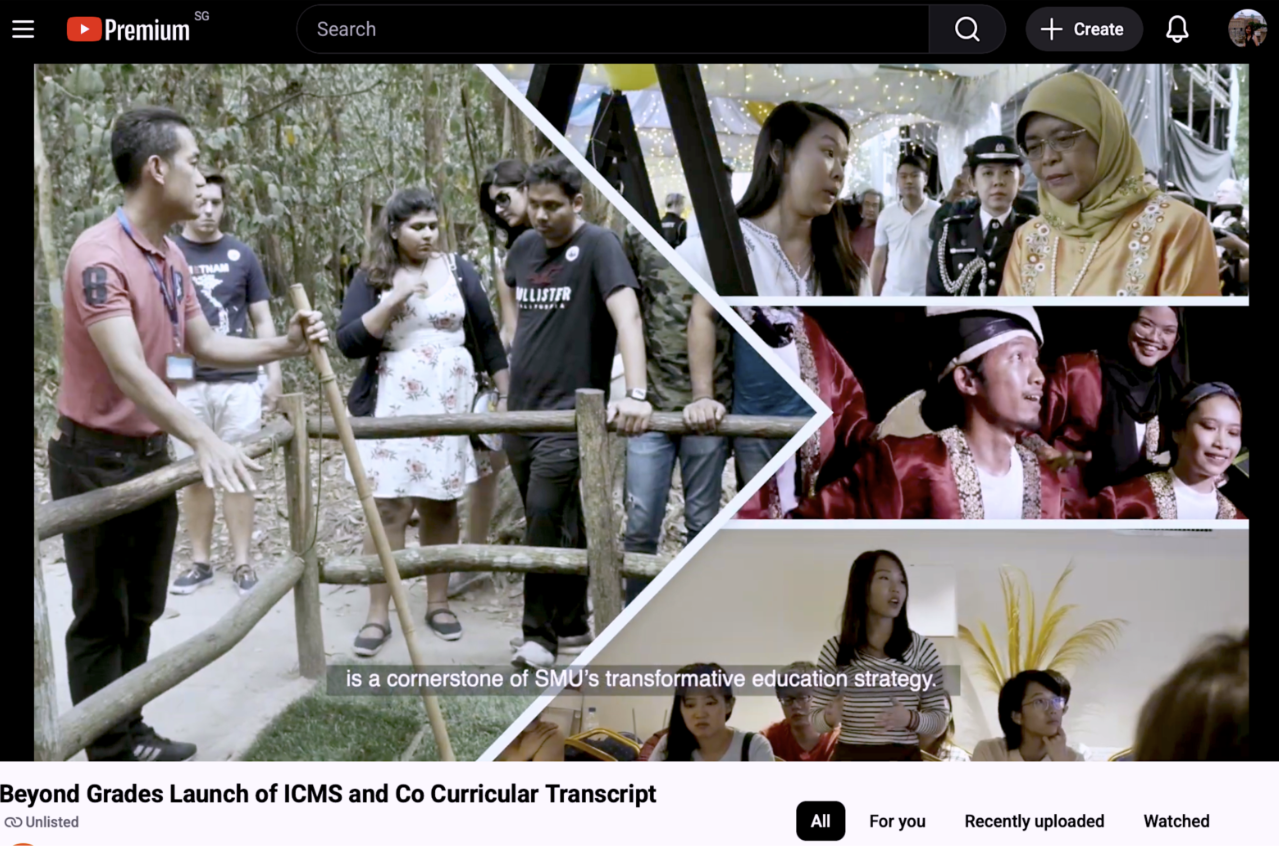
Learn how the Co-Curricular Transcript is transforming the way SMU students document and articulate their learning. Watch the video here.
Empowering Students to Articulate Their Growth
SMU President Prof Lily Kong emphasised the importance of this initiative when the CCT was launched in 2023: "We align learning objectives from the various co-curricular platforms to these Graduate Learning Outcomes and promote a culture of meaningful reflection, with the aim of guiding students in deepening and documenting their learning. In so doing, we empower students to enhance self-awareness and articulate areas of personal growth."
At the heart of the initiative is the Integrated Co-Curricular Management System (ICMS), a digital platform that supports participation tracking, guided reflection and mentor feedback. Through this system, students are guided to make intentional co-curricular choices, reflect meaningfully on their experiences, and translate learning into demonstrable competencies.
Grounded in Mezirow's Transformative Learning theory, the CCT shifts the focus from learning that is 'taught' in the classroom to learning that is 'caught' through lived experience – capturing not just what students have done, but how those experiences have shaped their readiness for life and work.
This structured approach enables students to develop greater self-awareness, articulate their learning with confidence, and engage more meaningfully in career conversations. At the same time, it provides employers with verified insights into graduates’ capabilities beyond academic grades, addressing a long-standing gap between university credentials and workplace expectations.
Early feedback indicates strong student support for this approach. In a pilot survey conducted in 2022, over 80 per cent of students agreed that the co-curricular learning framework made their involvement more purposeful, while nearly all respondents supported having a formal co-curricular record issued upon graduation. From 2025 onwards, the Co-Curricular Transcript will be issued to every graduating undergraduate cohort, benefiting approximately 2,000 students each year.
Recognising the Team Behind the Innovation
The success of the Co-Curricular Transcript is the result of years of dedicated effort by a passionate team. Alvin Sim, Head of Co-Curriculum Development and Student Care & Support Services, led the project from its inception in 2020, working closely with Prof Paulin Straughan, former Dean of Students, who served as project advisor and has been instrumental in championing holistic education at SMU. Toh Xiao Wee, Project Manager, played a key role in bringing the initiative to fruition.
Prof Straughan noted: "SMU has always been at the forefront of integrating co-curricular activities into the higher education experience. We believe that education goes beyond the classroom — experiential learning through community service, internships, and global experiences enables students to apply academic knowledge in real-world settings while fostering both personal and professional growth."
Setting New Benchmarks for Higher Education
The CCT has garnered significant interest from institutions worldwide. Over the past 24 months, the team has engaged with counterparts from the National University of Singapore, Singapore University of Social Sciences, Singapore University of Technology and Design, as well as international institutions including Mississippi State University (USA), De La Salle University (Philippines), Qatar Foundation Higher Education, University of Brunei Darussalam, and NEOM (Saudi Arabia), among others.
This win adds to SMU's growing list of accolades at the QS Reimagine Education Awards. In 2024, SMU's Industry Project-Based Experiential Learning (INDEX) programme, also known as SMU-X, won the Gold Award for Innovation in Business Education — demonstrating SMU's consistent commitment to pioneering transformative approaches to education.
Learn more about the Co-Curricular Transcript: https://www.smu.edu.sg/campus-life/student-experience/co-curriculum-development/co-curricular-transcript-icms.
Read about the Co-Curricular Symposium 2025: https://news.smu.edu.sg/news/2025/05/05/empowering-career-ready-graduates.