

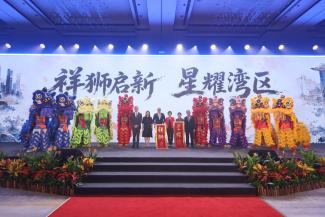
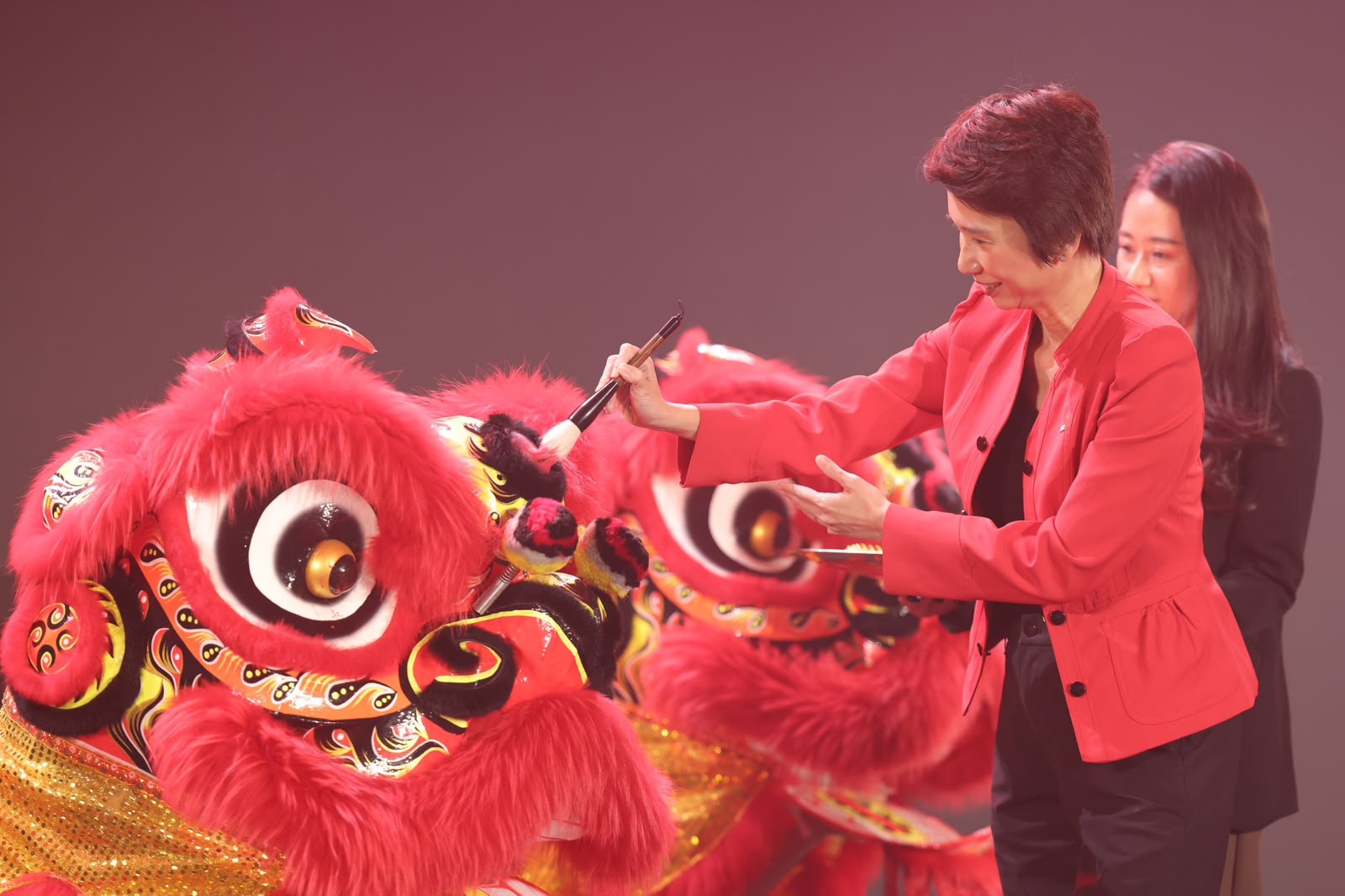
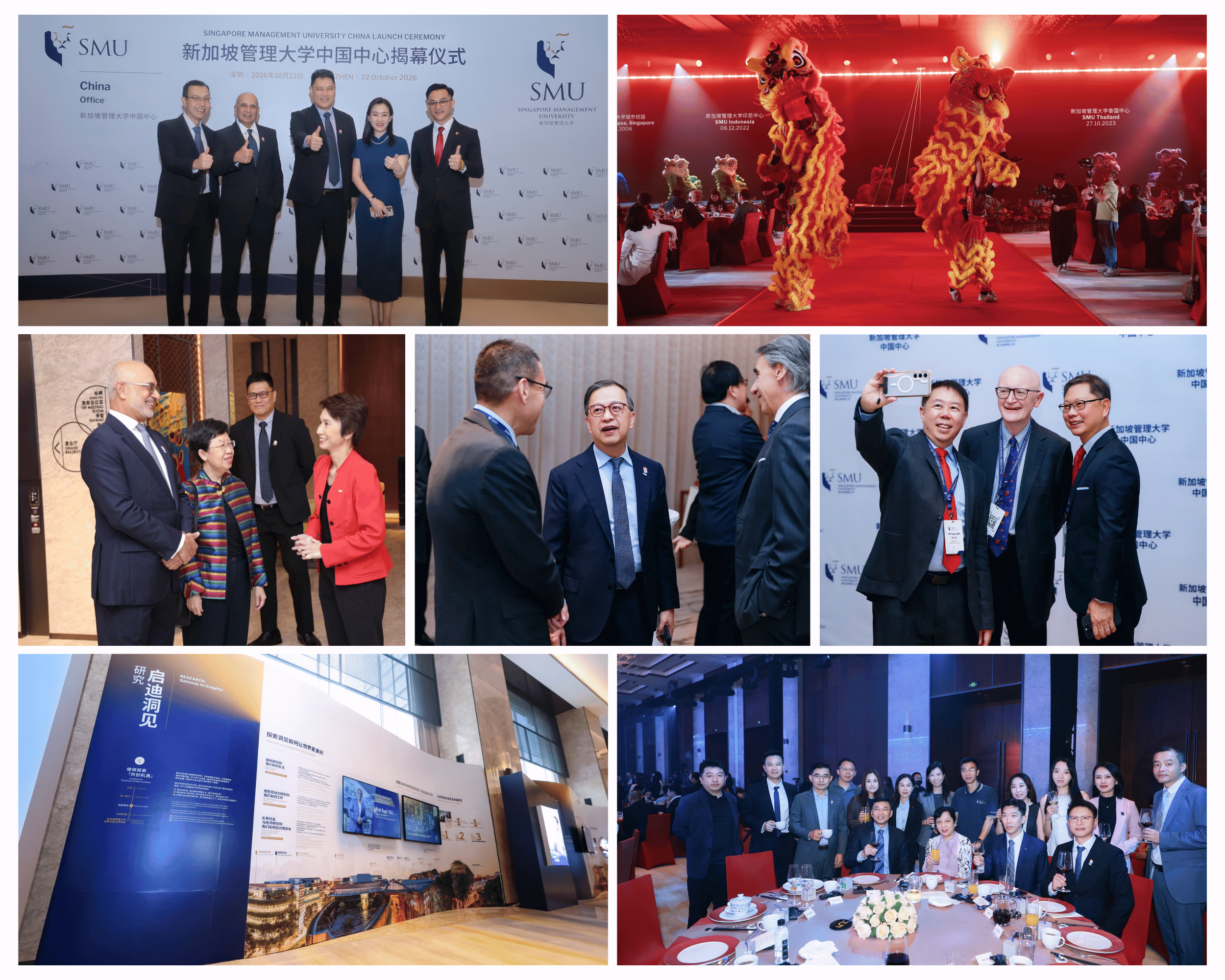
Shenzhen, 23 October 2026 (Friday) – Singapore Management University (SMU) launched SMU China in Shenzhen on 22 October in the presence of Guest of Honour Ms Low Yen Ling, Senior Minister of State, Ministry of Energy, Trade and Industry and Ministry of Culture, Community and Youth, Singapore. SMU China is the University’s first centre in China; it extends SMU’s regional presence beyond Southeast Asia, complementing its centres in Indonesia, Thailand and Vietnam.
At the launch ceremony held at Raffles Shenzhen Hotel, also attended by Ms Cindy Wee, Consul-General of Singapore in Guangzhou, the University announced four memoranda of understanding (MOUs) to connect the Greater Bay Area with Singapore and Southeast Asia through research, talent and enterprise.
The MOUs are with: ‘Go Global’ Global Service Centre; Shenzhen Foundation for International Exchange and Cooperation; CIIC International Business Development Co. Ltd.; and The Chinese University of Hong Kong (CUHK), Shenzhen. (Please refer to Annex 1 for more details.)
Why Shenzhen, why now
In his welcome remarks, SMU Chairman, Mr Piyush Gupta, said that Asia is helping to shape the next phase of global growth, and universities that aspire to understand and contribute to Asia’s future must be present where that change is taking place. Shenzhen, he noted, brings together leading technology companies, research institutions and entrepreneurs. It is also connected to the Greater Bay Area, China and the global economy, making it a natural base for SMU’s engagement with China.
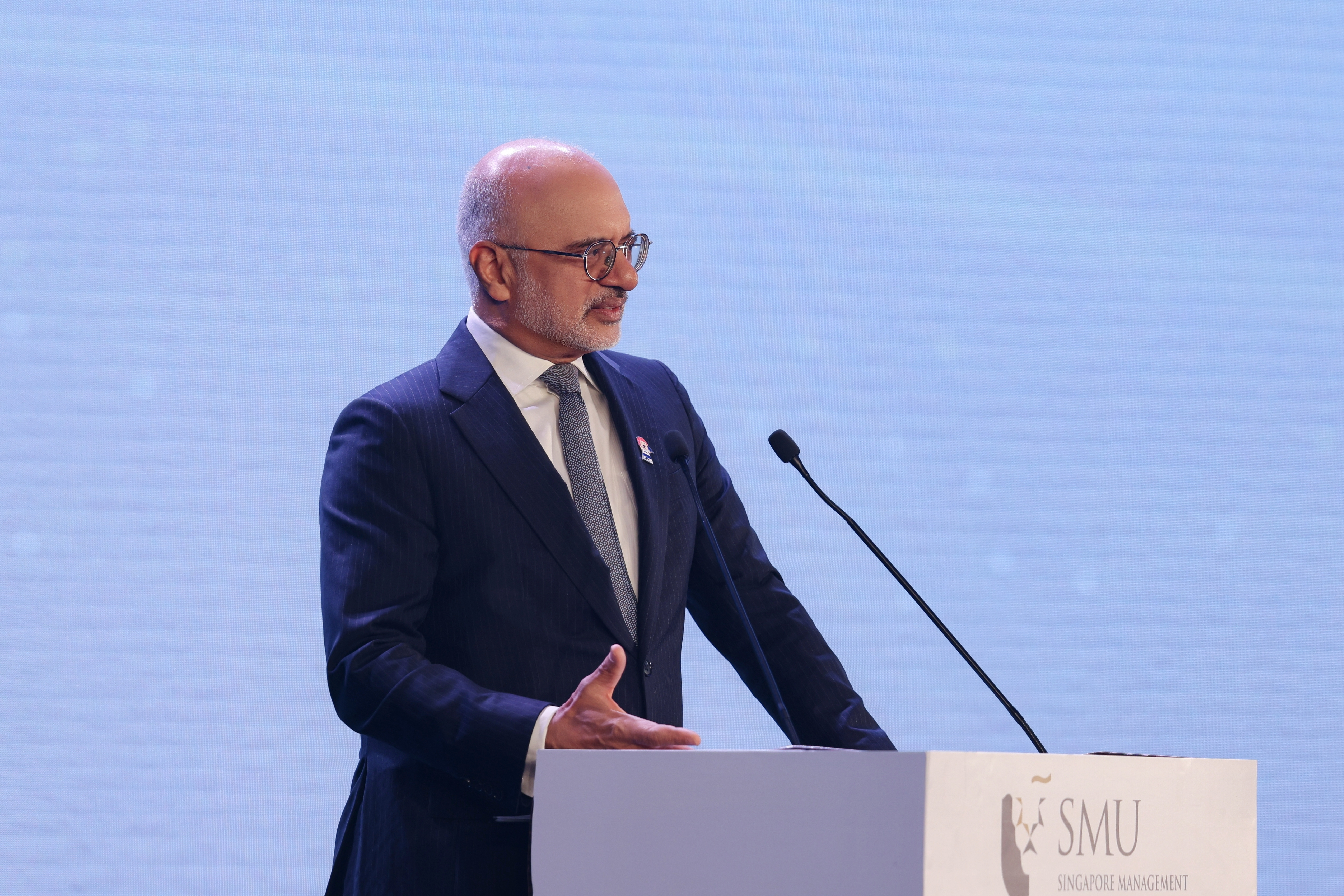
“SMU China will be a gateway into China and a bridge to Southeast Asia,” said Mr Gupta. “Physical presence matters. Universities cannot fully understand changing economies and evolving societies from a distance. Being on the ground allows us to listen more closely, learn more deeply and contribute more meaningfully,” he added.
The timing reflects SMU's maturing relationships in China and growing two-way interest between China and Southeast Asia. More Chinese enterprises are looking to Southeast Asia, while many Southeast Asian businesses are looking to China and the Greater Bay Area. SMU China will help organisations on both sides understand each other's markets, systems and ways of working.
Building on long-standing ties
The new centre builds on relationships developed over many years. SMU collaborates with 60 universities in China and has 7,000 alumni in China. Fudan University and Zhejiang University are among its strategic partners.
In Shenzhen, SMU runs joint Doctor of Business Administration (DBA) programmes with Peking University HSBC Business School and CUHK, Shenzhen. SMU’s other joint DBA partners in China include Fudan University, Zhejiang University, Shanghai Jiao Tong University and Cheung Kong Graduate School of Business.
Since 2011, more than 850 SMU students have interned with over 350 companies in China. About a fifth of SMU's Asia-focused research is on China.
SMU China, helmed by Mr Victor Huang as its Country Director, is part of SMU's network of overseas centres, alongside SMU Indonesia, SMU Thailand and SMU Vietnam. It delivers on SMU2030, the University’s five-year strategic plan, which commits SMU to deepening its presence in key Asian cities.
SMU China will connect, create and contribute
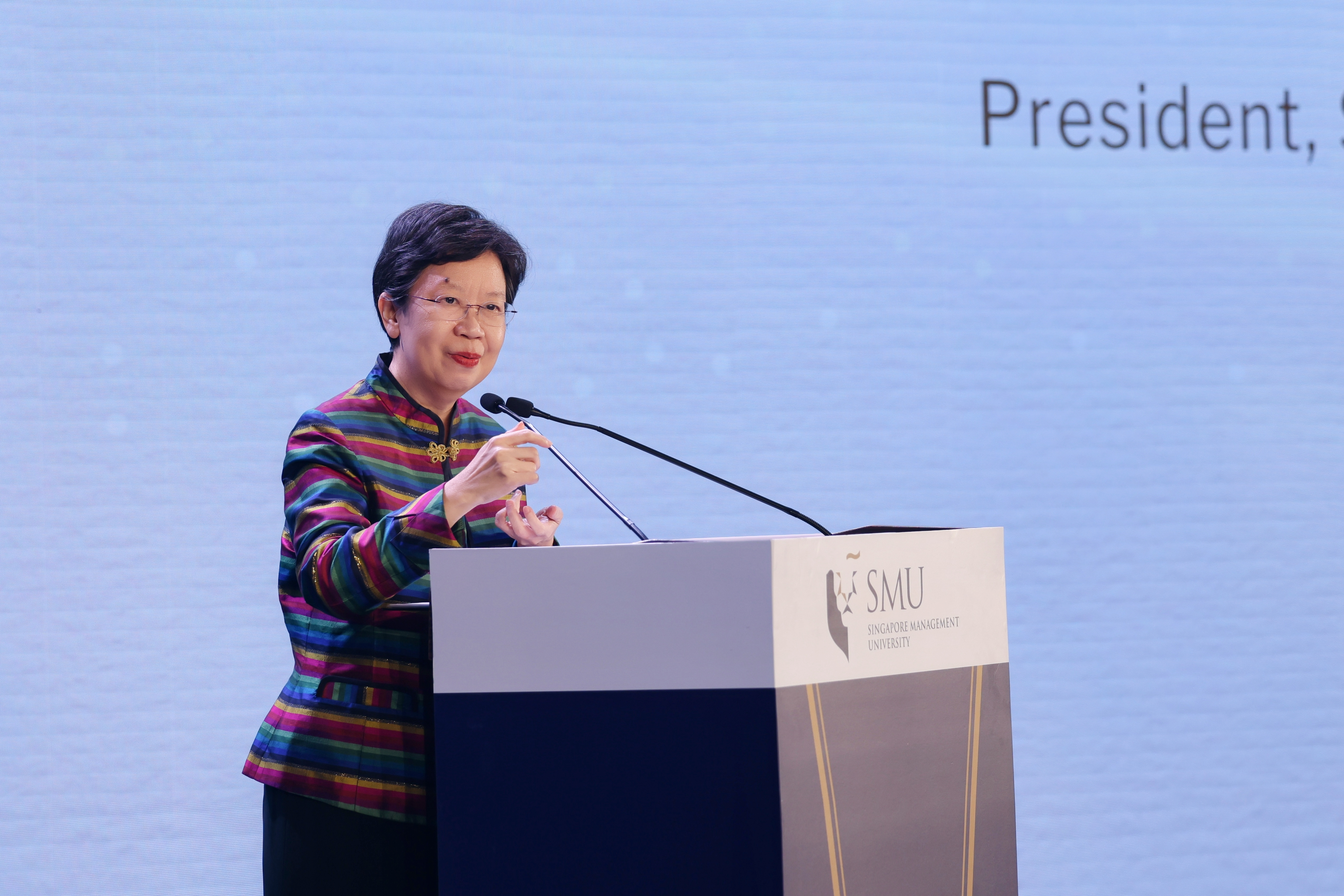
SMU President Professor Lily Kong summed up the centre's role in three words: connect, create and contribute. SMU China will connect organisations in China and Southeast Asia, turning partnerships into internships, jobs, executive development and business relationships. It will create opportunities for students to understand China from within China. And it will contribute by bringing what SMU learns in Shenzhen back into its classrooms, case studies and research. SMU already teaches more than 30 case studies on Chinese enterprises.
"SMU brings together management, the social sciences and technology. What we care about most is preparing people who are Asia-ready: who do not simply know about Asia, but can work across it, understanding its markets, its systems and its people," said Prof Kong. "The Greater Bay Area needs such talent, and so does Southeast Asia. That is why we have come to Shenzhen, and why we intend to stay for the long term."
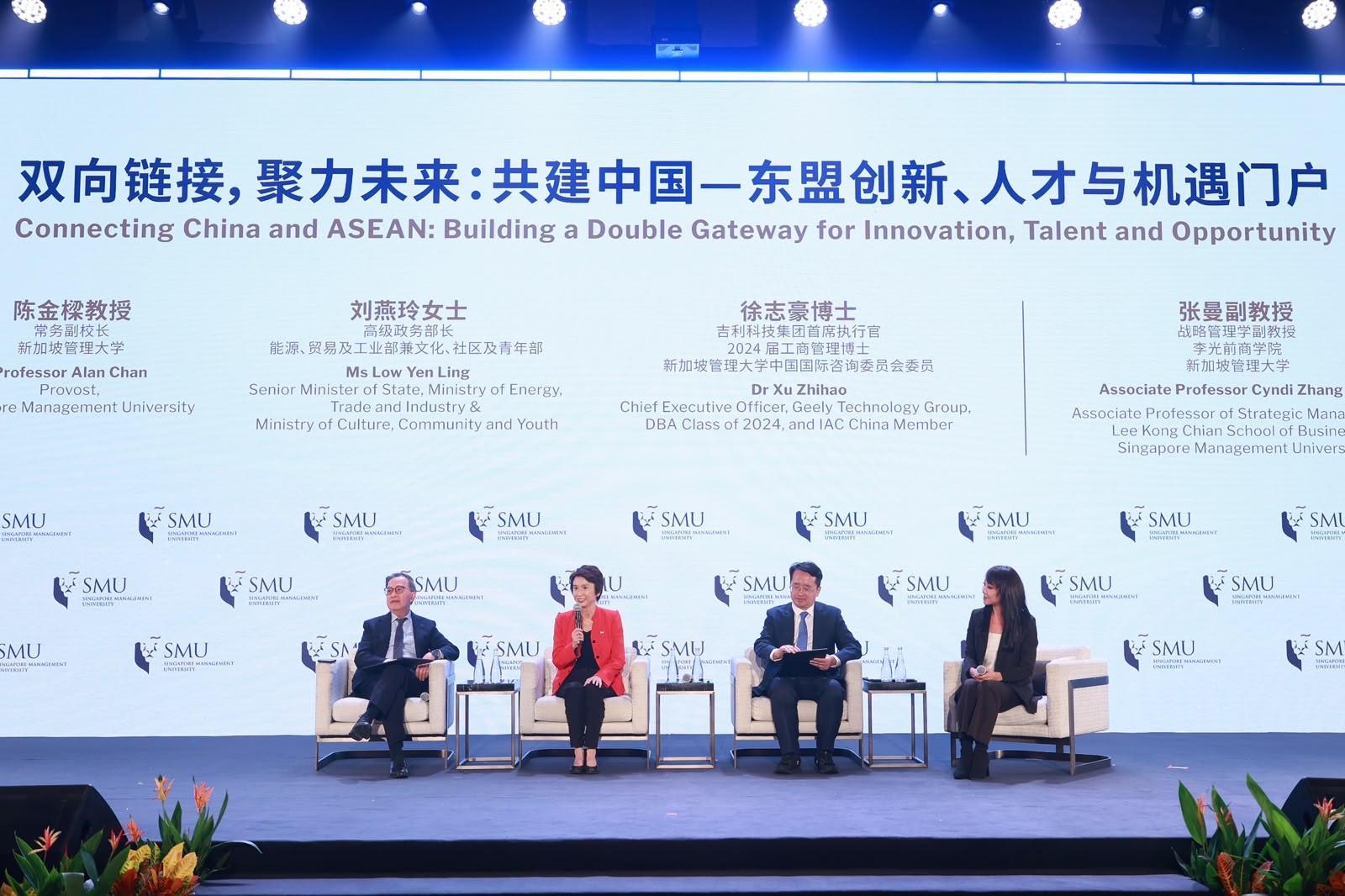
The launch programme, which was attended by about 250 guests, comprising university and industry partners, donors, alumni, staff and students, also featured a panel discussion themed Connecting China and ASEAN: Building a Double Gateway for Innovation, Talent and Opportunity, with Ms Low; Dr Xu Zhihao, CEO of Geely Technology Group, a member of the SMU International Advisory Council China and an SMU alumnus; and SMU Provost Professor Alan Chan. The speakers explored the topic through the lenses of policy, business and academia, including how Chinese enterprises can expand into Southeast Asia through Singapore and what universities add to that bridge. The discussion was moderated by Associate Professor of Strategic Management Cyndi Zhang, who is also Academic Director of SMU’s Chinese EMBA programme.
SMU China is located in China Resources Tower in Nanshan District (also known as the Spring Bamboo or Chunsun), Shenzhen’s hub for technology and enterprise. It will be SMU’s principal point of contact in China for prospective students, universities and organisations, and will introduce businesses expanding into Southeast Asia to SMU’s centres in Indonesia, Thailand and Vietnam. In doing so, it strengthens SMU’s role as a gateway between Asia and the world.
- End -
Enclosures:
- Welcome remarks by Mr Piyush Gupta, SMU Chairman
- Speech by Professor Lily Kong, SMU President
- Speech by Senior Minister of State Ms Low Yen Ling (here)
- Annex 1: MOUs announced at the launch ceremony