
As sustainability reporting moves from the setting of standards to implementation, the accounting profession is facing a broader challenge: how to turn increasingly complex sustainability information into data that businesses, investors and other stakeholders can trust.
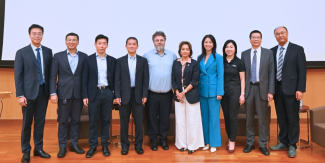
That question was at the heart of the 2nd Singapore-China Accounting Leaders Dialogue, which brought together close to 200 leaders from the accounting profession, academia and business communities in Singapore and China at Singapore Management University (SMU).
Jointly organised by SMU, the Institute of Singapore Chartered Accountants (ISCA) and Xiamen National Accounting Institute (XNAI), the Dialogue focused on “Sustainability Reporting in Practice: Standards, Assurance and the Future of the Profession”.
For SOA, the Dialogue reflects the school’s role as a platform for bringing academic research and professional practice together on emerging issues facing the accounting profession.
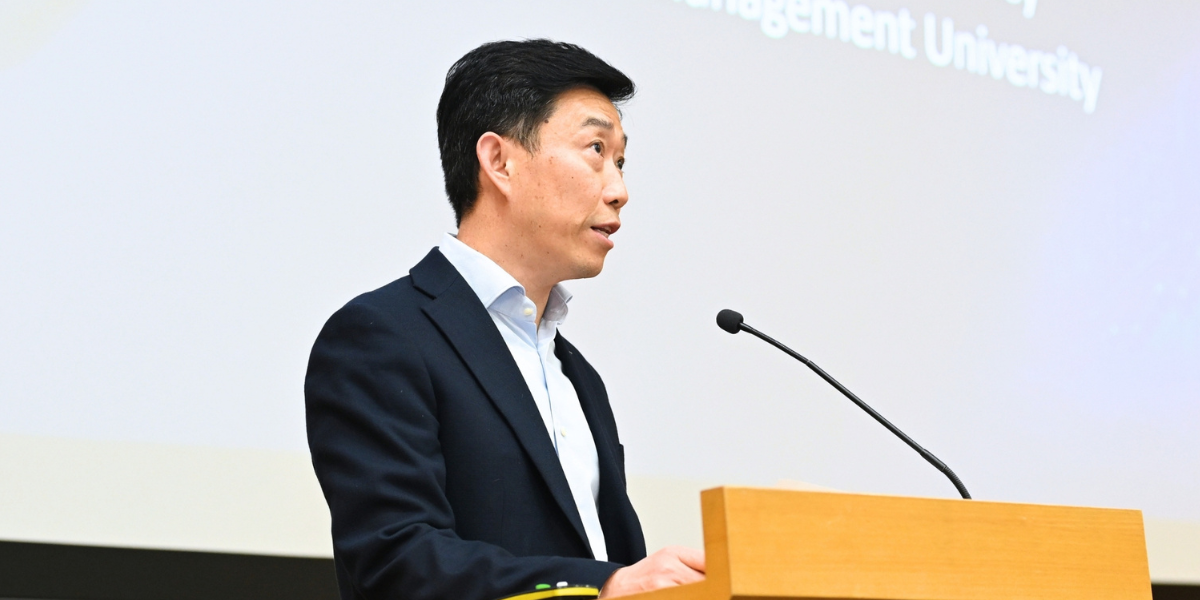
The discussions moved beyond the question of what sustainability standards require to examine the practical implications for organisations: how sustainability data is generated and governed, how disclosures can be assured, and how accountants will need to adapt as sustainability information becomes increasingly relevant to business and capital-market decisions.
From disclosure requirements to business reality
Opening the discussion from the regulatory perspective, Ms Kuldip Gill, Assistant Chief Executive (Accounting Development & Regulatory Group), Accounting and Corporate Regulatory Authority (ACRA), shared developments in Singapore’s sustainability disclosure landscape, including practical considerations around data governance, assurance and implementation.
Associate Professor Ruoyu Weng, Director of the ESG Research Center at XNAI, shared XNAI’s experience in preparing its first sustainability report, including its work on greenhouse gas inventory, stakeholder engagement and data governance.
Professor Thomas Bourveau of the University of Oxford examined carbon disclosure and its relationship with market mechanisms, bringing an international research perspective to the discussion.
Taken together, the perspectives highlighted a shift in the sustainability reporting debate. As reporting requirements become more established, the challenge for organisations is increasingly about the quality, governance and credibility of the information underpinning their disclosures.
This also places accounting professionals at the intersection of financial reporting, sustainability data, internal controls and assurance.
Accounting’s expanding role in sustainability
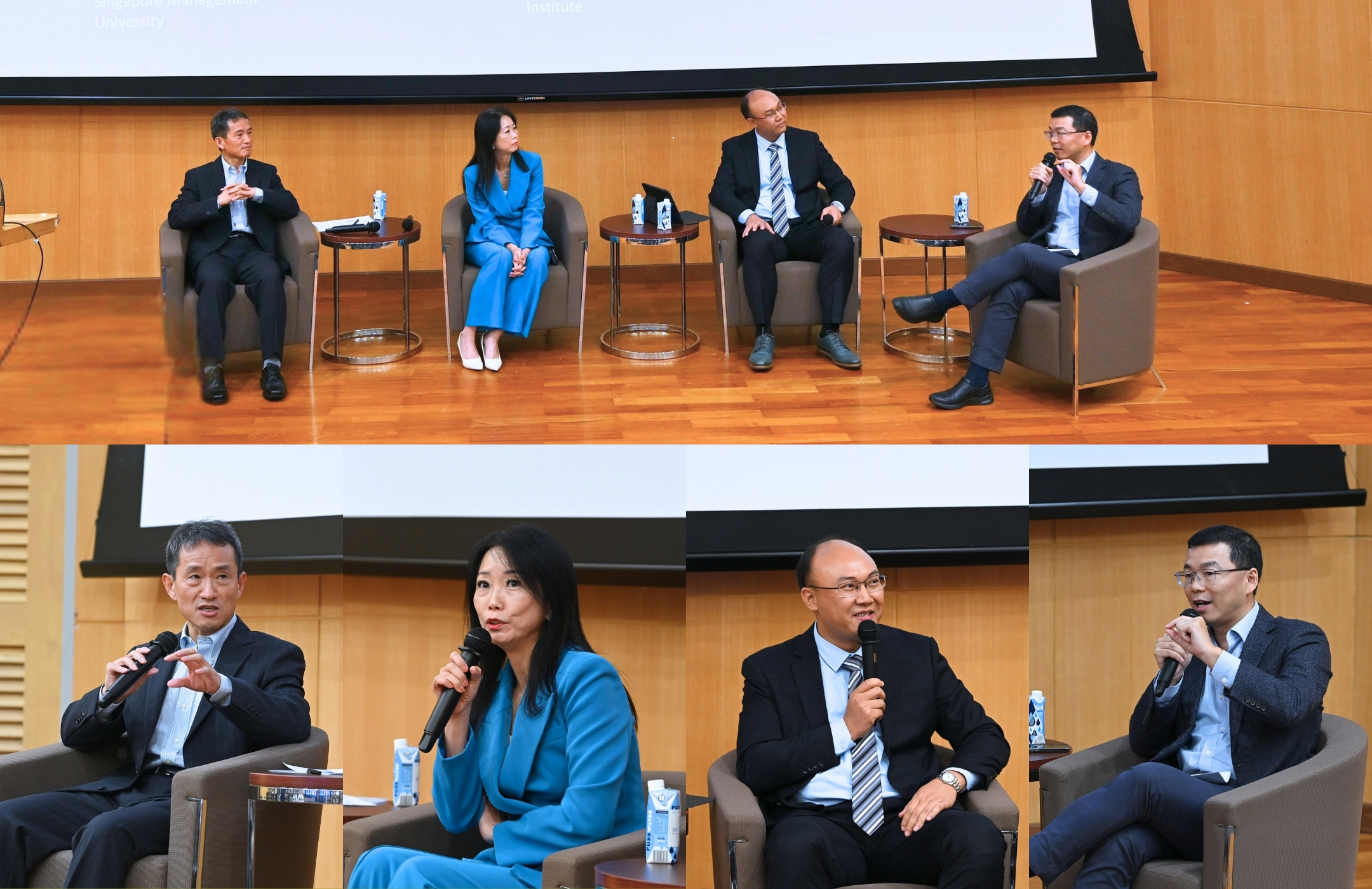
The changing role of accountants was further explored in a roundtable, “Standards · Organisations · Talent: Co-building the ESG Reporting Ecosystem”, moderated by Professor of Accounting Jiwei Wang, Associate Dean of Postgraduate Professional Programmes at SMU’s School of Accountancy.
The panel brought together Ms Beh Siew Kim, Chief Financial & Sustainability Officer, Lodging, CapitaLand Investment Limited; Professor Qiang Cheng, Lee Kong Chian Chair Professor of Accounting at SMU; and Dr Haijian Liang, Head of International Partnership and Capacity Development Program at XNAI.
The discussion examined how financial and non-financial information can be integrated, how organisations are responding to evolving international sustainability standards, and what capabilities the profession will need as sustainability reporting becomes more embedded in corporate decision-making.
Professor Cheng’s participation also reflected SOA’s contribution to the wider conversation on the implications of sustainability reporting for companies and the accounting profession, alongside the school’s emphasis on connecting research with real-world business challenges.
As sustainability information becomes more consequential to investors, regulators and corporate decision-makers, accountants will increasingly need to combine established expertise in financial reporting, controls and assurance with capabilities in sustainability measurement, data and disclosure.
A platform for Singapore-China exchange
The Dialogue builds on the inaugural Singapore-China Accounting Leaders Dialogue, held at XNAI in Xiamen in 2025, which examined green trade, sustainable development and international cooperation.
The second edition brought the conversation closer to implementation, providing a forum for participants from both markets to compare approaches and share practical experience as sustainability reporting frameworks continue to evolve.
For SMU, the continuing exchange also reflects the role of the School of Accountancy in connecting academic expertise with the professional community and international partners on issues that are reshaping the profession.
The organisers will explore further opportunities for knowledge sharing, professional exchanges, case-based learning and capability development.
By bringing together regulators, professional bodies, researchers, educators and business practitioners, the Dialogue seeks to deepen understanding of how the accounting profession can respond to the demands of sustainable business, while strengthening the Singapore-China exchange on the future of accounting.