
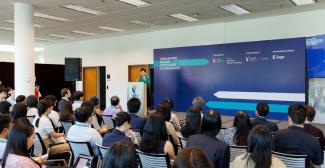
The Singapore Rising Scholars Conference (SRSC) is a space that the Singapore Management University (SMU) has created where ideas can be tested, refined and challenged to drive impact. Across two days in mid-May, it convened scholars from different institutions and disciplines, allowing for conversations across disciplines.
Hosted by the SMU College of Graduate Research Studies (CGRS), the fourth annual conference attracted over 130 doctoral students from nine countries and 26 institutions, fostering a productive environment for interdisciplinary exchange, academic mentorship and networking.
Stressing that research and analysis ultimately need to have impact, Professor Kong said, “The distance between insight and implementation — what some have called the ‘last mile’ — is often the hardest stretch to cross. Crossing it requires thinking, from the very outset of a project, about who your research is for, what it might change, and how it might travel beyond the journal it appears in. Who needs to read this? Who has the authority to act on it? What form does it need to take to be useful to them?”
Communicating Research and Building Partnerships
In this sense, establishing partnerships and trust with policymakers, employers and community organisations matters, so that insights can inform decisions in real time, she added. She encouraged the post-doctoral students present to build up the confidence and courage to articulate their research, so that they can communicate their research and build up important partnerships.
Noting that research is rarely linear and that there will be moments of doubt, Prof Kong said, “Confidence is built over time, through perseverance, reflection and the support of those around us.”
CGRS Dean, Professor Heli Wang agreed, spotlighting the role of SRSC in supporting the growth of a community of scholars. “Doctoral students spend a lot of time working in relative isolation, so bringing them together with peers from around the world, in an environment where ideas are genuinely challenged and debated, makes a real difference,” she said. “At the SRSC, that challenge comes with real support: participants get feedback on their work, but they also build connections with peers who share their research interests and understand the journey they're on.”
She said the world needs scholars who have the rigour and determination to test their ideas, “(and move) beyond the silo of individual research to build a collaborative ecosystem that defines the future of academic inquiry.”
A Platform for Connecting
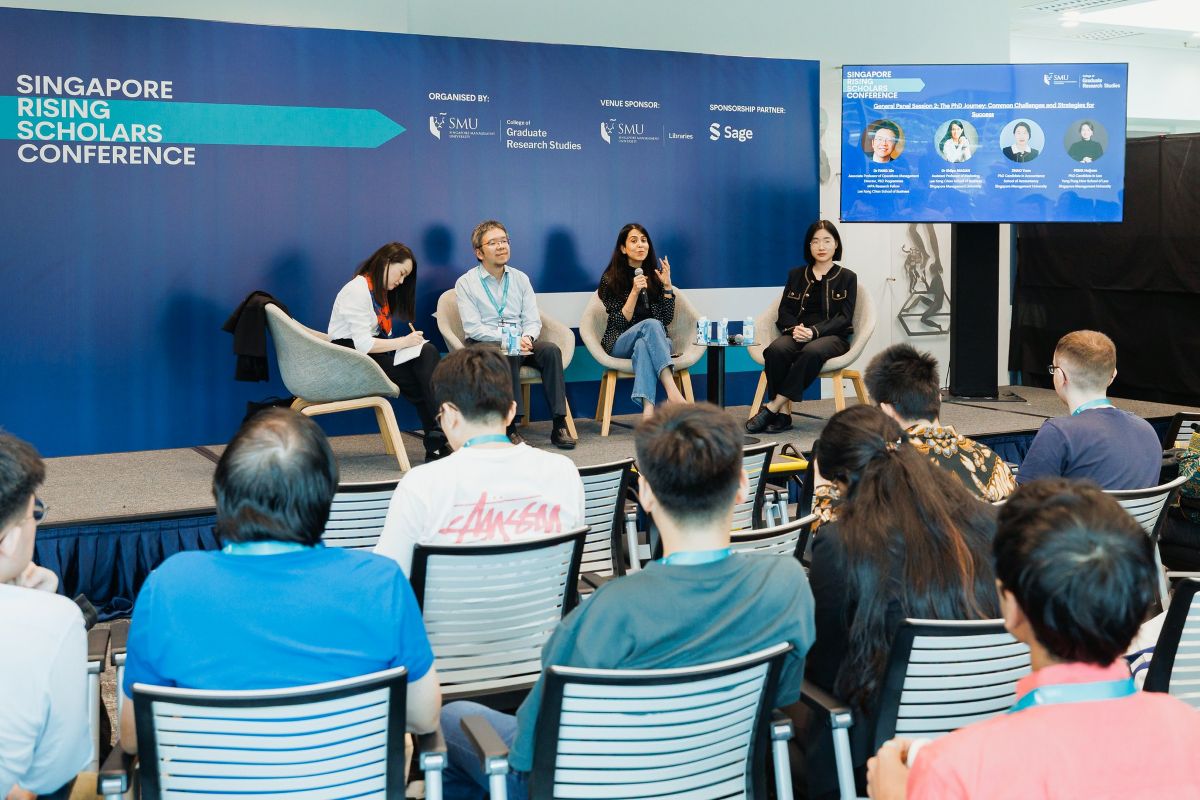
Supporting this agenda was the comprehensive programme featuring seminar sessions on topics such as ‘Academic Literature Review in the Age of AI and Large Language Models’; ‘Text Analysis for PhD Research: An Introduction to No-Code and Code-Light Tools’ and ‘Strategic Publishing and Critical AI Use for Research Impact’. Beyond breakout sessions on various research domains, participants also attended panels on collaborating for impact and dealing with the challenges of the PhD journey.
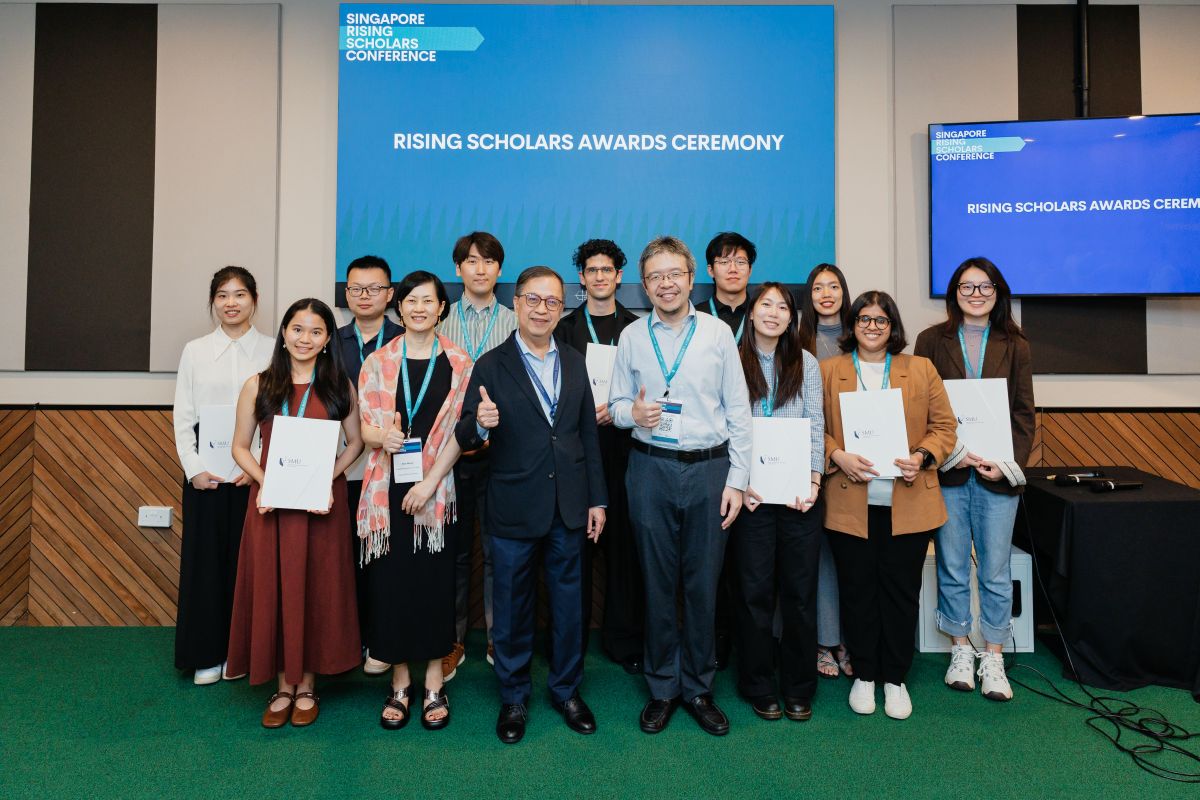
The SRSC is a helpful platform for young researchers. Kyeyoung Shin from Oxford University, who won the Best Paper Award for a paper entitled ‘Orchestrating Socially Oriented Innovation Ecosystems: A Phased Approach to Integrating State Actors’, said he found the SRSC valuable, both for receiving feedback on his work and for thinking more broadly about his academic journey.
He particularly appreciated the opportunity to meet doctoral researchers across different fields and regions. “The conference encouraged me to read, explore and connect more widely, which is especially important during the PhD years because you never know how those ideas and conversations may connect later,” he said.