


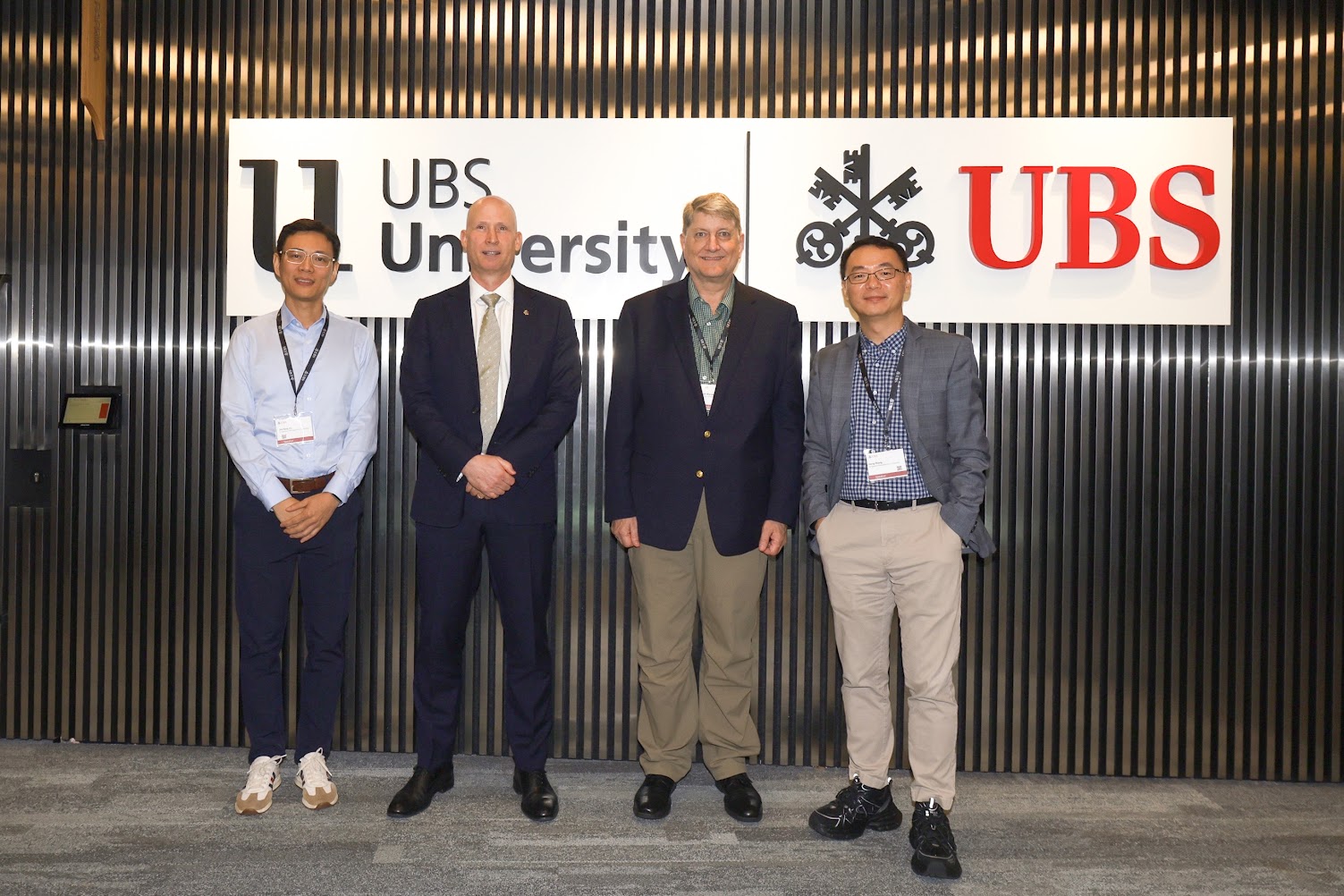
Can AI become a better investor? How can it help study investments more precisely? To answer these questions, the SMU Sim Kee Boon Institute for Financial Economics (SKBI) and the University of Maryland Centre for Financial Policy organised the Quant Investment Forum, which was hosted by UBS at its Singapore office recently.
Known as the first University of Maryland/Singapore Management University/UBS Quant Investment Forum: AI and Finance, the event also marked SKBI’s 16th Annual Conference. The one-and-a-half-day forum convened over 150 leading academics and industry practitioners for a research-focused exchange on the intersection of AI and investment management and trading.
The academics hailed from institutions around the world, including Harvard University, Washington State University, Tsinghua University, Peking University and the University of Hong Kong.
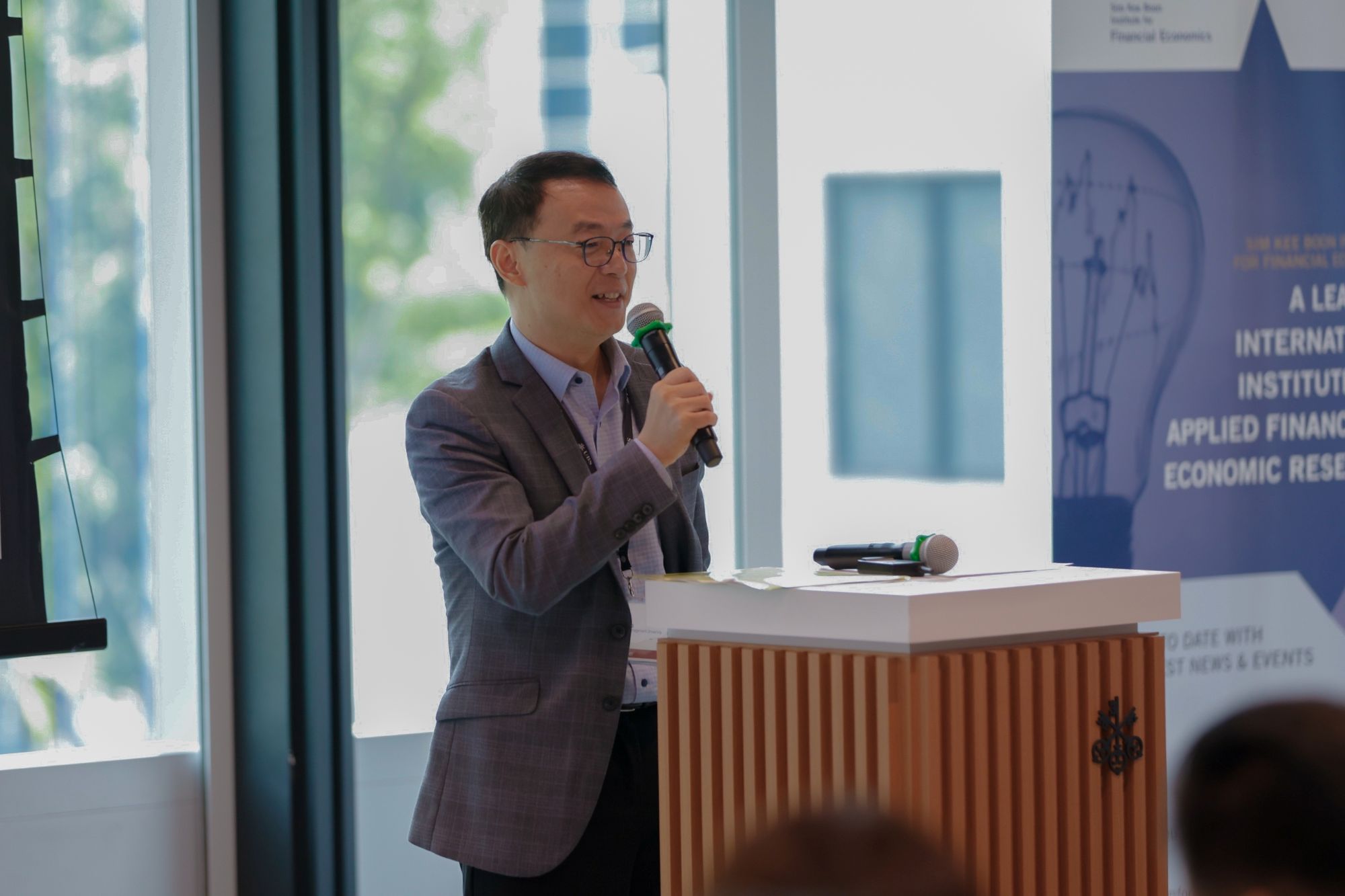
Keppel Professor in Financial Economics Zhang Hong, who is also Director at SKBI, said that the Quant Investment Forum reflects SMU's growing role at the intersection of AI, quantitative finance and investment management. “Our partnership with the University of Maryland's CFP and UBS brings together leading researchers to advance cutting-edge research and foster meaningful dialogue with industry participants on the future of investing,” he shared. “This platform seeks to generate insights that strengthen financial markets and support the responsible application of AI in investment management."
The Use of Large Language Models and AI ‘Errors’
The forum, held on 15 and 16 June, called for pioneering papers on the application of novel AI methodologies to solve core problems in investments and financial markets, the use of alternative data or foundational models to generate actionable insights for asset management, trading or risk assessment, and research that provides relevant perspectives for the Asian and the global investment community.
Specifically, the conference zoomed in on three important research themes, namely AI as Researcher — Capabilities, Errors, and Disagreement; the role of Machine Learning in Investments; and traders’ navigation of Informational Networks and Market Frictions.
Professor Zhang presented a paper entitled ‘Distant Investments: Decoding Mutual Fund Skill through Fund-Firm Semantic Alignment’, which examined the use of AI and large language models to measure the skill of mutual fund managers.
The research found that fund managers who make ‘distant investments’ by investing in firms with complex information beyond their stated expertise generate superior returns of approximately 4% annually. The empirical analysis demonstrated that these trading patterns predicted stock returns.
The discussion that followed touched on whether the results might be driven by recent AI hype, or if manager-level expertise analysis could provide better insights than fund-level prospectus comparisons. The authors planned to explore additional methods for capturing fund expertise and examining cross-style investments more thoroughly.
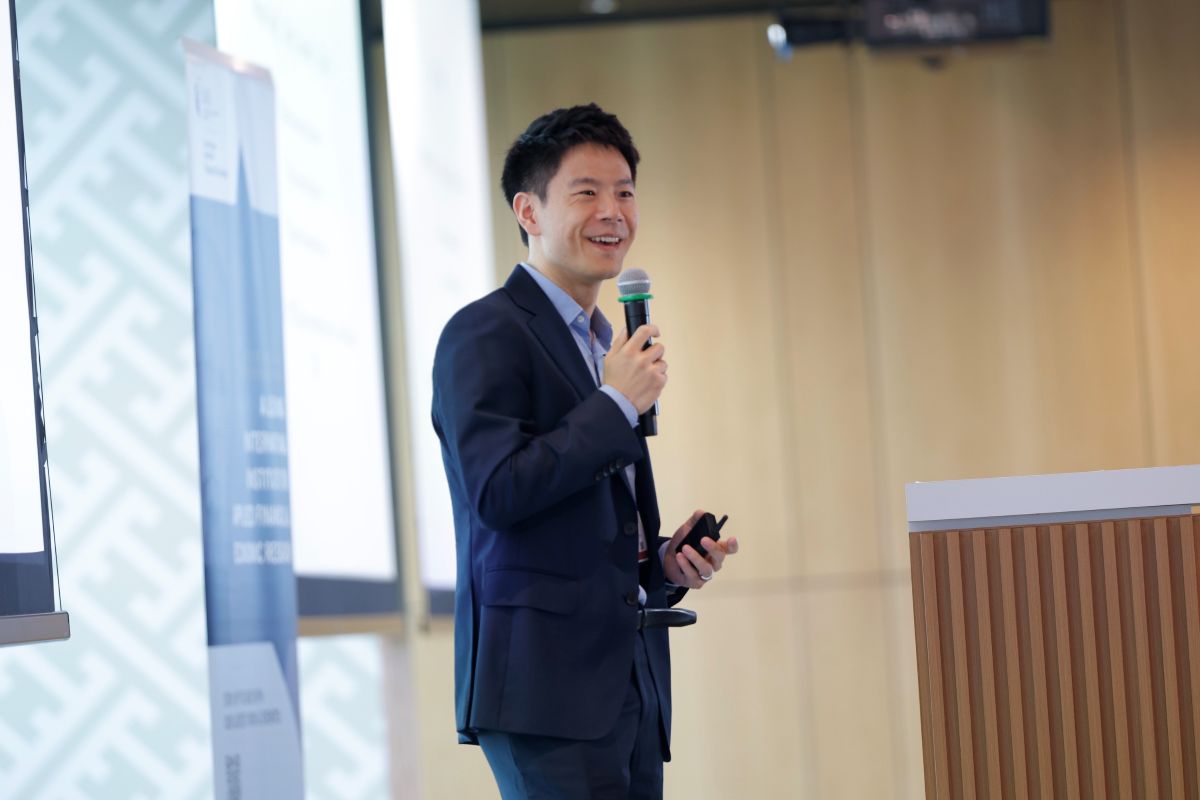
Next, SMU Assistant Professor of Finance Shihao Yu spoke on AI ‘Errors’, a research project where he asked AI agents to perform the same empirical research task that was done by many human researchers and compared the outcomes between the two. He documented that AI outcomes differ from those of humans, and the differences come from AI's more concentrated choices in a few analysis forks, including analysis frequency, model selection and data cleaning approaches. These results help guide better collaboration between humans and AI in research processes.
A new method of studying hedge funds?
On day two of the conference, SMU Associate Professor of Finance Jianfeng Hu presented another paper, ‘Informed Trading under the Microscope: Evidence from 30 Years of Daily Hedge Fund Trades’. It focused on estimating hedge fund order flow in US stocks using high-frequency and public data. The study developed a novel approach to estimate hedge fund trading at higher frequencies, which could potentially be extended to intra-day analysis in future studies.
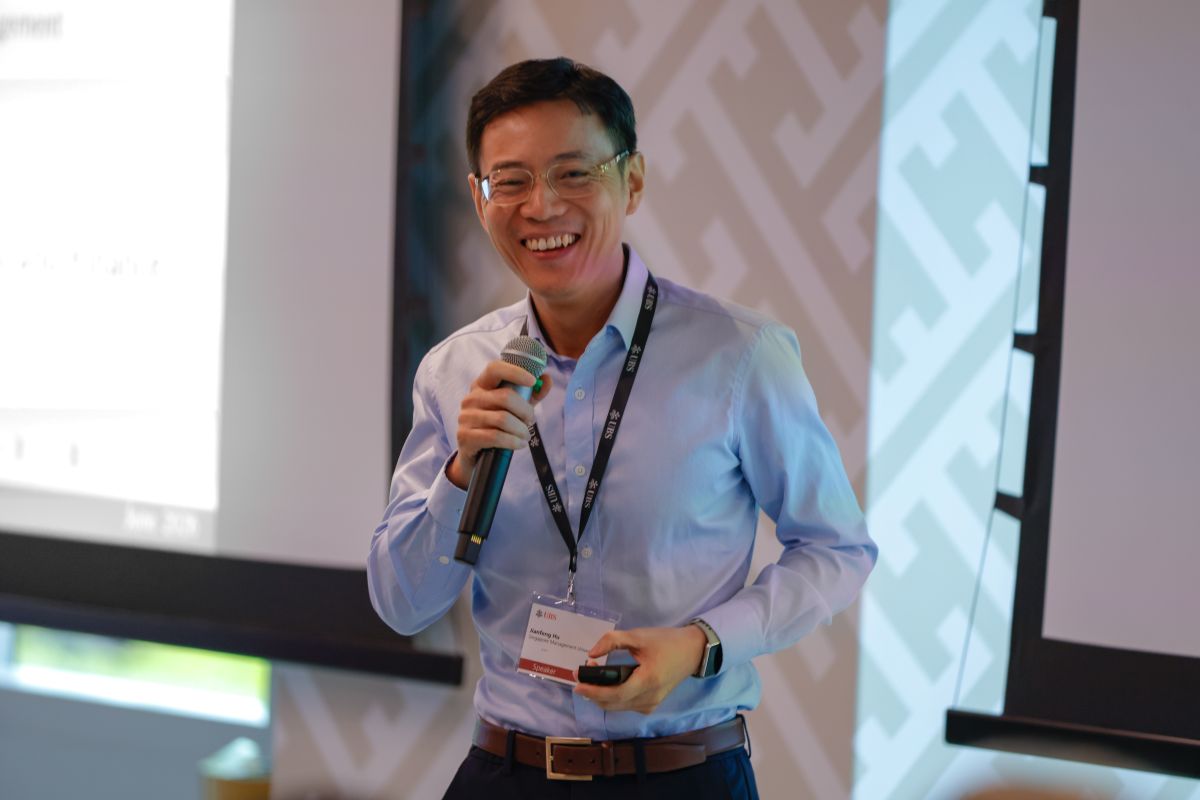
The research team noted that it provides a unique method for observing hedge fund behaviour around corporate events or specific time windows, with the results showing that hedge funds help markets work more efficiently. Nonetheless, the discussant from a university in Japan sounded a note of caution about the stability of the method over time and the accuracy of measuring informed trading through trade size, suggesting potential limitations due to changes in market practices.
As Singapore becomes recognised as a hub for innovation in finance and AI, said Professor Zhang, such conferences illustrate SKBI’s commitment to strengthening the exchange of ideas between academia and industry in this evolving space.
“Through initiatives such as the Quant Investment Forum, SMU will make an impact in the development of new knowledge of AI in quantitative investing, asset management and financial economics,” he noted.
To read the papers mentioned in this article or download the slides presented at the forum, please visit the SKBI website: https://skbi.smu.edu.sg/events/past/2026-Quant-Investment-Forum