
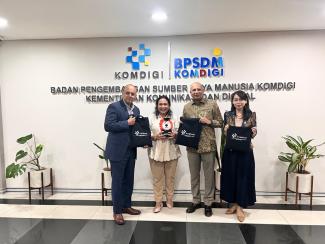
Singapore Management University (SMU) is strengthening its presence in Indonesia through new partnerships that support the country's digital transformation agenda, bringing together government leaders, academics and technology professionals to share expertise in artificial intelligence while expanding opportunities for research collaboration and talent development.
Organised through SMU's Indonesia Office, the university collaborated with Indonesia's Ministry of Communication and Digital Affairs (KOMDIGI) on an exclusive hybrid knowledge-sharing session that connected participants in Jakarta with digital professionals across Surabaya, Yogyakarta and Malang.
This exchange comes at a pivotal moment, as the global AI marketing industry is valued at $47.32 billion in 2025 and is projected to exceed $107.5 billion by 2028, with a compound annual growth rate (CAGR) of 36.6%. Furthermore, 92% of businesses plan to invest in generative AI tools for marketing within the next three years, potentially unlocking hundreds of billions in annual global value by increasing marketing productivity by 5–15% of total spend.
Scaling AI and Machine Learning Insights
The highlight of the event was the lecture delivered by Prof. Kapil Tuli, Lee Kong Chian Professor of Marketing and Deputy Dean (Research) at SMU. Prof. Tuli shared invaluable operational insights from his recently published case study, "Developing and Deploying AI-ML at Scale: Lessons from Erica at the Bank of America." Addressing KOMDIGI’s tech and digital transformation teams, the lecture delved deep into the practical application of Artificial Intelligence (AI), Machine Learning (ML), and Natural Language Processing (NLP) in building world-class customer service tools.
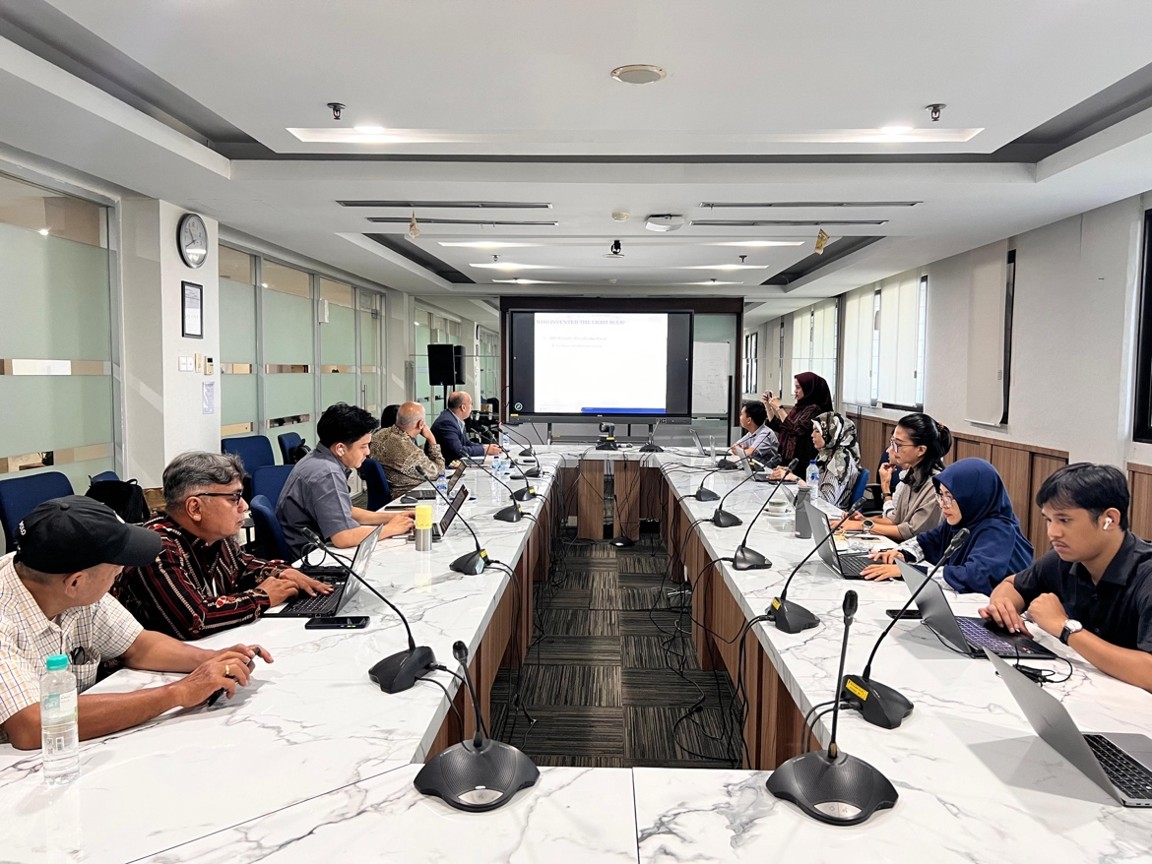
Drawing on one of the world's largest enterprise AI deployments, Professor Tuli examined how artificial intelligence, machine learning and natural language processing can be implemented responsibly and at scale. He shared how Bank of America's AI-powered virtual assistant, Erica, evolved from millions of interactions to more than 3.2 billion by March 2026, demonstrating the importance of operational discipline, continuous refinement and strong governance in deploying AI solutions.
Rather than focusing solely on technology, the session explored the organisational capabilities needed to implement AI successfully, including responsible governance, customer-centred design and continuous learning.
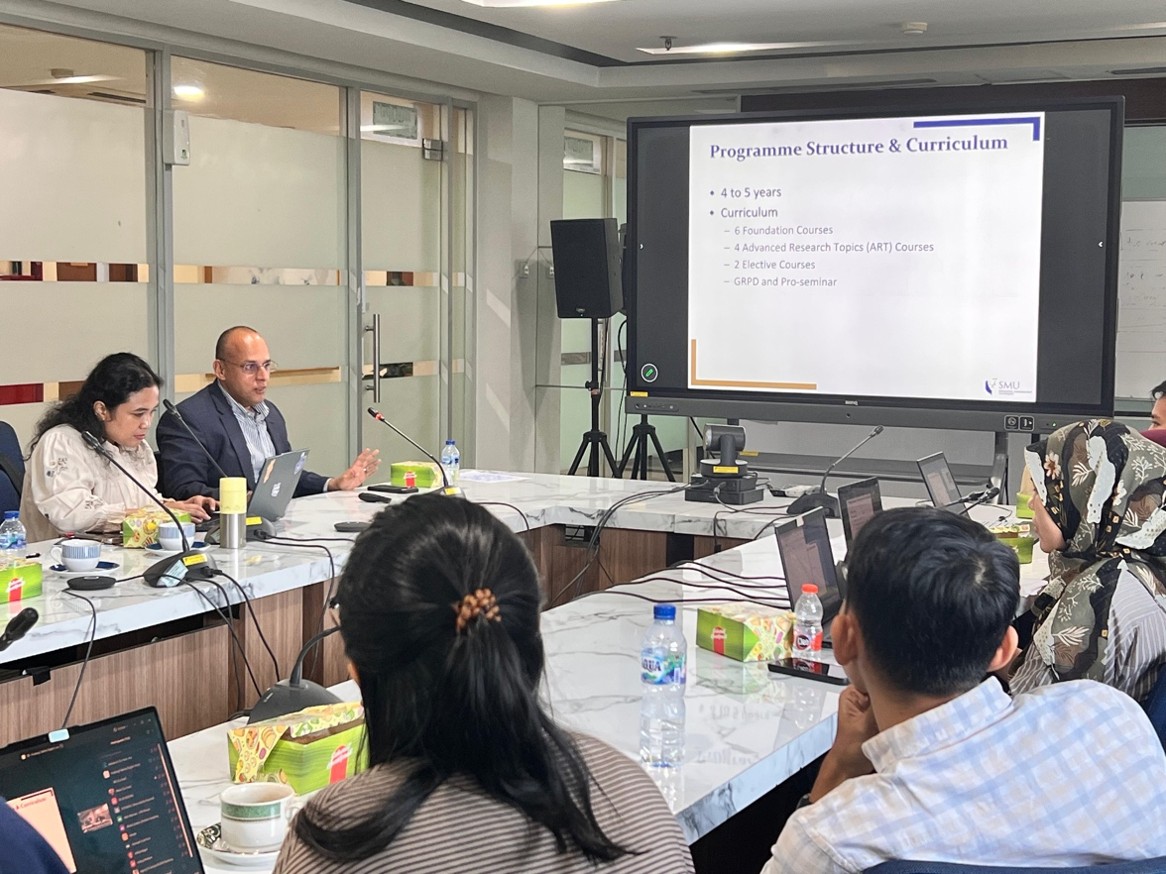
"Sharing these real-world scaling challenges and breakthroughs with the digital architects of Indonesia’s public sector is exactly the kind of cross-border knowledge exchange SMU aims to foster," said Prof. Tuli.
For public sector operations and entrepreneurs without billion-dollar budgets, Prof. Tuli provided a clear decision matrix based on the level of decision criticality and task standardisation that SEMs can use to identify the applications of Gen AI and AI tools. He urged organizations to "go where the customer is" as seen in case studies like KLM Royal Dutch Airlines leveraging AI to move transactional functions directly to social media messaging applications to handle 200,000 conversations a week—while building strict governance guardrails against bias and hallucination.
Nurturing the Next Generation of Global Scholars
The session also introduced participants to SMU's fully funded PhD Research Programme, highlighting opportunities for Indonesian scholars to pursue advanced research in areas including computer science, economics and the social sciences. The initiative complements Indonesia's efforts to develop advanced digital capabilities by strengthening its future research and innovation ecosystem.
Beyond engaging government partners, the visit also reinforced SMU's long-standing commitment to Indonesia's growing alumni community. Professor Tuli met alumni in Jakarta, providing an opportunity to reconnect with graduates and strengthen professional networks that continue to contribute across business, technology and the public sector.
Together, these engagements demonstrate how SMU's Indonesia Office is serving as a bridge between Singapore and Indonesia, connecting government, academia, industry and alumni to advance shared priorities in digital innovation, research and talent development.
As Southeast Asia's digital economy continues to expand, the office is helping to further deepen SMU's regional footprint by building enduring partnerships that create opportunities for knowledge exchange, leadership development and collaborative research across one of the region's most dynamic markets.