

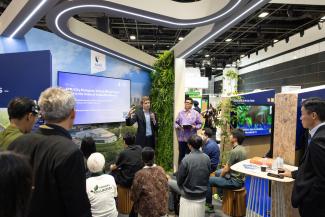
SINGAPORE, 16 June 2026 – Singapore Management University (SMU) today released a new White Paper, “What is the Value of Urban Resilience?”, at the 2026 World Cities Summit (WCS) in Singapore. Authored by Professor Orlando Woods, the paper challenges conventional approaches to urban resilience and calls for a more expansive, equitable and human-centred understanding of what it means for cities to endure and adapt.
The publication arrives at a critical moment. In the past year alone, millions across Southeast Asia were affected by severe floods in Indonesia, Malaysia, Thailand, Vietnam and the Philippines, a 7.7-magnitude earthquake in Myanmar, and extreme heatwaves across the region. Globally, climate shocks have already driven more than USD 300 billion in annual losses, and the rate and intensity of such events continue to accelerate.
Against this backdrop, the paper argues that cities can no longer afford to treat resilience solely as an infrastructure or risk-management exercise. Its recommendations are grounded in the fourth edition of SMU City Dialogues, held in Vienna in July 2025 as a partner event of the Mayors Forum of the World Cities Summit 2025, which brought together more than 100 participants from 20 countries, representing over 20 universities and more than 30 public and private sector organisations.
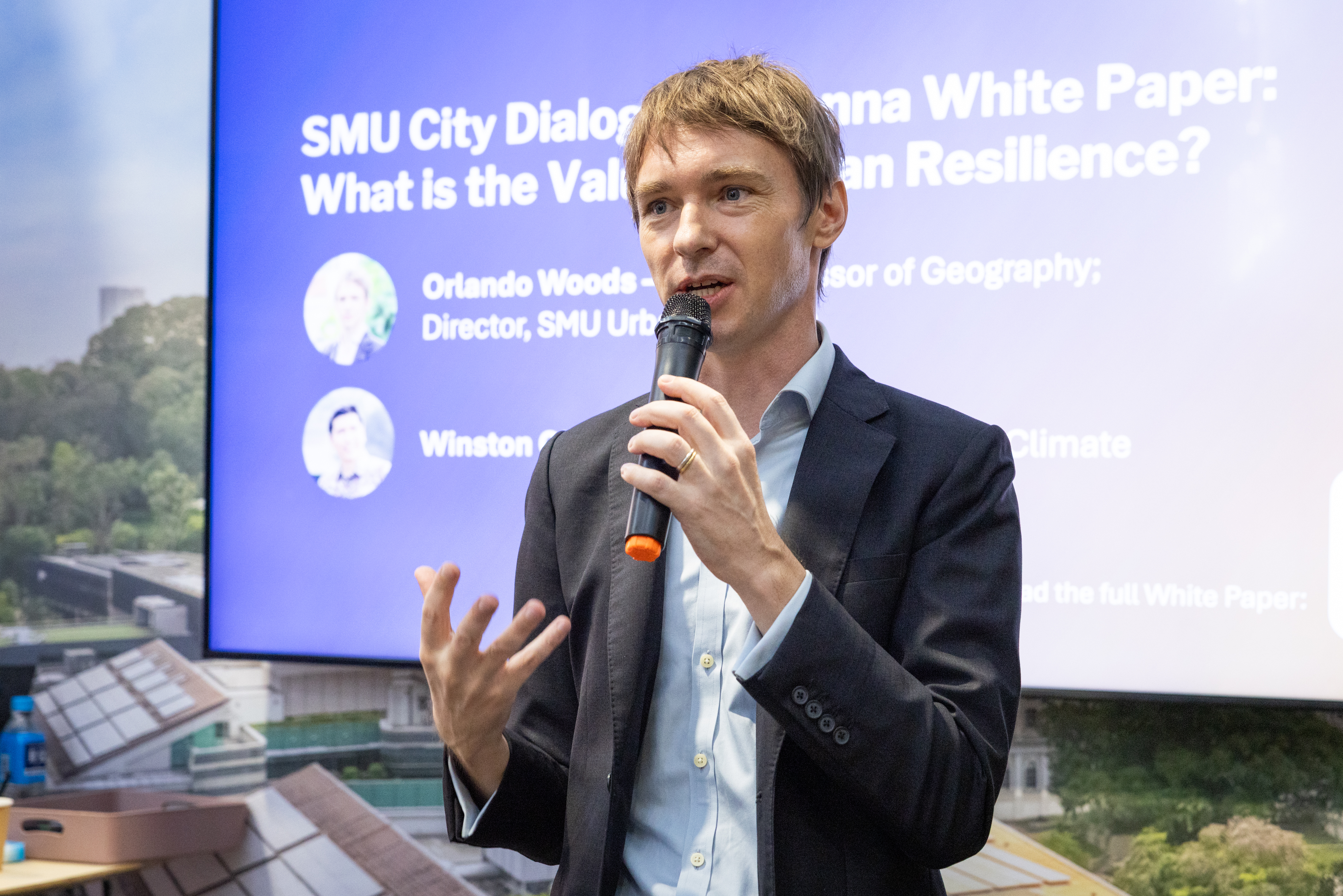
Professor Orlando Woods, Professor of Geography and Director, SMU Urban Institute, said: “Urban resilience has long been measured by what we can quantify, such as avoided losses, infrastructure investment, and economic returns. However, the crises hitting our cities today are not evenly distributed, and they fall hardest on those least equipped to recover. If we only value what we can count, we risk building cities that are technically resilient but socially fragile. This white paper is a call to hold both the rigour of evidence and the humanity of experience in the same frame – and to ask, seriously, whose futures we are protecting and whose knowledge we trust to do it.” Professor Woods is concurrently Associate Dean (Research and Postgraduate Education) at SMU’s College of Integrative Studies.
Four Cross-Cutting Themes
Drawing on discussions among academics, industry leaders, and government officials, the White Paper distils four cross-cutting themes that interrogate how urban resilience is justified, implemented, distributed and measured:
- Value: Economic valuation frameworks have been effective at building the business case for resilience, but what can be measured is not always synonymous with what matters. The paper draws on Mozambique’s early warning system – which reduced fatalities and economic damages by an estimated 83% during Cyclone Freddy – to illustrate that the most significant dividends of resilience, including strengthened governance, community trust, and social cohesion, are precisely those that resist quantification. Cities have become adept at pricing risk, the paper argues, but far less capable of valuing collective wellbeing.
- Governance and Partnerships: Participatory processes often remain symbolic, with community input failing to translate into decision-making outcomes. The paper draws a sharp distinction between consultation – which treats communities as sources of information – and co-production, which recognises experiential and local knowledge as essential complements to technical expertise. When communities are genuine partners in shaping outcomes, rather than consulted after the fact, the quality, legitimacy and long-term uptake of resilience measures improve significantly.
- Inclusion: Resilience is not evenly distributed. Income, gender, disability, and citizenship status all shape vulnerability to risk and access to resilience-building resources. The paper uses the experience of migrant workers in Singapore during COVID-19 – who faced disproportionate exposure despite universal protective policies – to illustrate how resilience strategies that overlook structural inequality can fail the most vulnerable, even within otherwise well-functioning systems. A city cannot claim to be resilient, the paper argues, if resilience remains a privilege rather than a public good.
Data and Technology: Digital tools and smart city systems are neither neutral nor merely instrumental. Drawing on research into the aftermath of Hurricane Harvey in Houston – where climate-attributed flood impacts concentrated in low-income communities that official risk maps had failed to identify – the paper warns that data gaps, algorithmic bias, and the seductiveness of technological solutionism can deepen the very vulnerabilities they purport to address. The future of urban resilience, it argues, depends not only on better data, but on more accountable systems for producing, interpreting, and governing knowledge.
Key Recommendations
The White Paper sets out a roadmap for advancing urban resilience through four priority areas:
- Reframe how resilience is valued – champion plural valuation frameworks beyond cost-benefit analysis to capture long-term, indirect, and non-quantifiable benefits, including trust, social cohesion, and public confidence.
- Strengthen governance and coordination – treat participatory governance as core implementation infrastructure, ensuring community input is embedded in decision-making and resource allocation rather than treated as a procedural step.
- Institutionalise inclusive participation – embed equity as a core metric and prioritise vulnerable groups in the design of resilience interventions.
- Reposition technology and data – deploy critical assessments of data gaps and algorithmic bias, align digital innovation with locally grounded knowledge, and establish stronger governance mechanisms for data accountability and public oversight.
Launched at the World Cities Summit
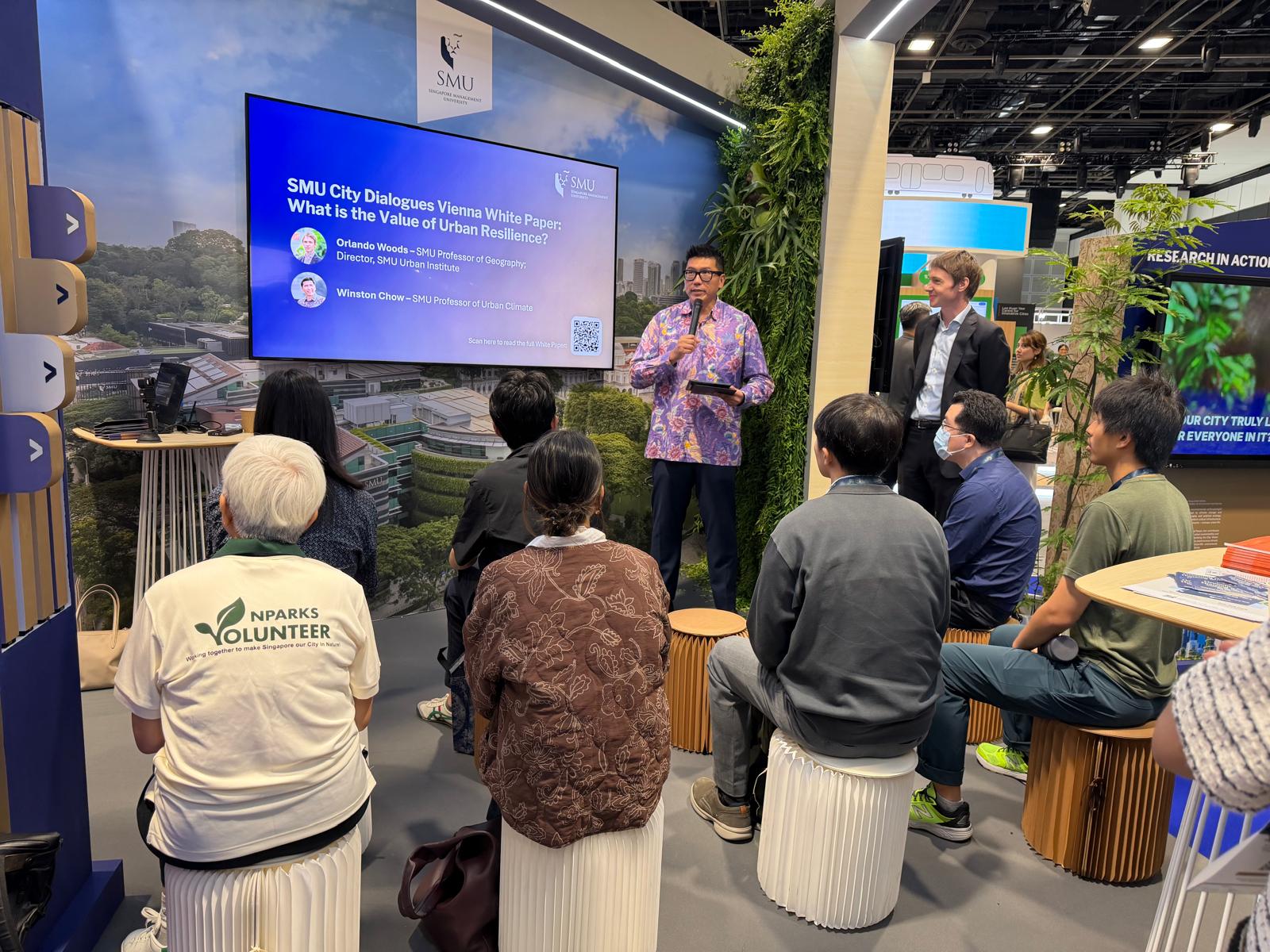
The White Paper is released in conjunction with the World Cities Summit 2026, where SMU is hosting a brand pavilion showcasing the University’s research insights, experts and thought leadership on the future of cities. WCS provides a natural platform to extend the conversations begun in Vienna to a broader international audience of urban policymakers, city leaders, and built environment professionals.
The paper translates the insights from SMU City Dialogues Vienna into practical guidance for policymakers, urban planners, built environment professionals and city leaders.
Beyond the white paper, the SMU booth also features Professor Woods’ research on Gamifying Places: Reimagining the City with Augmented Reality’, alongside other multi-disciplinary urban research by other SMU faculty. The full list of featured projects is as follows:
- Prof Orlando Woods, Professor of Geography; Associate Dean (Research and Postgraduate Education); Director, SMU Urban Institute; Pillar Lead, Urban Experiences: How gamification platforms such as Pokémon Go are reshaping how people interact with public spaces, communities, and urban life in increasingly digital societies.
- Prof Li Jia, Dean, School of Economics; Lee Kong Chian Professor of Economics; Econometrics Lead, SMU Urban Institute; Pillar Lead, Maximising Societal Human Capital, SMU Resilient Workforces (ResWORK) Institute: Singapore’s first AI-LLM Exposure Index, mapping which occupations are most vulnerable – and most adaptable – to AI-driven transformation across millions of job postings in Singapore and China.
- Prof Paulin Straughan, Professor of Sociology (Practice); Director, Centre for Research on Successful Ageing (ROSA); Urban Fellow (Urban Experiences): How social connection, neighbourhood familiarity, and a sense of belonging shape the well-being of older adults, and what this means for housing and community design in super-aged societies.
- Prof Phang Sock Yong, Celia Moh Chair Professor of Economics; Vice Provost (Faculty Matters); Urban Fellow (Urban Growth): How cities can sustain affordable housing through the coordinated management of land policy, housing supply, and financing – drawing on Singapore’s long-term governance experience.
- Asst Prof Sayd Randle, Assistant Professor of Urban Studies; Lee Kong Chian Fellow; Urban Fellow (Urban Systems); Basket Coordinator for Environment and Society: How increasing human-wildlife encounters in cities – from boars to other urban species – reflect deeper ecological, social, and policy tensions, and what more adaptive urban coexistence might look like.
- Prof Winston Chow, Lee Kong Chian Professor of Urban Climate; Pillar Lead, Urban Systems; Lee Kong Chian Fellow: Cooling Singapore 2.0’s Heat Risk Index, mapping how rising temperatures affect different communities; and ecosystem-wide strategies for greening data centres as digital infrastructure expands.
Click here for the White Paper, “What is the Value of Urban Resilience?”
More information / enclosures:
SMU City Dialogues Vienna: What is the Value of Urban Resilience?
- END -