

Asia’s transition to a low-carbon economy is facing a critical bottleneck: a growing shortage of specialised talent able to translate ambitious sustainability policy into concrete implementation. even as governments and businesses accelerate climate commitments. To bridge this gap and empower the region's youth, Singapore Management University (SMU) and the United Nations Development Programme (UNDP) have signed a Statement of Intent (SOI) to develop a robust talent pipeline through sustainability education, research and leadership development across Asia Pacific.
Anchored in Singapore, a premier strategic hub for green finance and sustainability innovation in Asia, the partnership will focus on integrating academic training with real-world policy and project exposure. UNDP, which operates in 170 countries and territories, will work with SMU to equip youth, graduates and mid-career professionals with the skills required to engage with complex sustainability challenges across the region.
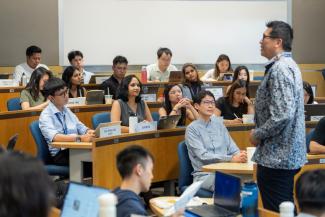
This collaboration builds on strong outcomes from an existing pilot within SMU’s Master of Sustainability (MST), where instructors from UNDP work directly with postgraduate students, many of whom are mid-career professionals pivoting into sustainability roles.
Building on this foundation, both parties will focus on co-designing and co-delivering undergraduate and postgraduate curriculum aligned with the United Nations Sustainable Development Goals (SDGs), with a focus on policy frameworks and implementation. This ensures a continuous talent pipeline from the classroom to the frontline of sustainable development. Students may also have opportunities to participate in field immersions, internships and projects linked to UNDP initiatives across Asia Pacific, including through SMU’s SMU-X experiential learning model, which partners students with industry, government and non-profit organisations.
The collaboration also opens pathways for joint research in areas such as sustainability standards, taxonomies and policy frameworks, alongside the development of case studies and teaching materials aimed at strengthening academic rigour and industry standards in sustainable development.
Professor Lim Sun Sun, Vice President (Partnerships and Engagement); Lee Kong Chian Professor of Communication & Technology, SMU said the collaboration reflects a growing need to connect education more directly with real-world challenges.
“Universities are crucibles of ideas and talent, but the full impact of our work is better realised when these strengths are connected to real-world challenges. Our collaboration with UNDP creates pathways for students, faculty, and partners to contribute directly to the advancement of the UN Sustainable Development Goals in Asia. Together, we aim to develop leaders who can move our sustainability transition from ambition to implementation.”
Beate Trankmann, UNDP Deputy Regional Director for Asia and the Pacific, said the collaboration reflects the organisation’s focus on building local and regional capabilities to support sustainable development outcomes, highlighting the importance of youth leadership.
“To achieve the Sustainable Development Goals in a dynamic region like Asia Pacific, we must invest in our youth and emerging leaders. Partnerships with forward-looking institutions like SMU allow us to build a rigorous talent pipeline that transforms theoretical knowledge into on-the-ground impact. By leveraging Singapore's position as a regional hub, we are equipping the next generation with the exact skills needed to turn climate and development pledges into tangible, lasting action.”
The move comes as Singapore expands its role in green finance and sustainability governance, driving demand for talent able to operate across sectors and markets.
The collaboration supports SMU’s 2030 strategy; an impact-driven roadmap that seeks to transform lives through education, research and partnerships.
UNDP and SMU will also include “train-the-trainer” programmes to build capacity among students and educators, as well as identify opportunities for collaboration across UNDP programmes in Asia Pacific.
The new partnership signals a shared direction to strengthen sustainability capabilities in the region, as institutions, governments and industry respond to the growing demand for implementation-focused expertise.