

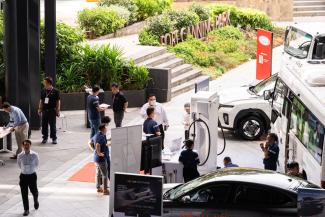
As Singapore advances its national goals in sustainability and low-carbon transport, the demand for real-world experimentation and industry collaboration in the electric vehicle (EV) space continues to grow. Against this backdrop, SMU’s experiential learning platform, SMU-X, has been creating opportunities for students to engage directly with partners across the electric mobility value chain – from land-based EV systems to early-stage developments in marine electrification.
Bringing the EV Ecosystem to Campus
In November 2025, SMU-X and ChargedUp@SG 2.0 co-organised on campus a four-day conference and expo focused on land-based EV innovation. The event, which included a conference, B2B exhibition, workshops, site visits and a public EV showcase, brought together industry leaders, the SMU community and the public to explore solutions shaping Southeast Asia’s transition to cleaner, smarter mobility.
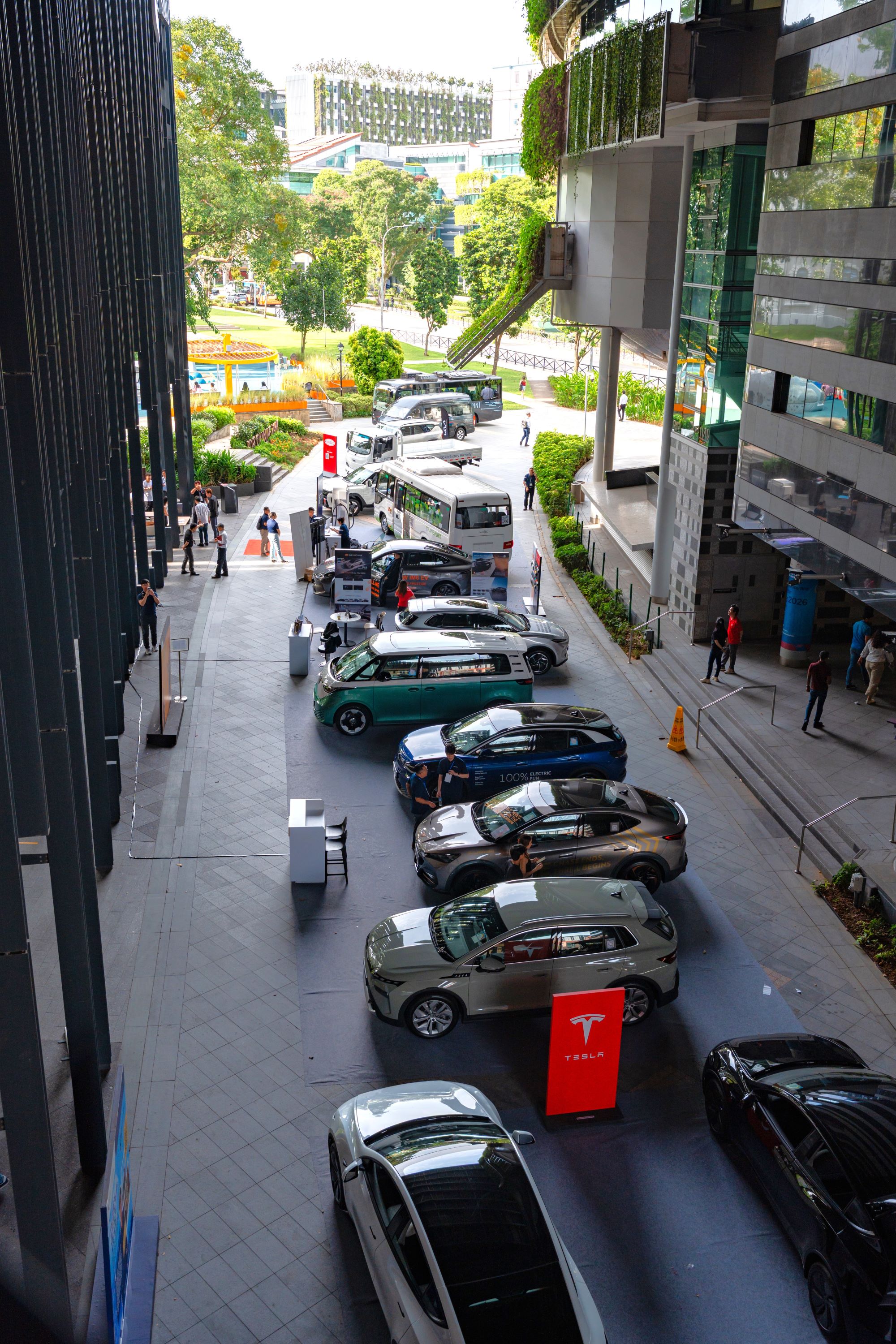
Attendees were able to see one of the widest ranges of EVs ever exhibited in Singapore — spanning motorcycles, vans, buses and heavy trucks — alongside next-generation charging technologies from Huawei, Schneider Electric, Sinexcel, ST Engineering x Go Parkin and Charge+. Product unveilings and partnership announcements underscored the sector’s momentum, with several industry players, such as BYD, Denza, Eurokars Group, KGM, Hong Seh Group, Motorway Group, Qingling Motors, Sime Motors and Tesla, showcasing their innovations aligned with Singapore’s Green Plan 2030 and the region’s low-carbon targets.
SMU students also contributed to organising the event; members of student clubs, including SMU VERTS – the University’s environmental sustainability club – co-curated public engagement and lifestyle segments, translating complex energy and electrification topics into engaging, community-friendly content.
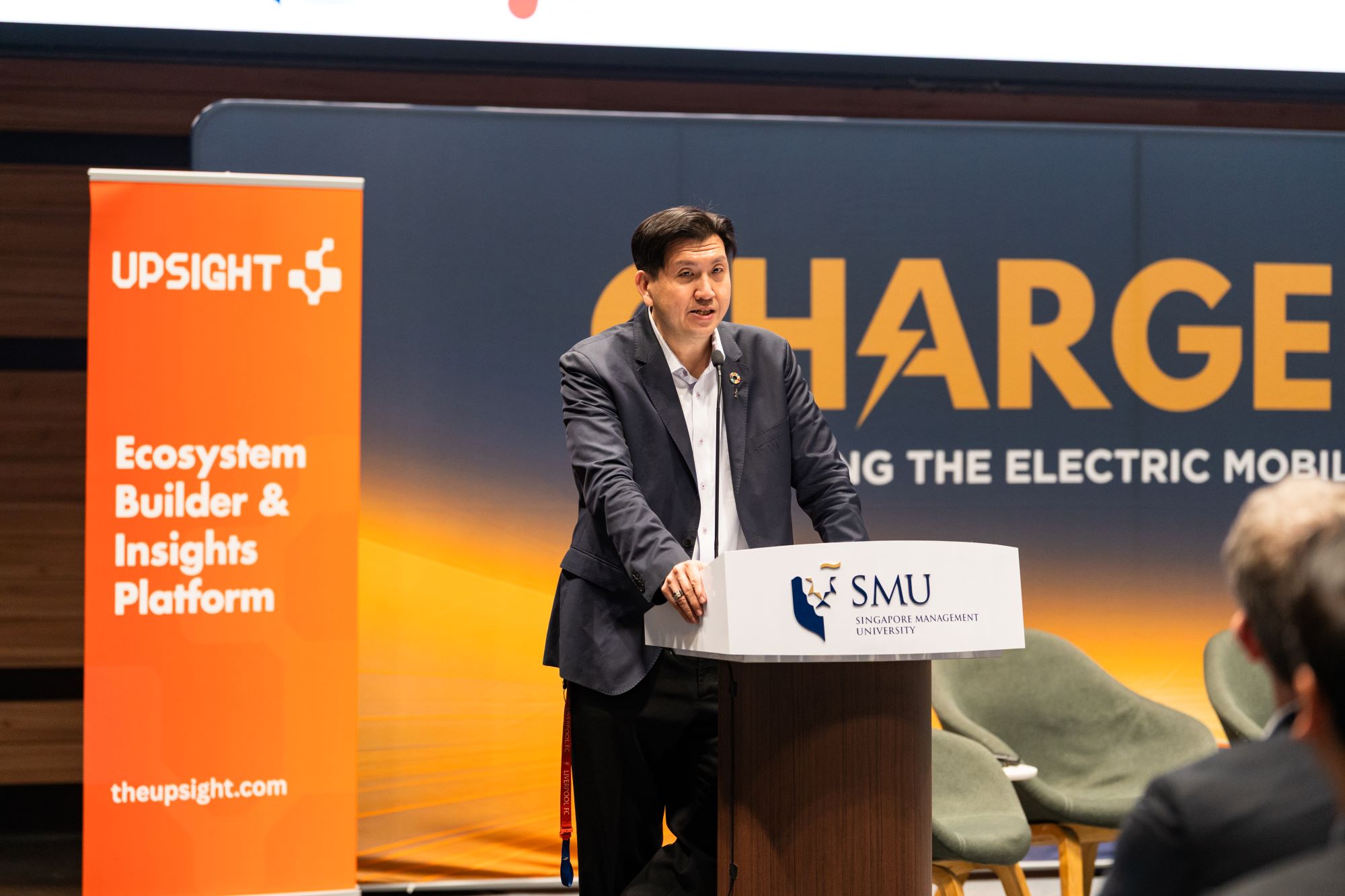
In his address at the opening of the event, Dr Cheong Wei Yang, SMU Vice Provost (Strategic Research Partnerships), highlighted that the event reflects SMU’s commitment to cross-sector collaboration. “ChargedUp is more than a showcase. It demonstrates how universities, industry and government can work together to co-create solutions and accelerate the future of mobility. This year’s edition highlights the spirit of SMU-X – learning that happens through real projects, experimentation and engagement with the ecosystem,” he said.
Bringing EV concepts into the classroom
To strengthen students’ understanding of EV innovation and electrification pathways, three SMU-X courses offered at SMU’s Lee Kong Chian School of Business from August to November 2025 – ‘Design of Business: Business Capstone’, ‘Managing Process Improvement’ and ‘Strategy’ – embedded EV-focused projects into their curriculum.
In the ‘Strategy’ course taught by Assistant Professor Terence Fan, students engaged manufacturers, fleet operators, startups and policymakers, uncovering insights into adoption drivers and operational barriers. The findings offered practical relevance for logistics, transport and retail fleets seeking to electrify high-utilisation commercial vehicles.
The course ‘Design of Business: Business Capstone’, taught by adjunct lecturer Adam Gerard, allowed final-year students to partner with Spanish Performance automotive brand, CUPRA. Applying interdisciplinary design thinking, business strategy and user-centred problem solving, students examined how the brand, new to the Singapore market, could strengthen digital touchpoints to raise awareness, and create experiential, in-person engagement strategies to drive sales. Their work provided insights into how a European performance-lifestyle brand can stand out in a competitive automotive market. In addition to ground research and market analysis, students prototyped recommendations for balancing desirability, feasibility, and viability.
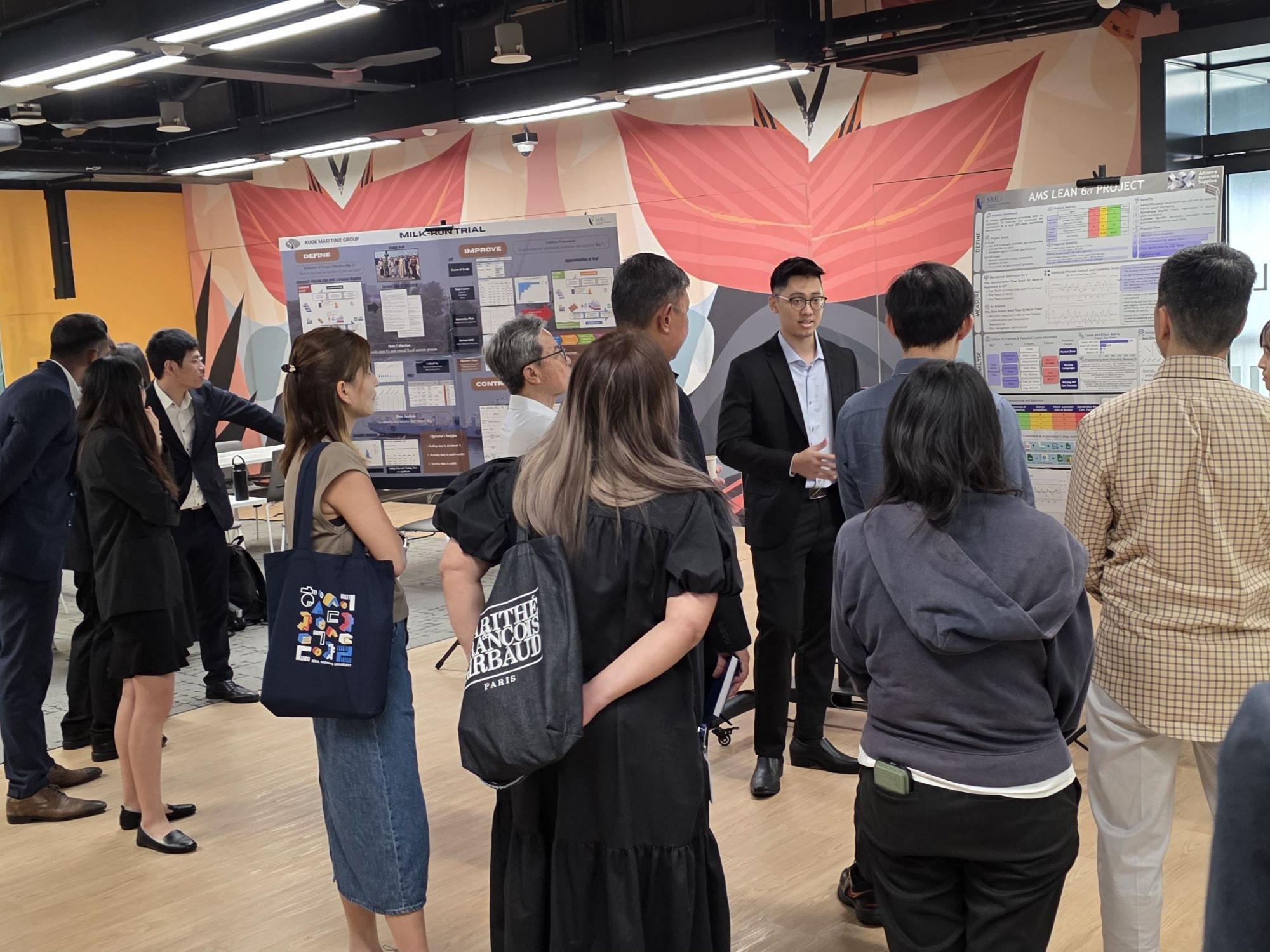
Meanwhile, in ‘Managing Process Improvement’, students, under the mentorship of adjunct lecturer, Edmund Tan, focused on operational excellence, diagnosing bottlenecks and designing data-informed improvements for real organisations. Using Lean, Six Sigma, and process innovation tools, they mapped workflows, identified inefficiencies, and proposed practical enhancements that boost speed, quality, and productivity.
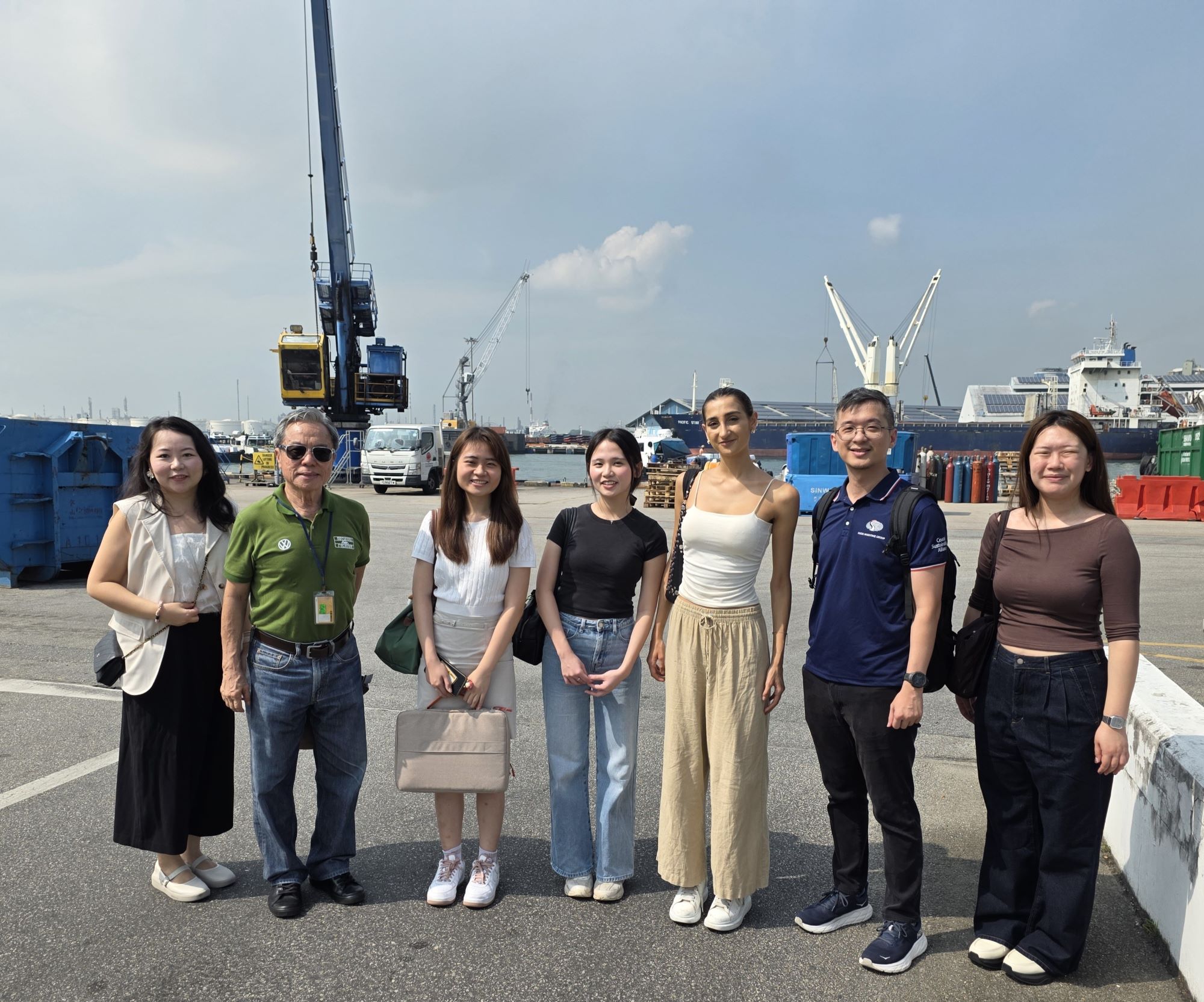
Beyond land transport, students were also exposed to the marine EV sector. This was made possible through a unique industry partnership in the ‘Business Operations Management’ course, taught by adjunct instructors Edmund Tan and William Fong in collaboration with the Coastal Sustainability Alliance, led by Kuok Maritime Group. Site visits to a lighter terminal and the ship operator’s office gave students a valuable glimpse into the entire operational ecosystem and how various industry stakeholders coordinate and support each other.
The project focused on early pilots of the electric supply boat, Voltai, and its integration with the Milk-Run supply chain concept at sea. The Milk-Run involves consolidated deliveries from shore to ship, a model which is critical for significantly reducing carbon emissions and fuel use in port operations. Through this hands-on engagement, students witnessed the complex economics of electric marine vessels, explored new operational model for harbour crafts, analysed charging and energy requirements at sea, and assessed how marine EV adoption strategically complements Singapore’s broader decarbonisation roadmap.
Building talent for Singapore's emerging EV sector
The land-sea perspective enabled students to compare electrification pathways across different transport modes, deepening their understanding of how Singapore’s EV future relies on both terrestrial mobility and maritime innovation.
Building on this momentum, SMU-X is developing two new EV-focused projects in the coming academic semester with partners across the land-based EV ecosystem. These efforts are early but meaningful contributions to building talent for Singapore’s emerging EV sector.
-End-