

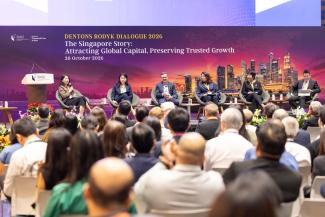
The 10th Dentons Rodyk Dialogue, jointly organised by Singapore Management University (SMU), through its Centre for Commercial Law in Asia (CCLA) at the Yong Pung How School of Law, and Dentons Rodyk, was held at SMU on 28 October 2026. It drew close to 300 participants from the legal, financial and business communities to examine Singapore’s evolving role as a global financial centre.
Titled 'The Singapore Story: Attracting Global Capital, Preserving Trusted Growth', this year’s Dialogue explored how Singapore can continue to attract foreign investment and long-term capital while preserving the regulatory credibility, institutional integrity and business confidence that underpin its position as a trusted international hub.
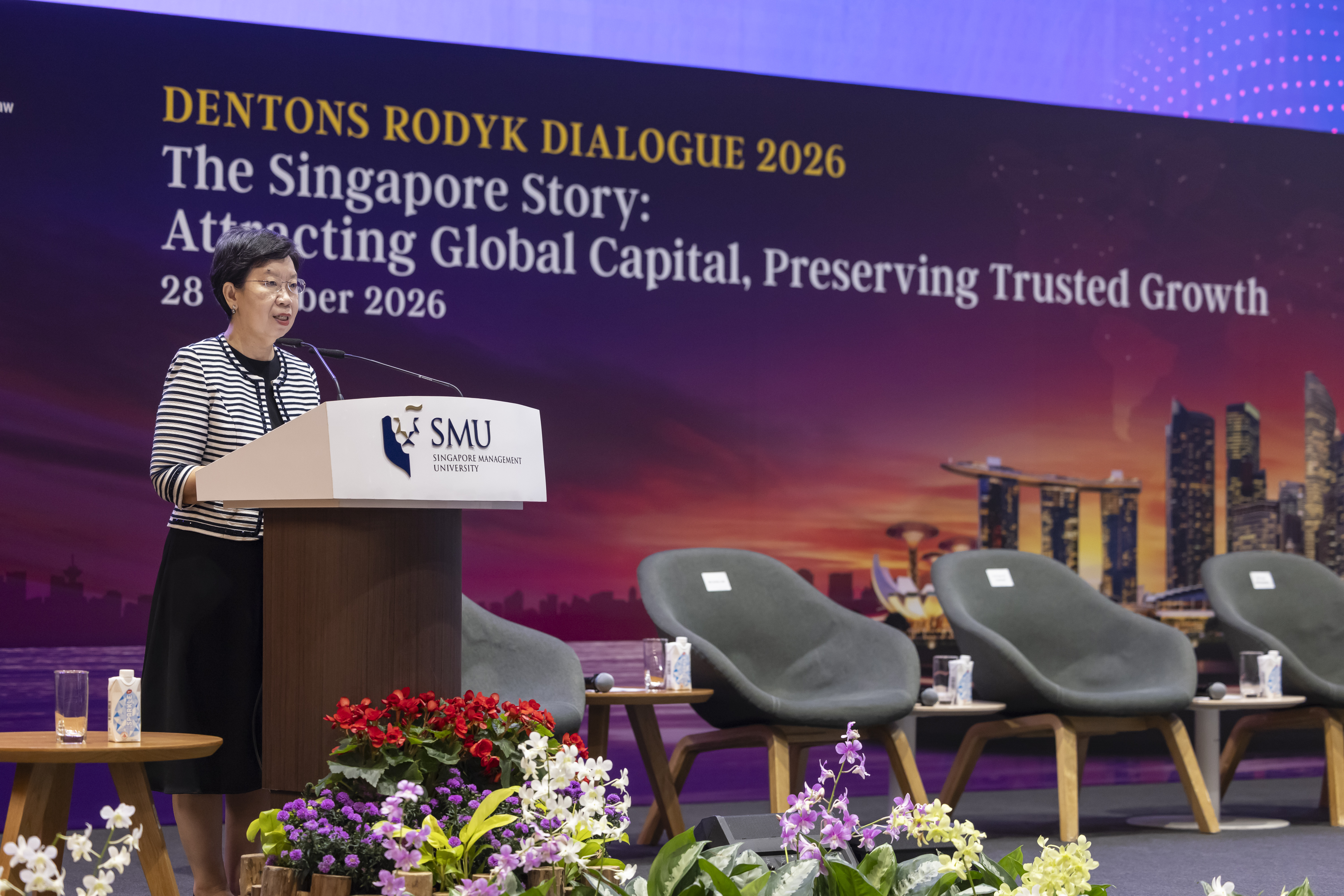
In her welcome remarks, Professor Lily Kong, President of SMU, said the partnership has, since 2017, “brought together Ministers, regulators, scholars, practitioners and business leaders to think through the questions that shape Asia’s legal, business and economic landscape”. “As a university rooted in Singapore and connected to Asia, SMU sees convening conversations like this as part of how we create impact beyond our campus,” she said.
Mr Gerald Singham, Global Vice-Chair and ASEAN CEO of Dentons Rodyk, highlighted the importance of the Dialogue as Singapore enters its next phase of growth. “It is through open dialogue and a willingness to challenge conventional thinking that we can better understand the opportunities ahead and the challenges we must navigate,” he said.
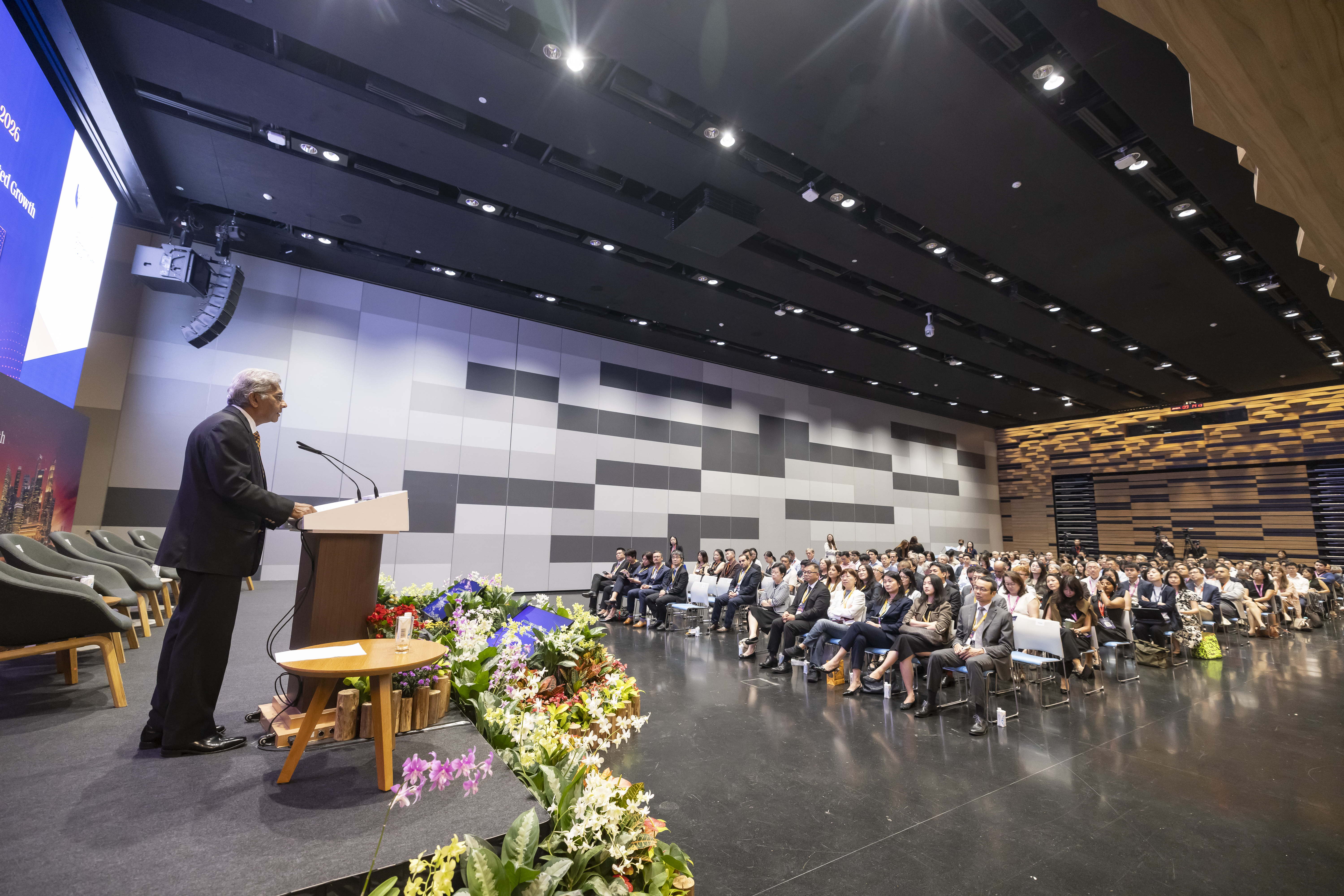
Perspectives from regulation, law and investment
The Dialogue featured perspectives from three distinguished speakers:
Mr Paul Yuen, General Counsel of the Monetary Authority of Singapore
Professor Dan W Puchniak, Yong Pung How Professor of Law at SMU’s Yong Pung How School of Law and Director of the CCLA
Ms Gopi Mirchandani, Head of Client Group, Asia, at Schroders
Their presentations examined the regulatory, geopolitical and investment considerations shaping Singapore’s continued development as a destination for global capital.
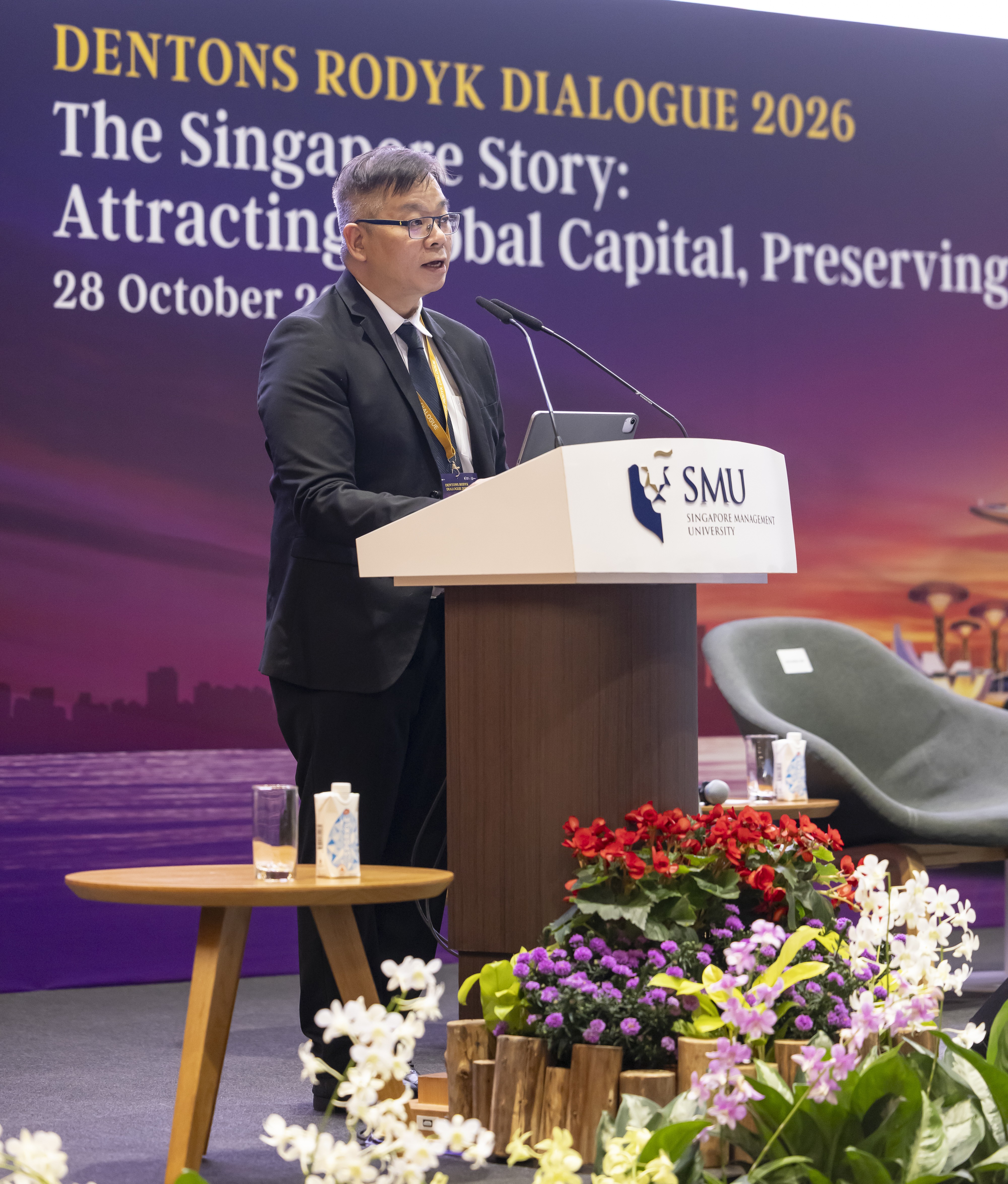
In his keynote address, Mr Paul Yuen outlined three priorities for Singapore as an international financial centre: attracting capital, enabling enterprise and sustaining trust. “We should compete for capital on the strength of our institutions, not by compromising the standards that make those institutions credible,” he said. He highlighted initiatives to strengthen Singapore’s fund-management ecosystem and called for clear, proportionate and adaptable regulation that enables innovation while responding to emerging risks. Trust, he noted, depends on regulators, financial institutions and intermediaries sharing responsibility for financial integrity, supported by information-sharing platforms such as COSMIC, which strengthens the financial system’s defences against illicit activities.
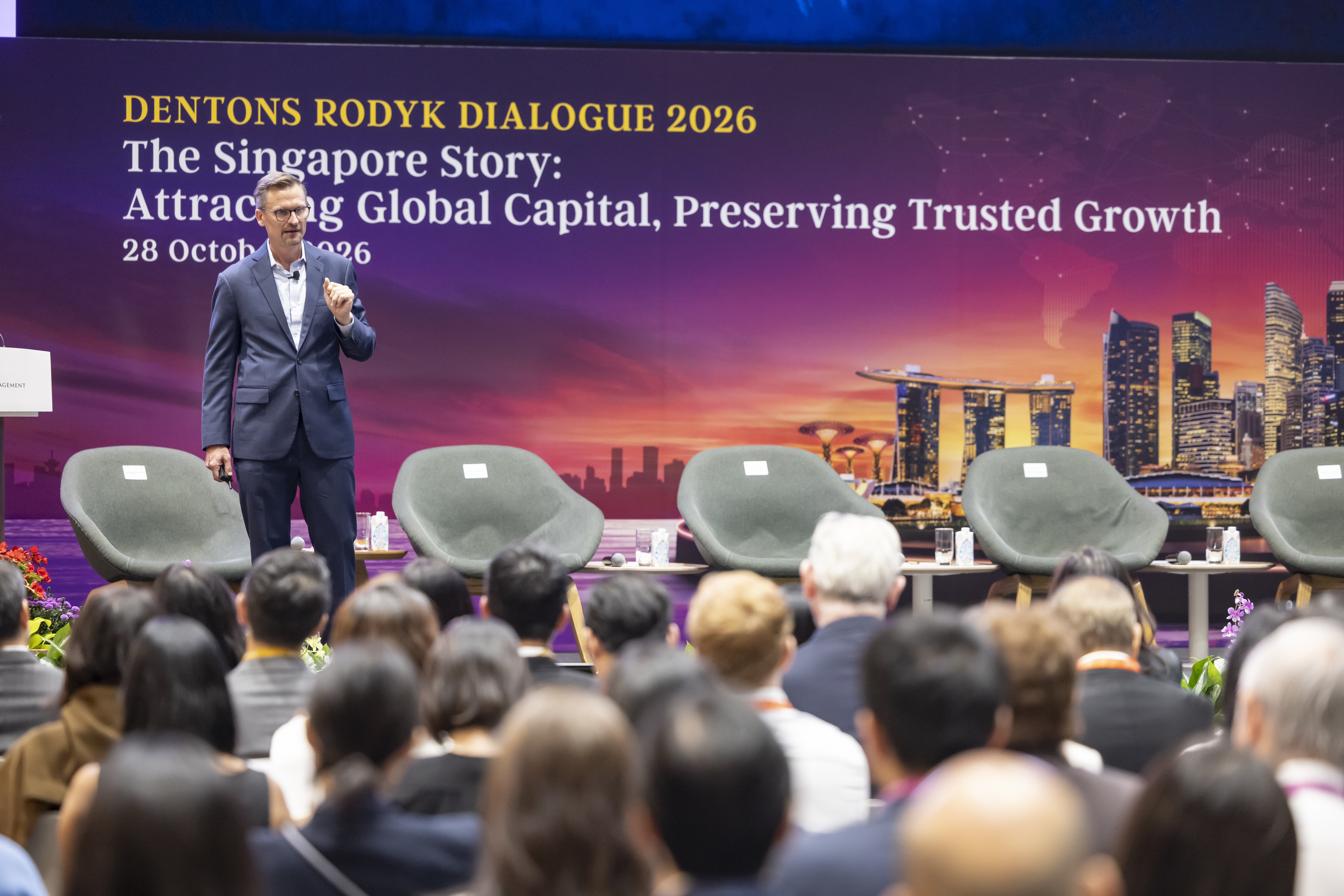
Drawing on his research on comparative corporate law and governance, Professor Dan W Puchniak examined how geopolitics is complicating corporate national identity. He argued that conventional legal criteria, such as jurisdiction of incorporation, headquarters and ownership, are insufficient to capture the full picture.
“We are living in a new world where corporate lawyers must recognise the fact that where a corporation is incorporated, where its real seat is, or who its controlling shareholder is, is not enough. You need to think about geopolitics,” he emphasised.
Using Nestlé, 7-Eleven and TSMC as examples, he illustrated how a company’s perceived national identity may be shaped by factors extending well beyond its formal corporate structure. Supply chains, access to data, strategic technologies and perceived connections to national interests increasingly influence how governments view and regulate companies. These considerations can have significant implications for cross-border investment, corporate governance and the treatment of multinational businesses. For Singapore, these developments raise important questions about how to maintain a predictable and attractive business environment while navigating geopolitical risks and changing government expectations.
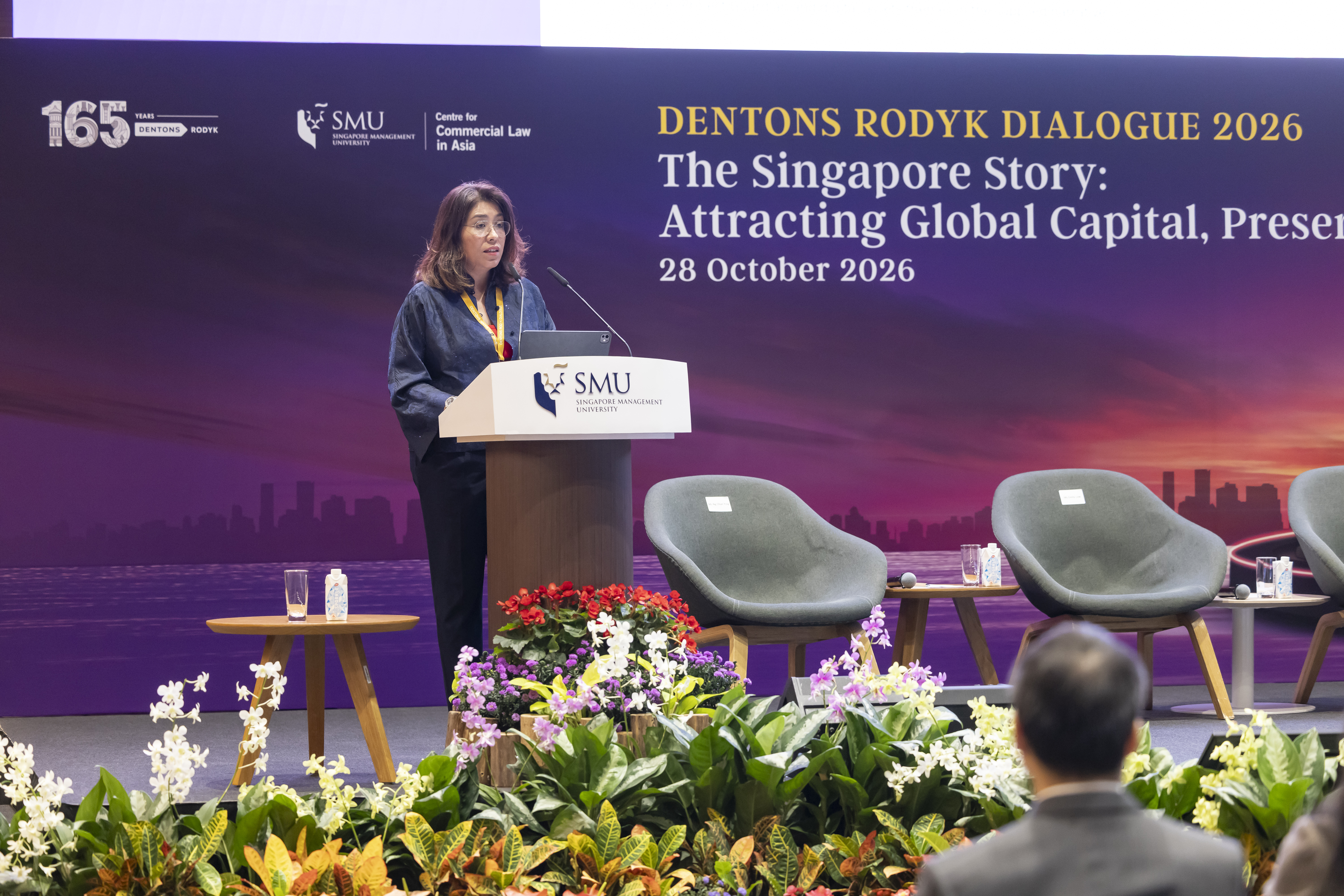
In her presentation, Ms Gopi Mirchandani argued that the next phase of Singapore’s asset-management industry should focus on strengthening investment capabilities and directing capital towards meaningful economic outcomes. She identified four emerging priorities for the sector: intergenerational wealth transfer, access to public and private markets, tokenisation and financing the economic transition. Together, these trends reflect changing investor expectations and the need for financial institutions to develop new ways of connecting capital with investment opportunities.
Ms Mirchandani emphasised the importance of investor protection, trusted financial infrastructure and the mobilisation of capital for infrastructure and innovation. Building on Singapore’s role as a gateway to Asia, she saw an opportunity for the city-state to become a more integrated platform connecting global capital with regional opportunities.
Balancing openness and safeguards
The Dialogue concluded with a panel discussion moderated by Mr Mark Wong, Senior Partner at Dentons Rodyk. Drawing together the themes explored in the individual presentations, the panellists examined the legal, regulatory, economic and investment considerations involved in positioning Singapore as a trusted destination for global capital.
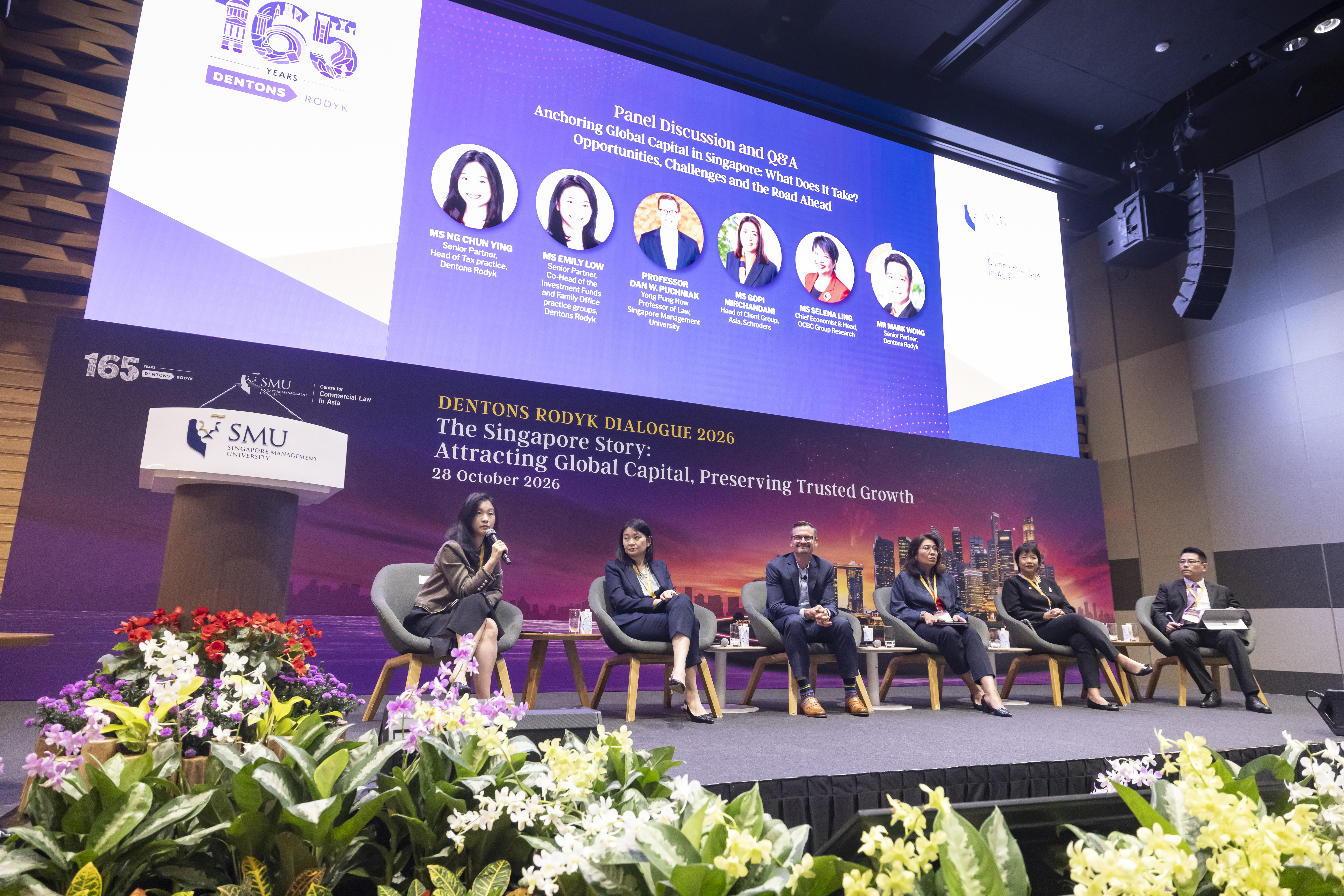
The discussion highlighted how Singapore can balance openness to international investment with robust regulatory safeguards as geopolitical shifts reshape cross-border businesses. Panellists also explored how Singapore can build on its established financial strengths to deepen investment capabilities and channel capital towards meaningful economic outcomes.
The panel underscored that Singapore’s continued success as a global financial centre will depend on its ability to evolve without compromising the institutional credibility and regulatory trust that underpin its appeal, as geopolitical shifts, technological developments and changing investor expectations reshape global capital flows.
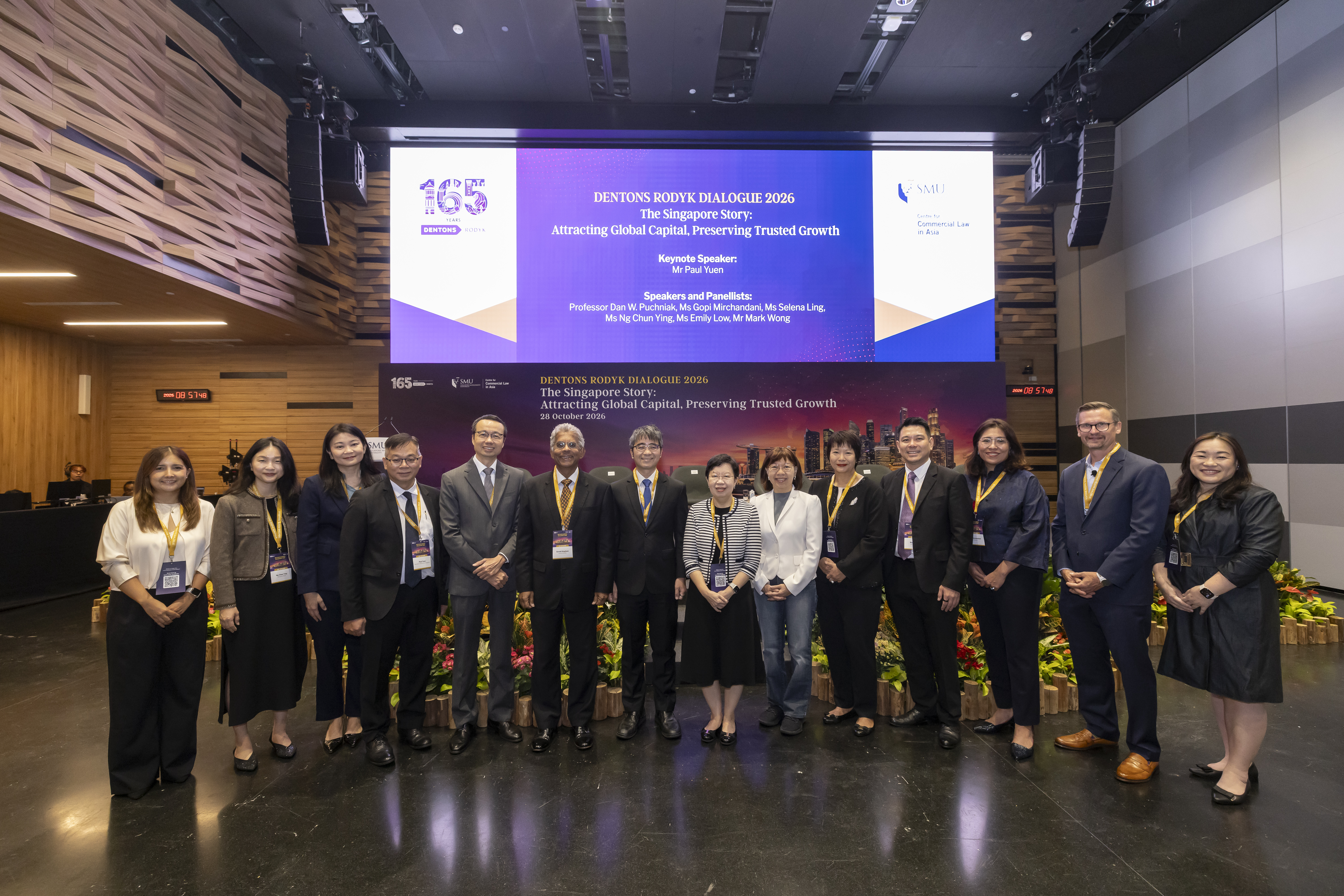
The Dentons Rodyk Dialogue is CCLA’s flagship platform for bringing legal scholarship to bear on the questions facing regulators, practitioners and businesses in Singapore and the region. The themes examined at this year’s Dialogue sit squarely within the Centre’s research agenda on the legal and regulatory foundations of commerce and finance in Asia. Through the Yong Pung How School of Law and the CCLA, SMU will continue to contribute research and thought leadership that inform Singapore’s development as a trusted global financial centre.
- End -