

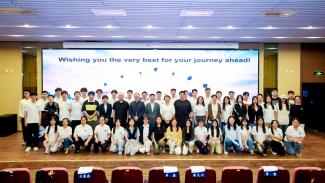
What happens when economists are trained to work with AI, machine learning and complex datasets, and data scientists are taught to ask the economic questions behind the numbers?
This intersection forms the heart of the Master of Data Science in Economics (MDSE), a joint postgraduate programme offered by Singapore Management University (SMU) and the Central University of Finance and Economics (CUFE). The inaugural cohort of the MDSE kickstarted its two-year programme in Beijing on 7 September 2026.
“This programme is not a simple sum of our two universities’ strengths. It brings together the strongest academic foundations of each, so that students gain a breadth of vision and independent judgement that is hard to develop within a single system,” said SMU Dean of the School of Economics and Lee Kong Chian Professor of Economics Li Jia, in his opening remarks at the launch event hosted on CUFE campus.
The MDSE programme is designed to develop a capability that is increasingly important as businesses and policymakers contend with more data, more sophisticated technologies and increasingly complex economic decisions. More importantly, the skills and knowledge gleaned are intended to help participants master an understanding of what the analysis means and use it to make better-informed decisions.
By combining economic reasoning with econometrics, machine learning and artificial intelligence, participants move from formulating an economic question to analysing complex datasets, evaluating evidence and communicating insights to decision-makers. Their training could be applied to questions such as whether a policy is achieving its intended effects, how competition is evolving in digital markets, or how businesses can assess economic and financial risks.
“Technology can process data and build models, but what remains truly scarce is judgement: knowing which questions to ask, which conclusions to trust, and how to explain complex problems clearly to decision-makers,” commented Prof Li. “You are the first students of this programme. In a sense, you are the first bridge, and the first ambassadors, between our two universities.”
Building skills for the future
Marking the start of the inaugural cohort, SMU and CUFE brought students into the universities’ latest research through two open lecture sessions. Prof Li and SMU Associate Provost (Postgraduate Professional Programmes) Themin Suwardy shared insights, giving students an early look at how academic research might be applied to real-world economic and business questions.
In a talk on building “Skills for the Future”, Assoc Prof Suwardy challenged students to look beyond the technical expertise that they would gain from the MDSE programme. Underscoring the importance of the ability to think critically, adapt to change, lead, generate ideas and understand one’s own strengths, he referenced the World Economic Forum’s Future of Jobs Report 2025 to highlight five capabilities: analytical thinking; resilience, flexibility and agility; leadership and social influence; creative thinking; and motivation and self-awareness.
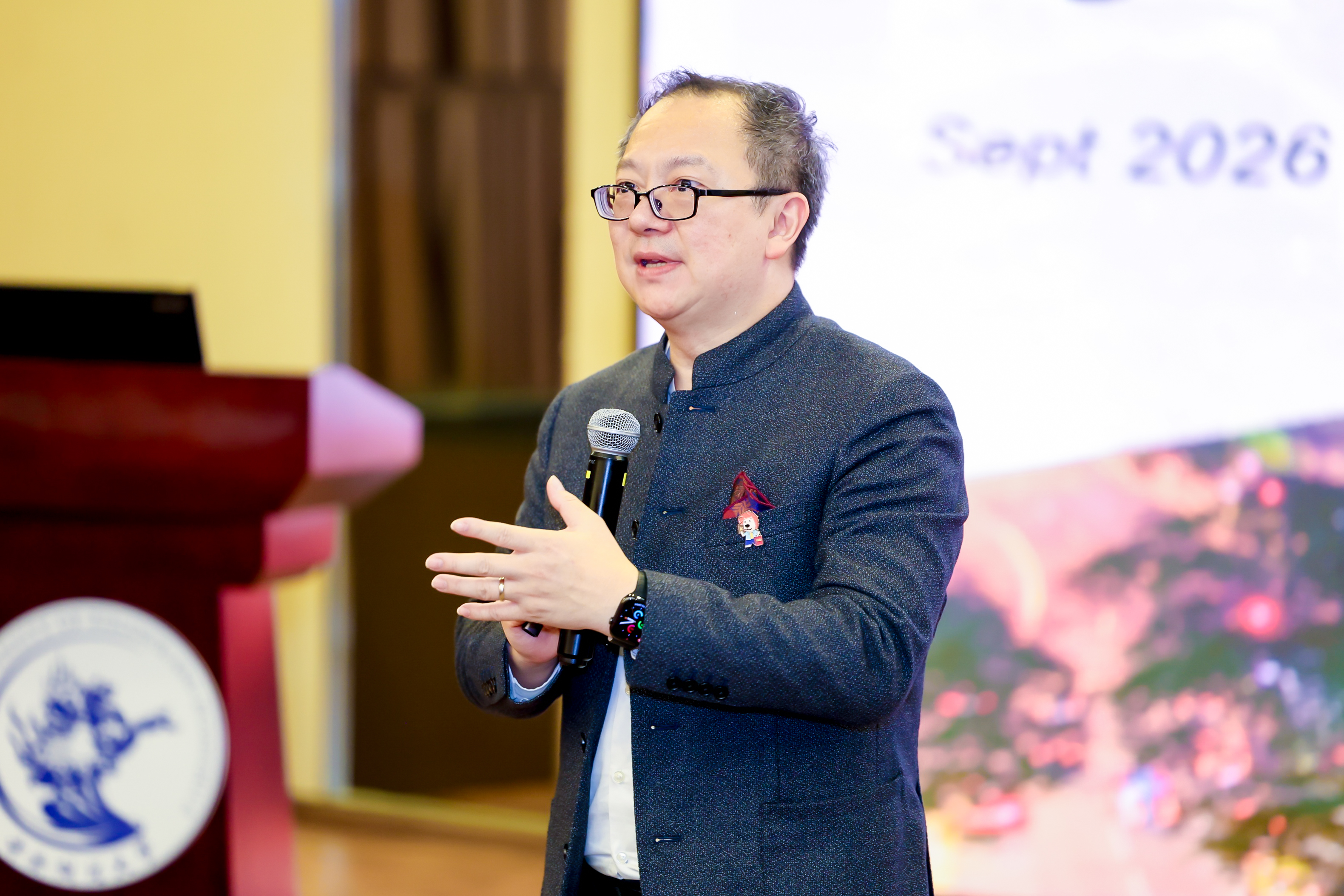
In particular, he urged students to start developing these capabilities from the first day of their master’s journey, rather than waiting until graduation or entering the workforce. Encouraging them to tackle problems independently before turning to answers or AI tools, and develop greater self-direction expected at a postgraduate level, his message was ultimately about using the two years at SMU and CUFE not only to acquire knowledge, but to develop the judgement, initiative and adaptability to put that knowledge to work in an AI-enabled economy.
Will AI replace our jobs?
Addressing one of the most pressing questions surrounding generative AI, Prof Li Jia took a data-driven perspective in his talk, Skill Exposure in the Age of AI: Understanding How Generative AI Is Transforming Work Through the Lens of Skills.
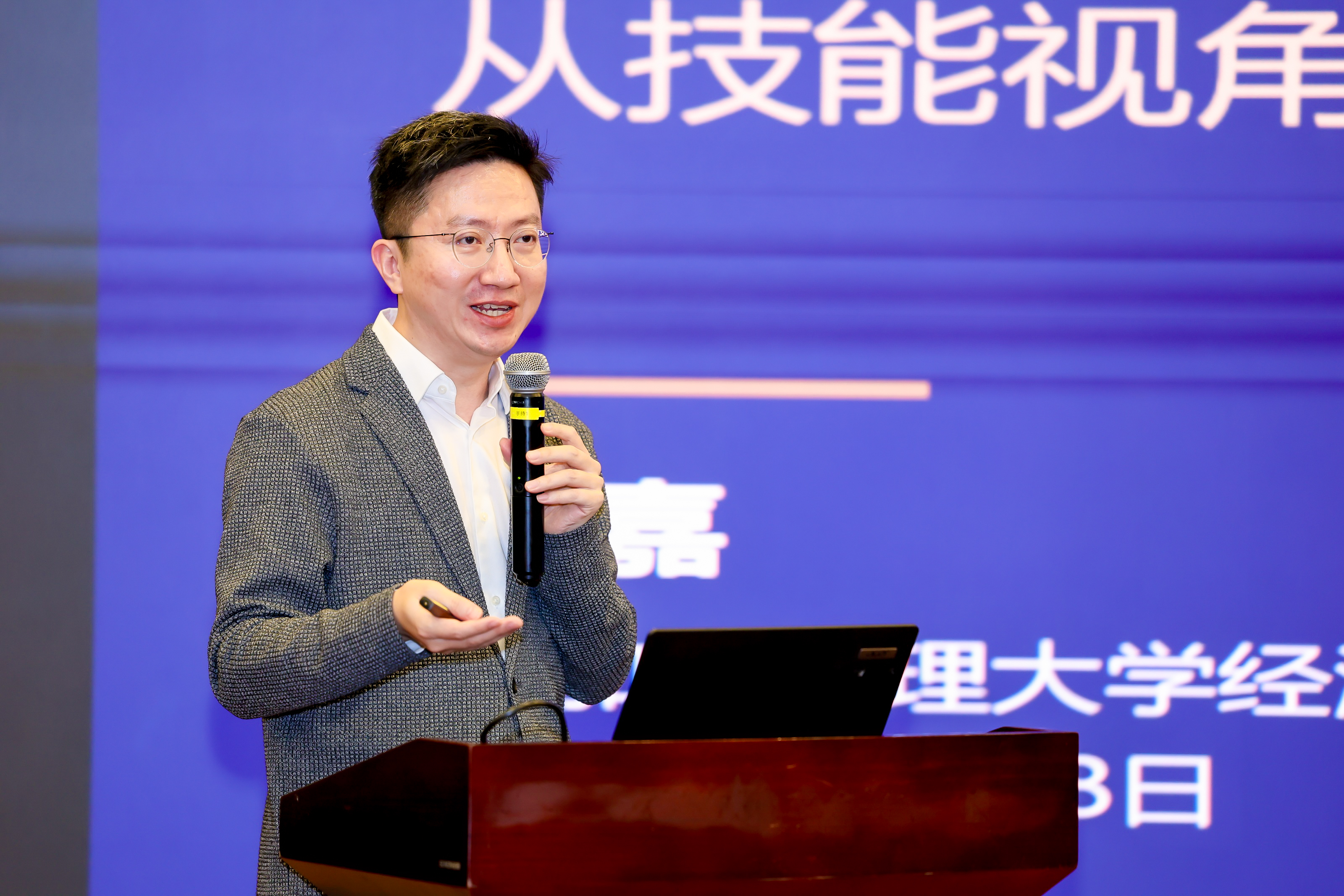
Drawing on his research, Prof Li highlighted the need to move beyond broad predictions about which occupations may be affected by AI and examine instead which specific skills are most exposed to generative AI. His team assessed around 8,900 skills in Singapore’s Skills Framework, using three leading AI models — GPT, Claude and Gemini — to estimate the extent to which each skill could be performed or assisted by generative AI. The estimates are updated periodically to track how AI exposure evolves.
The findings pointed to a clear divide. Skills involving written expression are substantially more exposed to generative AI than hands-on operational skills, with overall exposure rising steadily since the launch of ChatGPT in 2022. Still, Prof Li cautioned against equating AI exposure with job replacement. A job can contain highly exposed tasks without the occupation itself disappearing, making the ability to work effectively with AI increasingly important.
For students entering an AI-shaped workplace, Prof Li's message was therefore less about competing with AI than learning to use it well. “The person who replaces you is not AI, but someone who uses AI better than you,” he told students. As AI makes tasks such as information gathering and research increasingly easy, he argued that the more valuable skills are knowing which question to ask, how to think critically about the answer, and whether an AI-generated result can be trusted. Quantitative and data science capabilities will remain important, but their value will increasingly be amplified by the judgement to apply them well.
Leveraging the strengths of SMU and CUFE
In an AI-driven era, sound judgement is an increasingly valuable resource, shaped by the ability to bring together different perspectives and ways of thinking. SMU’s partnership with CUFE reflected the University’s commitment to building meaningful connections across Asia, a key strategic focus under SMU2030 and the University’s Asia-Ready Education framework that was launched this year.
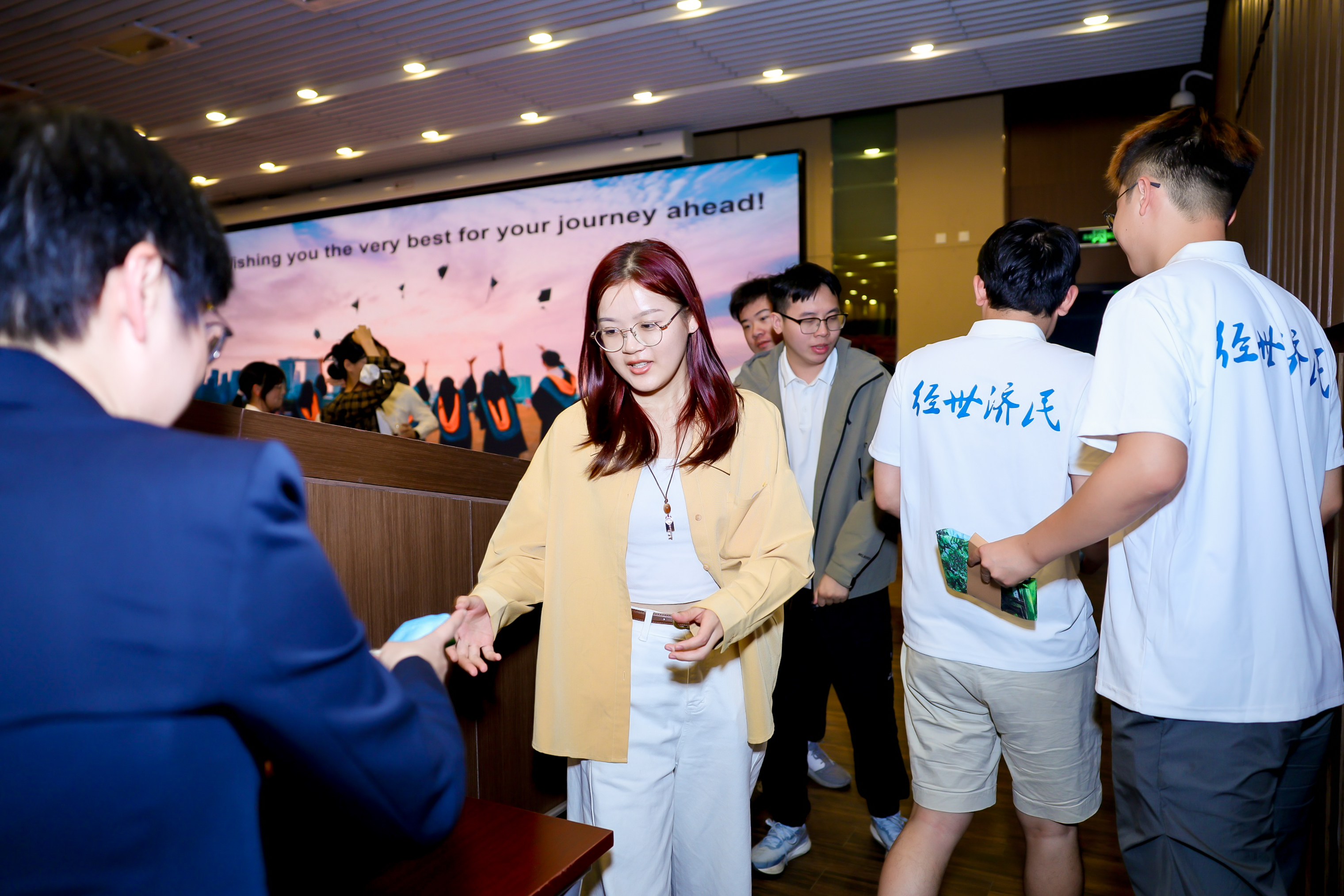
By bringing together the complementary strengths of two universities, participants of the programmes would draw benefits that enable a deeper and nuanced learning. SMU contributes expertise in econometrics and data science, including applied causal inference, machine learning, big data analytics, databases, time-series econometrics and complex networks. CUFE provides deep expertise in economics and the digital economy, together with knowledge of China's markets, institutions and policy environment.
For students, the combination would offer more than technical training. While based at CUFE in Beijing, they have the opportunity to gain exposure to China's economic environment, academic resources and professional networks, while earning an SMU degree and learning from faculty across both institutions.
“Our programme aims to develop graduates with the analytical and economic expertise to harness data effectively, evaluate complex challenges and make informed, evidence-based decisions. By combining SMU’s strengths in econometrics and data science with CUFE’s expertise in China’s economy, we prepare students to create value for businesses and the wider economy, while helping organisations and policymakers across China, Singapore and the region respond confidently to technological and economic change,” said Associate Professor Daniel Preve, Academic Director of the MDSE programme, SMU.
Photo credit: SMU