
As Vietnam accelerates its plans to establish an international financial centre, Singapore Management University (SMU) has brought together leading academics, regulators, financial professionals and industry leaders to examine one of the country's biggest challenges: developing the talent needed to support its ambitions.
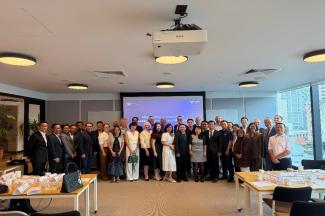
SMU jointly organised an invitation-only roundtable ("Vietnam's Capability Gaps – What We Heard, What We Agree On"), with the Vietnam International Financial Centre (VIFC), convening about 40 participants from universities, professional bodies, businesses and government to identify the capability gaps that could determine the success of Vietnam's emerging financial ecosystem.
The working session focused on the skills, institutional capabilities and cross-sector collaboration required for Vietnam to compete with established financial centres such as Singapore and Hong Kong.
Participants discussed critical financial-sector roles that remain difficult to develop, lessons from comparable international markets, and the actions universities, employers, regulators and professional bodies should prioritise to strengthen Vietnam's talent pipeline.
The discussion reflected growing recognition that building an international financial centre requires more than capital and infrastructure. It also depends on cultivating deep pools of specialised talent across finance, law, regulation, technology and sustainability.
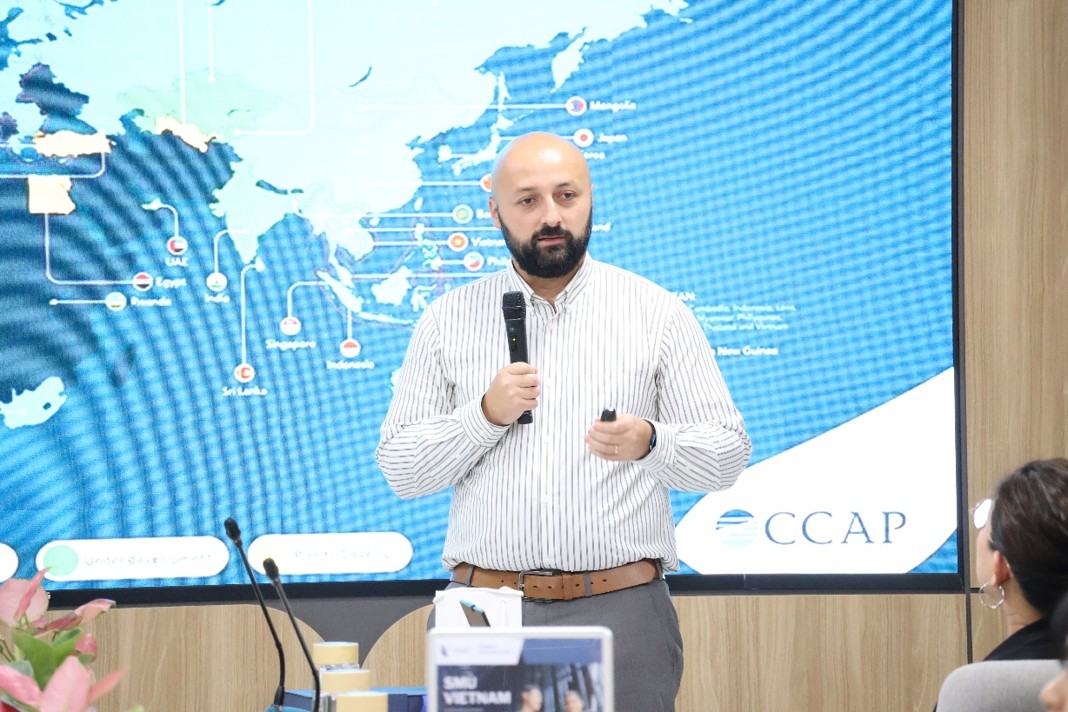
Opening the session, Associate Professor Theodor Cojoianu from SMU's College of Integrative Studies and the Singapore Green Finance Centre delivered a masterclass on sustainable finance, drawing on experiences from Singapore, Vietnam and global green bond markets.
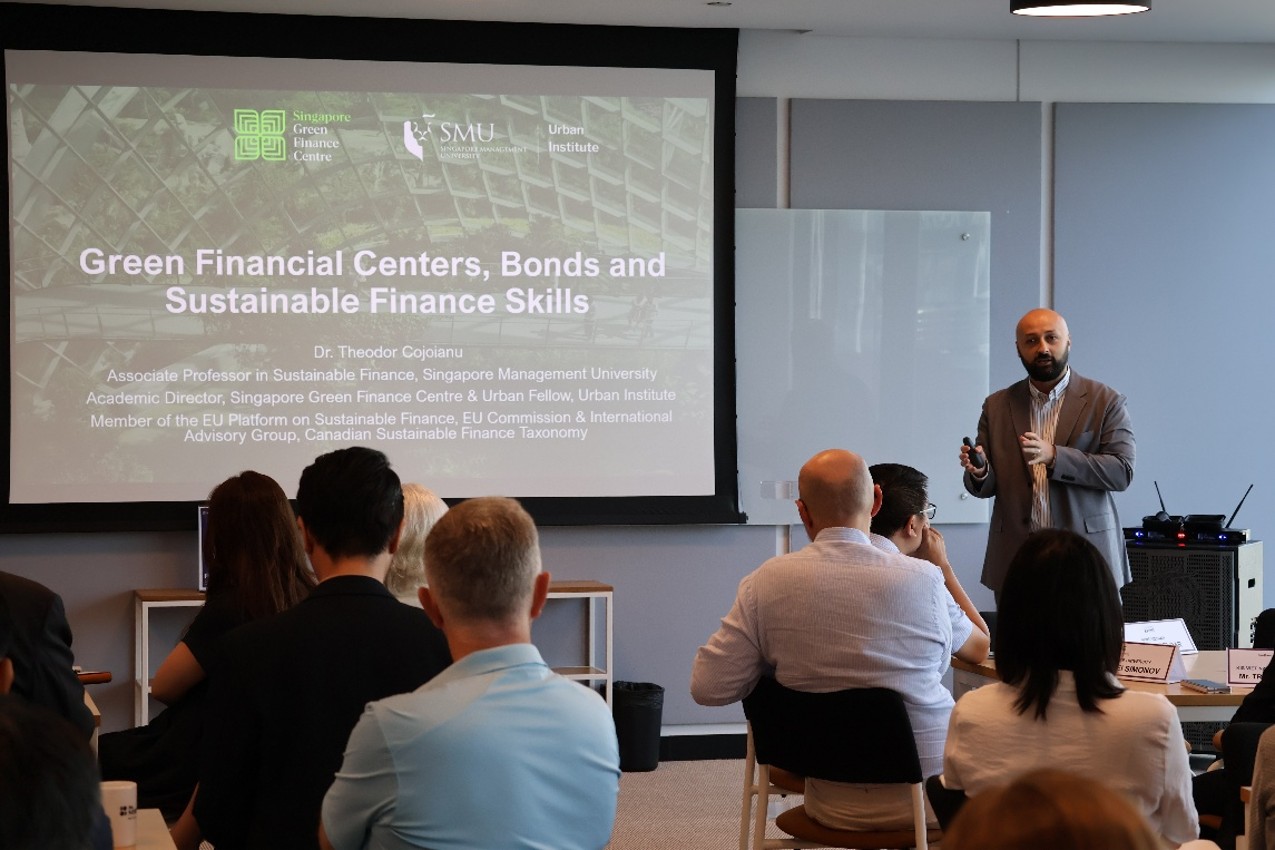
He highlighted that successful financial centres increasingly depend on aligning green infrastructure investment, capital markets, supportive public policy and interdisciplinary capabilities spanning finance, sustainability, artificial intelligence and data science. Emerging financial centres that invest early in these capabilities would be better positioned to support long-term economic transformation.
“Whether it is for domestic fundraising reasons or towards international coordination of green finance flows, meeting the sustainable project pipeline with green bond markets is crucial for the development of any financial centre, whether focused on non-financial corporate issuers or green bond issuances by banks,” said Theodor Cojoianu, Associate Professor of Sustainable Finance, SMU
The roundtable attracted participants from organisations including SMU, the National University of Singapore, the Hong Kong University of Science and Technology, the University of St Andrews Business School, Michigan State University, ICAEW, ISCA Vietnam, KPMG and the Vietnam Community of Investment Professionals, alongside representatives from business associations, consultancies and financial institutions. Former United States Ambassador to Vietnam Ted Osius and the Chief Executive Officer of the Vietnam International Financial Centre also attended.
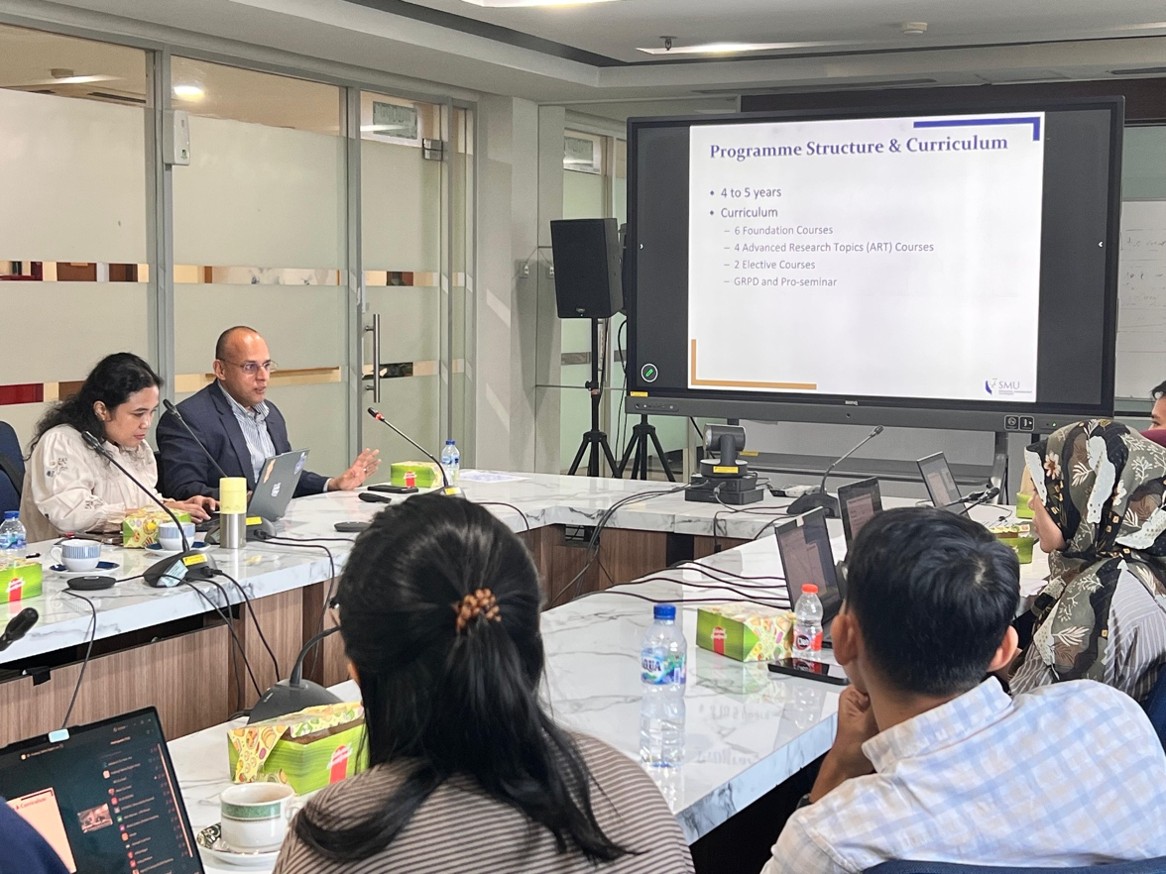
Among the participants was Professor Dr. Nhan of Ton Duc Thang University. "SMU's strong emphasis on industry collaboration and talent development made it an ideal partner for this initiative with VIFC. By convening leaders from academia, industry and the professional community, the event created opportunities to exchange ideas, identify practical solutions, and strengthen partnerships that will help develop globally competitive financial talent for Vietnam's future."
The engagement formed part of SMU's broader efforts to support capability development in Vietnam through thought leadership, higher education and research collaboration.
Following the roundtable, Associate Professor Cojoianu and SMU's College of Graduate Research Studies as part of the broader SMU delegation to Vietnam visited four universities in Ho Chi Minh City to deliver masterclasses on sustainable finance and introduce postgraduate research opportunities at SMU.
The sessions, held at Vietnam National University -University of Economics and Law, Eastern International University, Vietnam National University -Ho Chi Minh University of Science, and the University of Economics and Humanities, reached undergraduate students and faculty members interested in sustainability, finance and research. Close to 200 students attended the sessions.
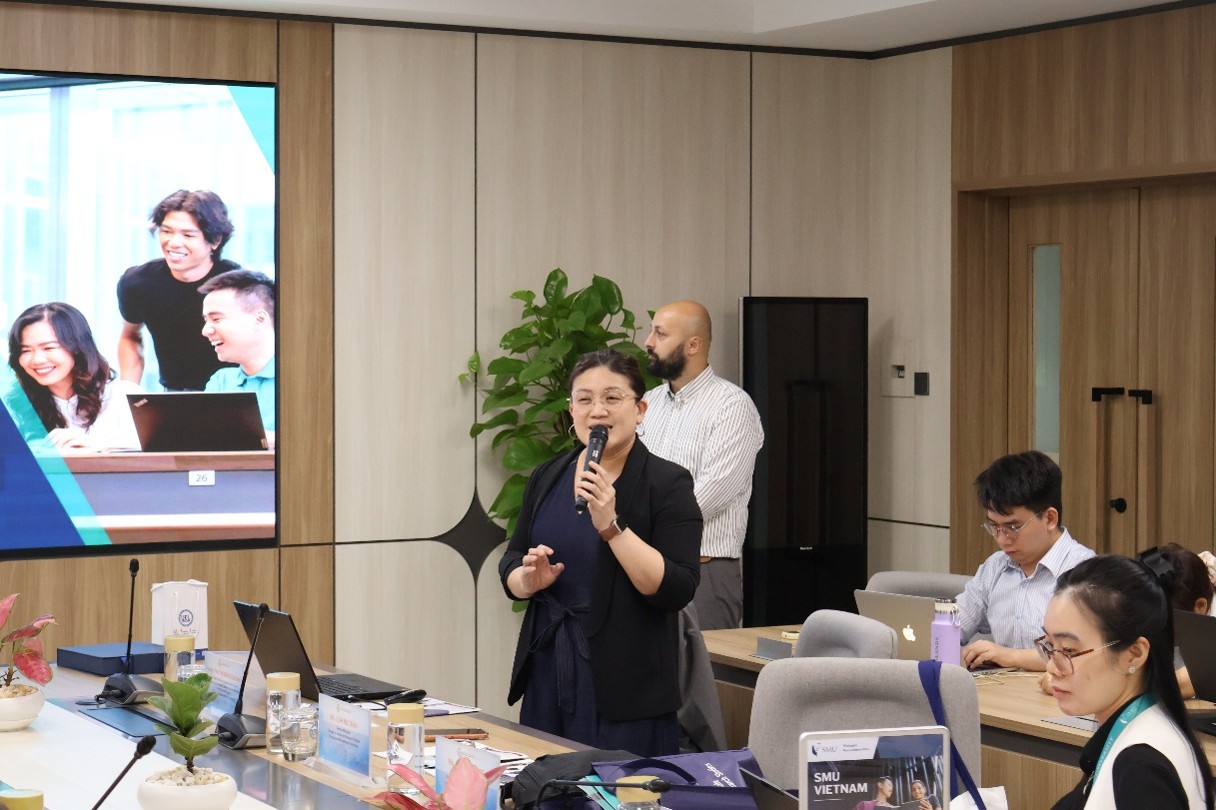
Together, the roundtable and university engagements reflected SMU's approach to regional partnership: combining thought leadership, industry engagement and graduate education to help build capabilities where they are needed most. Reflecting on the significance of the collaboration, Mr Viet Anh, Country Director of SMU Vietnam, said the initiative marked the beginning of a deeper partnership with VIFC.
“I believe this event marks the beginning of a meaningful partnership between SMU and the VIFC, united by our shared commitment to developing future-ready talent for Vietnam's financial sector. For over 25 years, SMU has proudly nurtured generations of Vietnamese graduates who have gone on to make meaningful contributions to the financial industry in both Singapore and Vietnam. Together with VIFC, we look forward to deepening collaboration across academia, industry, and government to drive impactful initiatives that strengthen Vietnam's financial talent ecosystem.”
As economies across Asia race to develop the talent needed for the next generation of financial centres, SMU is contributing not only through research and teaching, but also by convening policymakers, industry leaders and academia to address shared regional challenges. Vietnam's international financial centre ambitions present one such opportunity, where developing world-class talent will be as critical to long-term success as investment, regulation and infrastructure.