
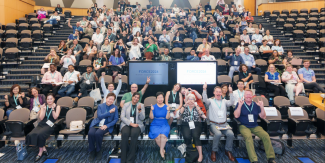
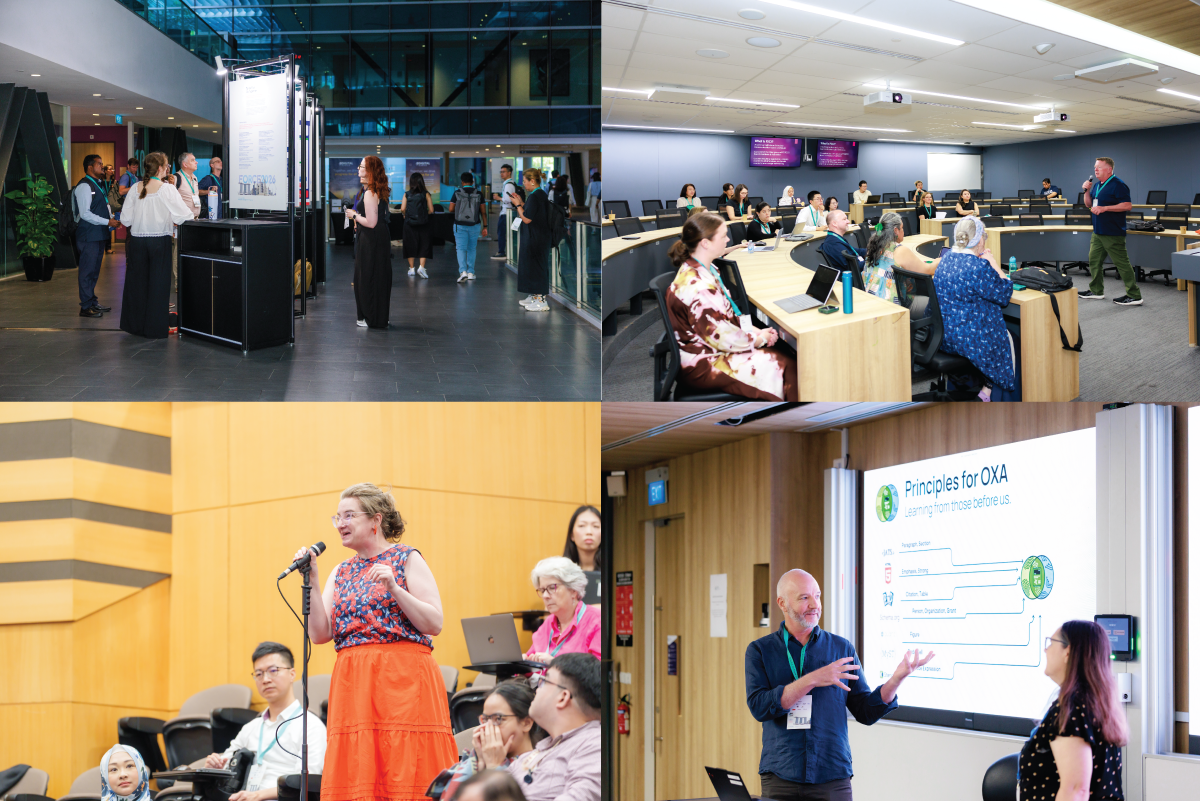
Singapore Management University Libraries (SMU Libraries) hosted FORCE2026, the annual conference of FORCE11, from 3 to 5 June 2026 in our city campus.
FORCE11 is a global community dedicated to advancing how scholarly knowledge is created, shared, and used. The conference commemorated FORCE11’s 15-year journey of building a global community committed to improving scholarly communication and research assessment.
FORCE2026 marked the first time the conference was held in Asia, positioning Singapore and SMU Libraries at the centre of global conversations on the future of research, scholarly communication and research assessment. By bringing the conference to the region, SMU Libraries helped create a platform for Asia-Pacific institutions to contribute more actively to shaping international discussions that will influence how knowledge is produced, evaluated and shared.
The conference brought together researchers, librarians, publishers, technologists, funders and research infrastructure leaders from Singapore and across the region, including Indonesia, Thailand, Hong Kong, India, New Zealand, Japan, China and Australia, as well as participants from the United States and Europe.
The conference also reflected SMU Libraries' growing role as a convenor of international conversations on open scholarships, research assessment and scholarly communication. Through active leadership within global networks such as FORCE11, SMU Libraries has contributed to building connections across institutions, disciplines and regions at a time when research challenges increasingly transcend national boundaries.
FORCE11’s rallying theme for 2026 was “To Go Far, Go Together: Advancing Scholarly Communication Across Boundaries and Disruptions,” and sought to address challenges that institutions worldwide, including SMU, are actively grappling with, over the three days. It underscored the importance of collaboration in navigating change across the scholarly communication landscape.
Rethinking how research is measured
Professor Lily Kong, President and Lee Kong Chian Chair Professor at SMU opened the conference with her keynote address, titled “From ‘Publish or Perish’ to Purpose and People: Going Together on Research Assessment Reform.” Her address examined an issue that would underpin discussions during the rest of the conference: what happens when the measures used to assess research begin to shape research culture itself?
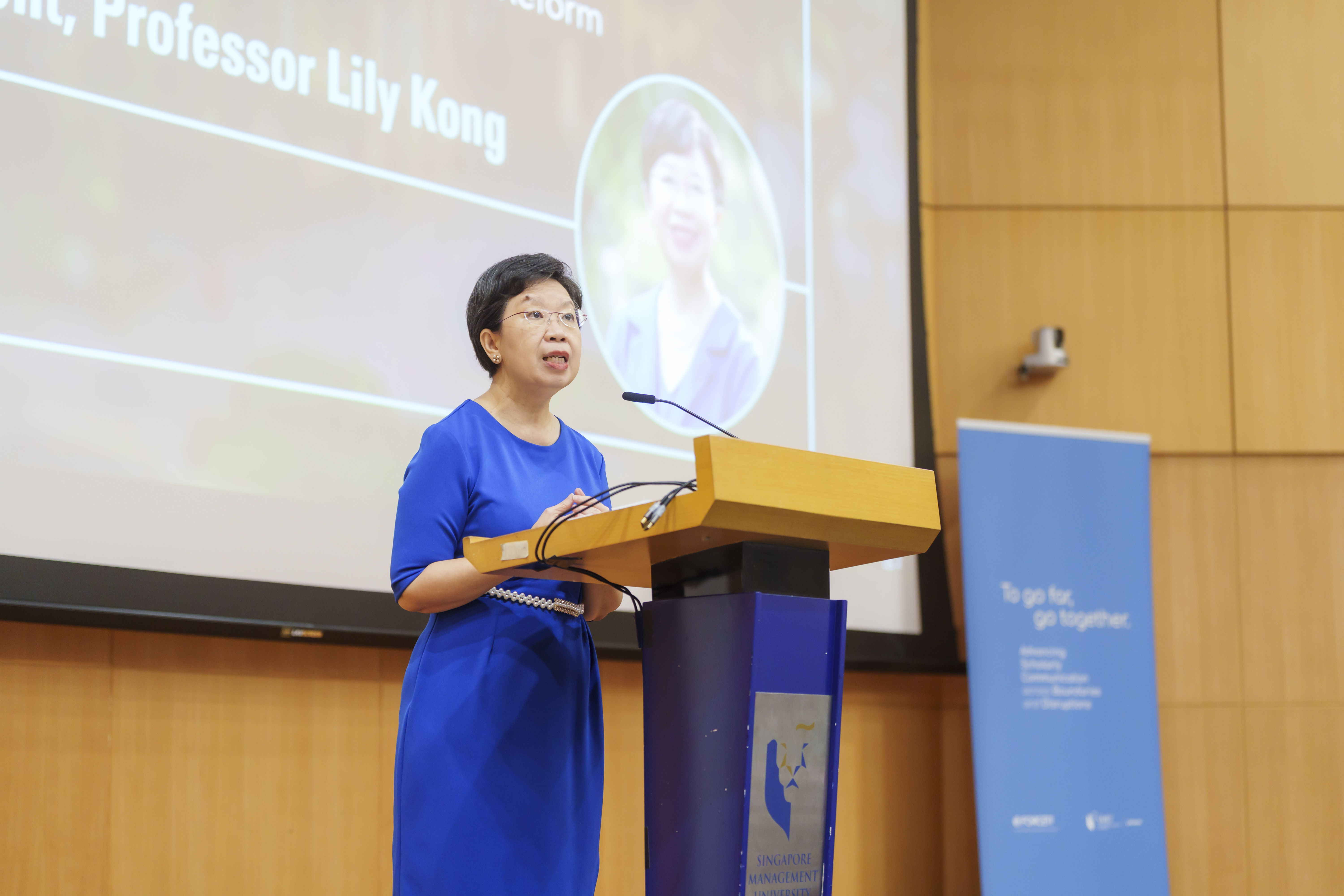
In her speech, Professor Kong noted that publication counts and citation metrics have long served as useful proxies for scholarly contributions. Problems arise, however, when these proxies become goals in themselves, fuelling concerns about researcher wellbeing, perverse incentives, and a narrowing of what institutions recognise and reward.
Rather than measuring more, she argued, universities need to measure in ways that illuminate rather than distort. This means recognising a broader ecology of contribution, spanning foundational scholarship, methodological innovation, policy influence, educational transformation, industry engagement, and community impact. With AI reshaping how knowledge is produced and evaluated, questions of originality, attribution, trust, and genuine contribution have become even more pressing.
As Professor Kong observed: “no university can reform research culture alone. Universities operate within broader ecosystems shaped by publishers, funders, ranking agencies, governments, technology platforms, libraries, and scholarly communities themselves. The incentives embedded across these systems often reinforce one another.”
The discussion reflected a broader shift taking place globally, one in which libraries are increasingly playing strategic roles beyond traditional information services. Today, libraries contribute to research integrity, data stewardship, scholarly publishing, open science initiatives and the responsible dissemination of knowledge.
*Prof Kong’s full keynote address can be downloaded in the pdf attached below.
Living with AI, and looking ahead to 2026
Questions of disruption ran throughout the programme. In his keynote, “Attention is all we have,” Ian Mulvany, Chief Technology Officer of BMJ Group, explored how AI may reshape scholarly communication and their wider implications for how knowledge is created, assessed and trusted. Rather than treating AI as a distant threat or easy solution, he framed it as a reality the scholarly communication community must shape deliberately.
He noted: “Attention is all we have. In a world of abundant knowledge creation and intelligence on tap, how we choose to use our attention becomes increasingly critical. The role of the human must remain critical.”
The conference closed with Professor Ginny Barbour, Editor-in-Chief of the Medical Journal of Australia and Co-Chair of the Declaration on Research Assessment (DORA), who delivered the keynote “Publishing in 2026.”
Asking “how we got into such trouble and how we get out of it,” she reflected on the historical challenges facing scholarly publishing and the growing pressures placed on established norms and processes. These include peer review overload, AI-generated papers, and the need to better equip academics to navigate a rapidly changing environment.
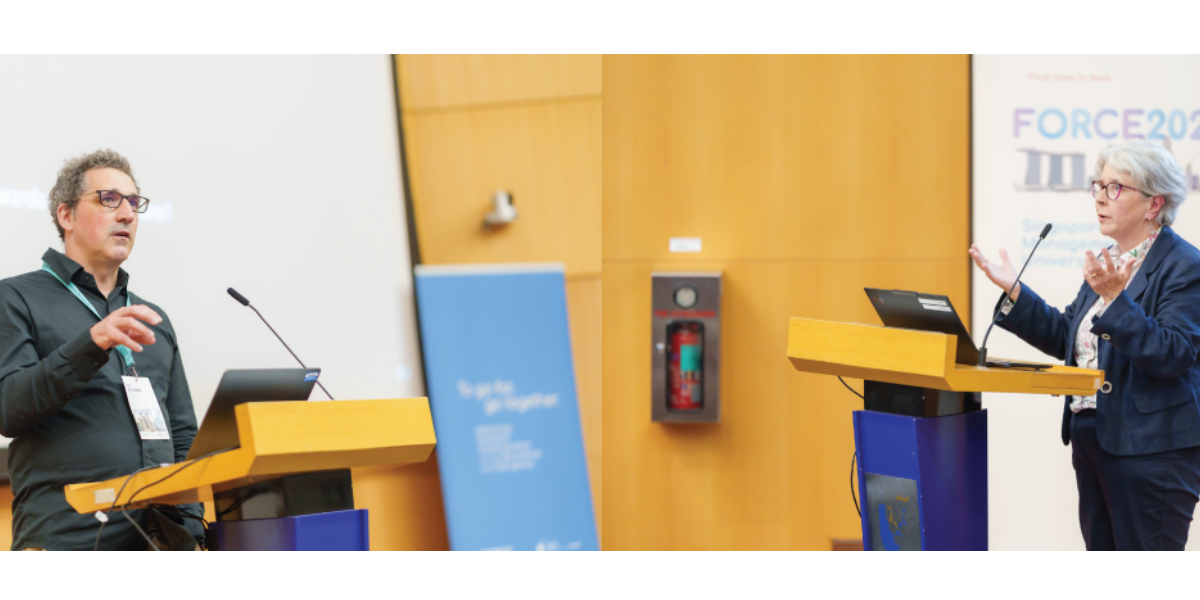
Between the keynotes, parallel sessions explored systemic issues across scholarly communication, including open infrastructure, participation and accessibility, FAIR data, open access publishing, research software sustainability, computational publishing, and equity. AI remained a prominent thread, with sessions on AI-powered workflows, trust and impact, AI and open data, and open-source software.
By bringing together researchers, publishers, funders, librarians and policymakers, FORCE2026 provided a platform for dialogue on some of the most pressing and complex issues facing the global research community. The conference highlighted the value of cross-sector collaboration in addressing challenges that no single institution can solve alone.
Aside from the main conference, a satellite event on 2 June, co-organised by CoARA (the Coalition for Advancing Research Assessment), DORA, ALLEA (All European Academies), together with FORCE11, brought together stakeholders from across the research ecosystem for a dialogue on research assessment reform across the Asia-Pacific.
The discussions strengthened regional networks and helped lay the foundations for future collaborations on research assessment reform, open scholarship and research infrastructure development across Asia-Pacific.
From dialogue to impact
Closing the conference, Bella Ratmelia, Senior Librarian at SMU Libraries, Co-Chair of FORCE2026 and Vice President of FORCE11, thanked participants as well as the sponsors for their support and belief in this community. She encouraged attendees to keep the conversations going within their institutions.
Bella's leadership within FORCE11 reflects SMU Libraries' active contribution to shaping international discussions on scholarly communication and research assessment. Through such engagements, SMU Libraries continues to build bridges between global conversations and regional priorities, helping ensure that Asia-Pacific perspectives are represented in the future of scholarly communication.
As Bella reflected in her closing remarks, FORCE2026 was not about leaving with the answers, but about finding one another.
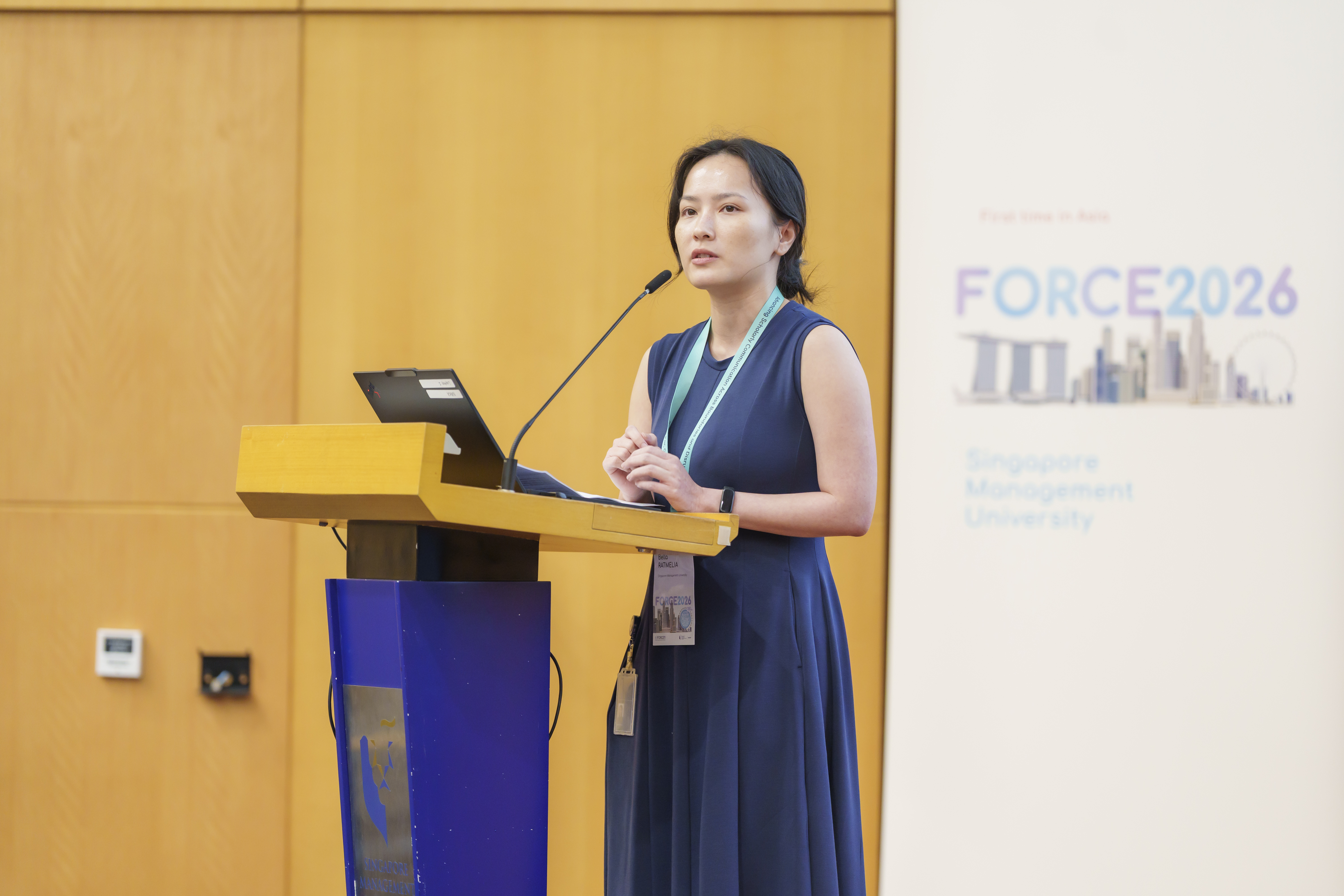
By bringing FORCE11 to Asia for the first time, SMU Libraries demonstrated how our libraries can serve not only as custodians of knowledge, but also as convenors, connectors and catalysts for shaping the future of research and scholarly communication.
As research continues to evolve amid technological and societal change, the conversations that began at FORCE2026 will continue to influence how knowledge is created, evaluated and shared across the region and beyond.