
In a world of fracturing geopolitics and accelerating technological disruption, resilience must go beyond recovery to strategic reinvention and place the arts and humanities at the centre of how societies adapt. Against this backdrop, Singapore will invest S$556 million over the next five years to strengthen social science and humanities research. Universities such as Singapore Management University (SMU) are positioned at the forefront of efforts to translate ideas into policy and societal impact.
Announcing the funding at the launch of the 2026 Social Science and Humanities Ideas Festival at SMU on Thursday (Feb 26), Minister for Education, Mr Desmond Lee said, “this year’s focus on resilience amidst a changing world is timely. We live in times of great complexity and uncertainty. Amidst these changes, social science and humanities research can help us to make sense of what’s going on, chart our course, identify trends, avoid pitfalls, and seize opportunities.”
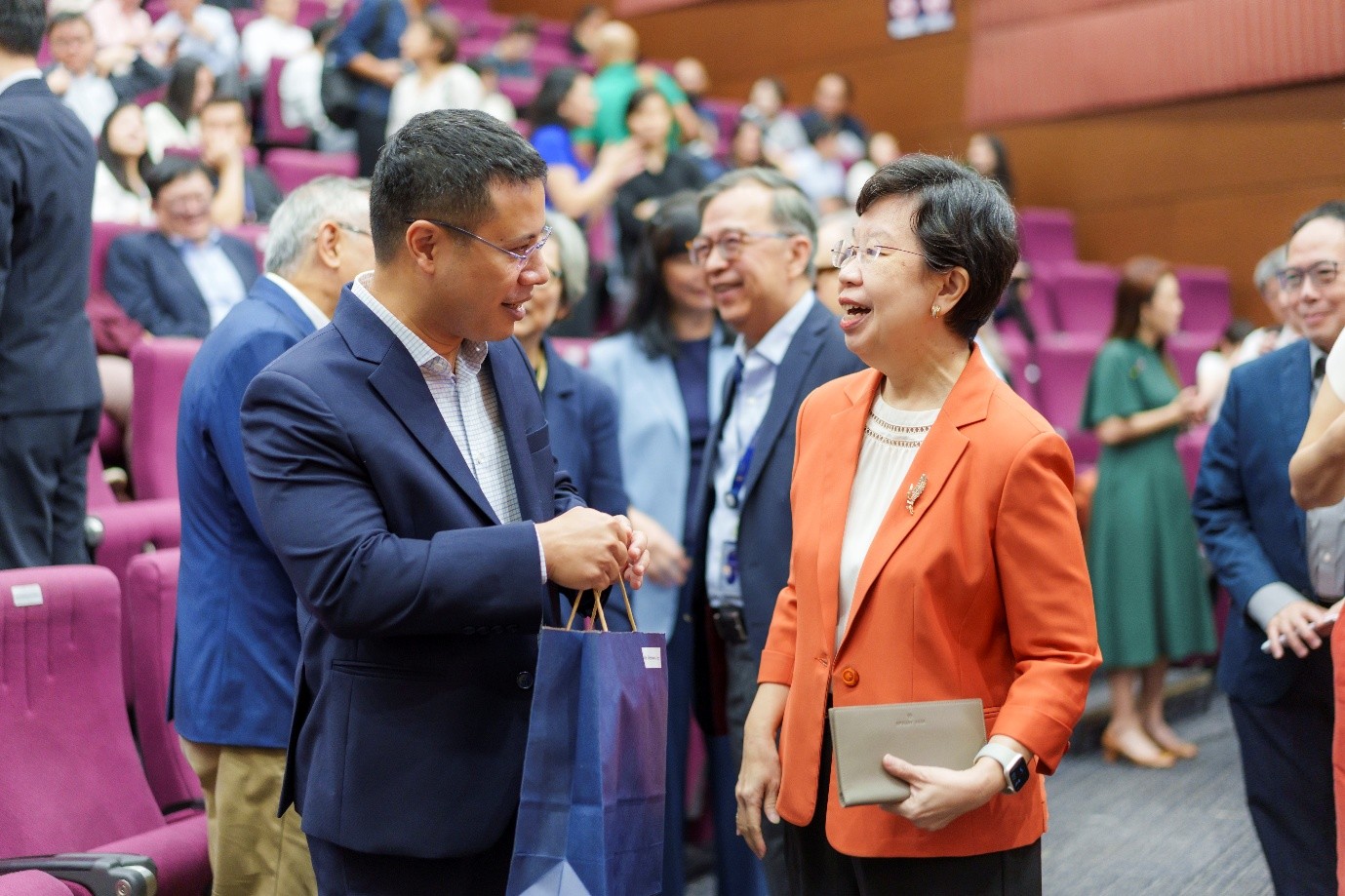
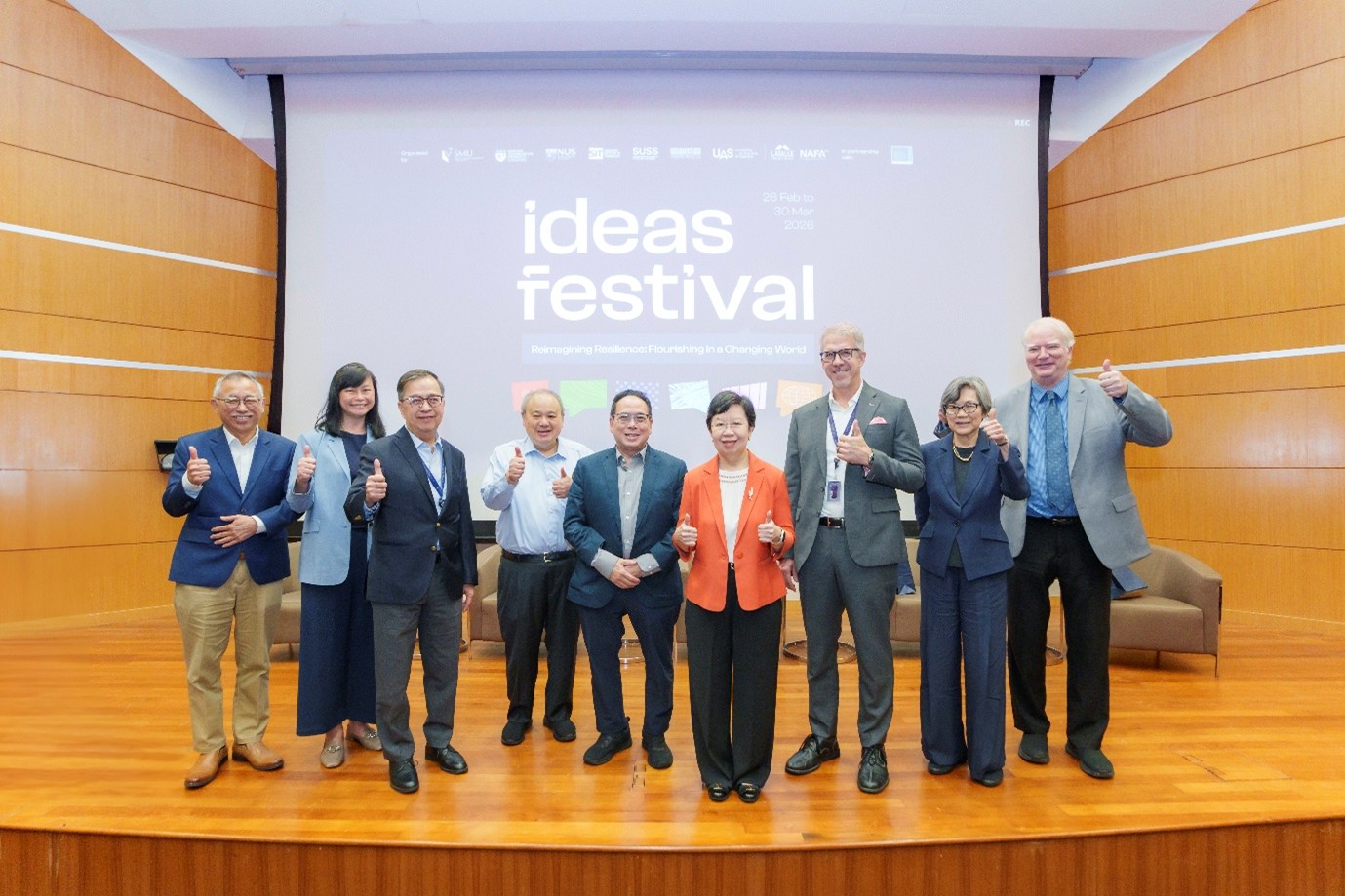
This year’s Ideas Festival, chaired by SMU Professor Kenneth Benoit, Dean, School of Social Sciences; Professor of Computational Social Science, runs from Feb 26 to Mar 27 and features 33 events involving more than 100 researchers across Singapore’s universities and research institutes. Hosted at SMU for its opening, the festival demonstrates the potential for local universities to work together on social science and humanities research, and recognises the real-world impact that researchers are making.
Reimagining resilience in a fractured world
At the same launch, speaker Ambassador-at-Large Professor Chan Heng Chee, SUTD Honorary Professor at the Lee Kuan Yew Centre for Innovative Cities and Deputy Chairman of the Social Science Research Council (SSRC) argued that resilience today must go beyond recovery to strategic reinvention, as countries confront a more volatile geopolitical and technological landscape.
Resilience once meant ‘bouncing back’ after crisis, she said, but states must now absorb shocks, adapt and transform, combining recovery with reinvention. Singapore’s response to the Asian Financial Crisis, which strengthened institutions and accelerated its shift to a knowledge economy, illustrated resilience with foresight rather than mere survival.
She warned that the global order itself is under strain, with weakening norms and rising power competition testing institutions such as the World Trade Organization and United Nations. In this environment, countries must build “geopolitical resilience” through deeper strategic awareness, diversified partnerships and new coalitions, rather than reliance on any single power centre.
Human judgment in an AI age
Prof Chan also stressed that in a world transformed by artificial intelligence and rapid change, the arts and humanities are central to resilience because they safeguard human judgment, meaning and identity.
They cultivate independent thinking, she said, warning that over-delegating cognition to machines risks eroding skills and discernment.
Growing Singapore’s research talent
The new tranche of funding will continue to support the SSRC in growing Singapore’s thought leadership in locally relevant research and strengthen efforts to expand the pool of promising Singaporean researchers.
“We want to support applied research that can achieve real-world impact and help Singapore overcome its challenges. To do so, we must grow our own pool of world-class researchers who can understand Singapore’s unique context and can harness research to make a difference,” Mr Lee said.
The Singapore government is looking to invest in initiatives that further expand the talent pipeline for outstanding Singaporean researchers, such as the SSRC Graduate Research Fellowship which aims to connect overseas Singaporean PhD and postdoctoral researchers with local institutions and encourage their return.
Social sciences as a compass
Noting that social science and humanities research had brought about tangible outcomes to Singapore and the world, Minister Desmond Lee encouraged government agencies, institutions and researchers to continue their collaborations to address Singapore’s challenges and contribute to global efforts.
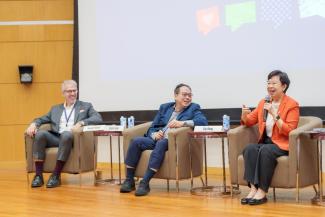
The theme was taken up in a panel discussion featuring: Professor Chan Heng Chee, SUTD Honorary Professor at the Lee Kuan Yew Centre for Innovative Cities and Deputy Chairman of SSRC; SMU Dean of Social Sciences Professor Kenneth Benoit; Professor Kenneth Dean, Kwan Im Thong Hood Cho Temple Professor, NUS, Professor Alan Chan, Kwan Im Thong Hood Cho Temple Chair Professor of Inter-Religious Studies and Harmony, and Provost, Singapore Management University, Professor Euston Quah, Albert Winsemius Chair Professor and Head of Economics, NTU, Member of SSRC and SMU President Professor Lily Kong, with disciplinary roots in Geography.
Panellists discussed how societies must rethink resilience in an era shaped by artificial intelligence, geopolitical uncertainty and social change. They emphasised that the arts and humanities cultivate human judgment and critical thinking, guide the ethical use of technology and sustain cultural identity and social cohesion.
The discussion concluded that in a world transformed by AI and rapid change, the arts and humanities safeguard human judgment, meaning and critical thought, making them central, rather than peripheral, to resilience.